Model Answer:
In India, where over 90% of the workforce operates informally, marginalized sections (SCs, STs, women, and migrants) bear the brunt of precarious, unprotected labor. Formalisation seeks to dismantle these caste- and gender-segmented exploitative arrangements through institutionalized legal, financial, and social protections.
Evaluating Formalisation: Safeguards and Sociological Realities
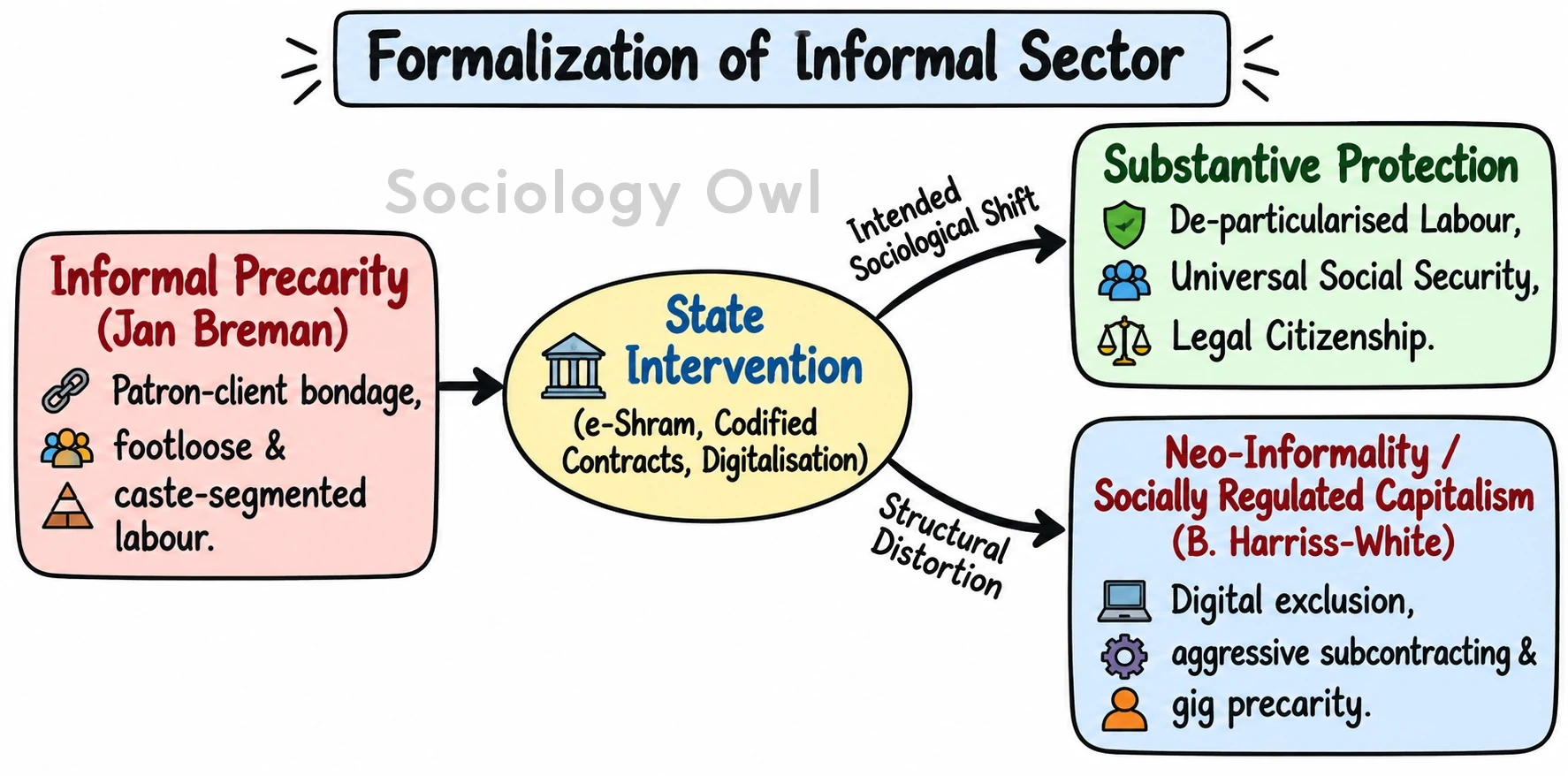
- De-particularisation of Labour: Codified contracts and statutory minimum wages erode traditional patron-client dependencies and caste-based debt-bondage, transforming Jan Breman’s “footloose labour” into legally recognized citizens.
- Universalizing Social Security: Platforms like the e-Shram portal provide institutional visibility, facilitating portable safety nets (insurance, pensions) essential for seasonal, circular migrant workers.
- Disrupting Exploitative Credit: Transition to formal banking minimizes dependence on usurious informal moneylenders, enhancing the economic agency of marginalized petty producers.
- Gendering the Labour Matrix: Registering domestic and home-based work legitimizes feminized survivalist activities, challenging patriarchal devaluation of women’s labor.
- The Pitfall of Digital Exclusion: Complex biometric and paperwork requirements systematically disenfranchise illiterate, resource-poor Adivasis and Dalits, producing new forms of bureaucratic marginalization.
- Repackaging Informality: Without structural transformation, top-down formalisation forces firms into aggressive subcontracting, cementing what Barbara Harriss-White terms “socially regulated capitalism” via neo-informal gig and contractual labor.
Formalisation must transcend mere digital registration to guarantee substantive welfare, dismantling entrenched caste-gender inequalities within India’s labour market.