Model Answer:
Despite constitutional abolition under Article 17, untouchability persists as “institutionalized exclusion” (Sukhadeo Thorat). It manifests as modern stigma and systemic denial of equal rights, adapting to contemporary socio-economic realities.
Sociological Forms of Untouchability
- Ritual and Commensal: Rooted in Louis Dumont’s concept of purity and pollution. The ActionAid study (Ghanshyam Shah) documents the enduring two-tumbler system and denial of temple entry in rural India.
- Spatial Segregation: Gopal Guru highlights how Dalit settlements (Cheris) remain forcibly relegated to village peripheries, physically manifesting social distance.
- Economic and Institutional: Beyond manual scavenging, Sukhadeo Thorat exposes modern exclusion through discriminatory private-sector hiring against Dalit candidates despite identical qualifications.
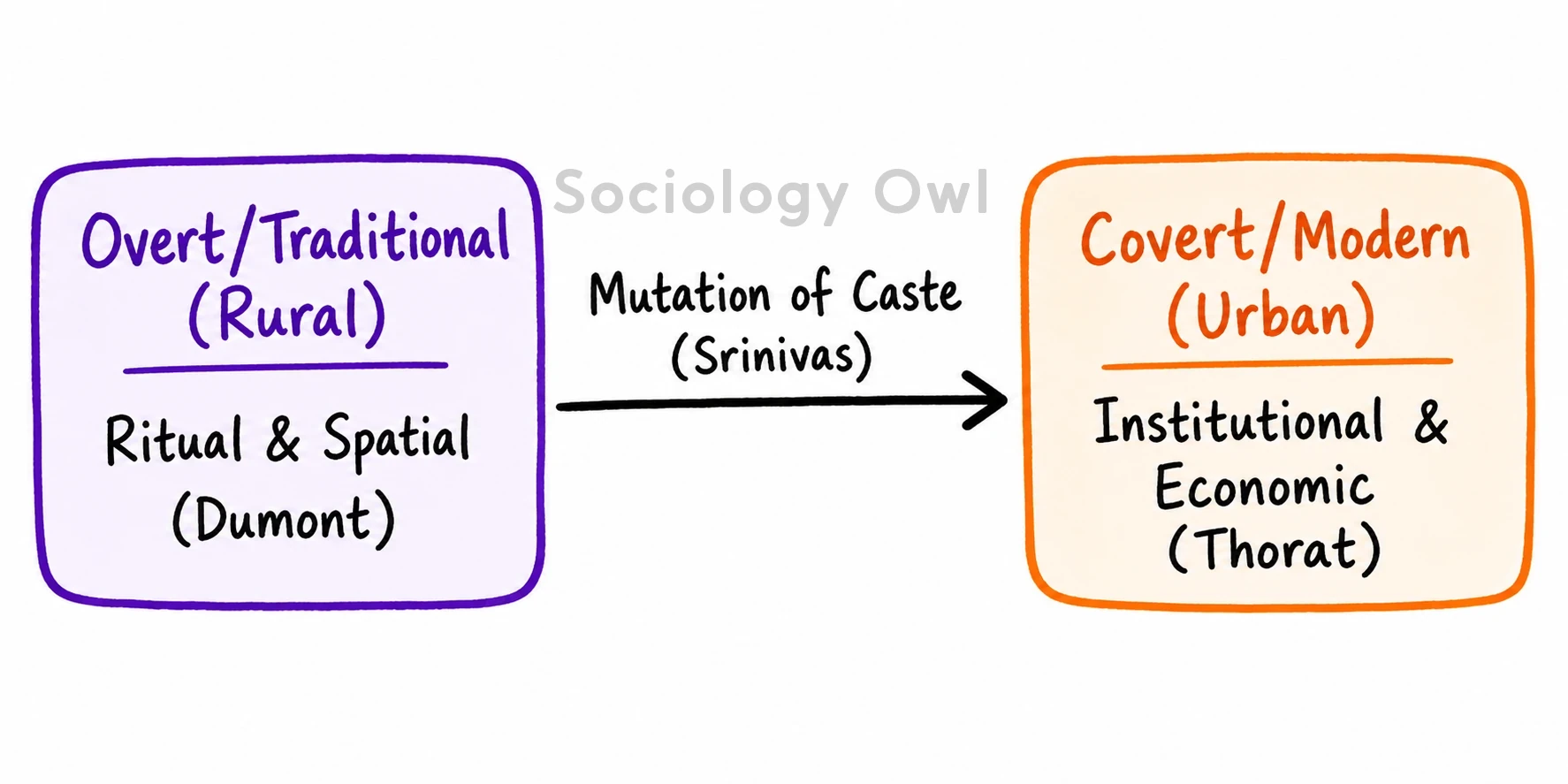
Untouchability has mutated into covert forms. Urban Dalits face systemic denial of rental housing. In elite universities, it manifests as covert peer alienation, proving M.N. Srinivas’s thesis that caste constantly finds “new avatars” in modern India.
Conclusion
While overt rural untouchability declines, covert urban exclusion persists as caste transforms into rival “discrete categories” (Dipankar Gupta). Eradicating it requires moving beyond legal enforcement to the ideological Annihilation of Caste, as envisioned by Dr. B.R. Ambedkar.