UPSC Mains 2025 GS3 Model Answer

Q. The Government of India recently stated that Left Wing Extremism (LWE) will be eliminated by 2026. What do you understand by LWE and how are the people affected by it? What measures have been taken by the government to eliminate LWE?

Q. The Government of India recently stated that Left Wing Extremism (LWE) will be eliminated by 2026. What do you understand by LWE and how are the people affected by it? What measures have been taken by the government to eliminate LWE?

UPSC Mains 2025 GS3 Paper

Model Answer:

Left Wing Extremism: Understanding and Government Response

Left Wing Extremism (LWE), rooted in the 1967 Naxalbari uprising, represents an armed insurgency based on Maoist ideology that rejects parliamentary democracy and seeks revolutionary overthrow of the state. Operating primarily in the “Red Corridor” spanning Chhattisgarh, Jharkhand, Odisha, Bihar, and Andhra Pradesh, these groups exploit genuine grievances of tribal and marginalized communities regarding land alienation and underdevelopment.

Impact on People:

The affected populations face severe multidimensional challenges:
• Security threats: Civilians caught in crossfire, subjected to violence and kangaroo courts (‘Jan Adalats’)
• Development deficit: Destruction of infrastructure (schools, roads, telecom towers) perpetuates poverty cycles
• Democratic denial: Killing of elected representatives creates governance vacuum
• Displacement: Forced migration disrupts traditional livelihoods
• Psychological trauma: Children growing up amid constant violence

Government’s Multi-Pronged Strategy:

The SAMADHAN doctrine combines security and development approaches:

Security measures:
• Deployment of specialized forces (CoBRA battalions, Greyhounds-Andhra Pradesh)
• Fortified police stations and intelligence-based operations
• Modernization of state police forces

Development initiatives:
• Road Connectivity Project for LWE areas (RCPLWE)
• Mobile tower installations improving connectivity
• Eklavya Model Residential Schools for tribal education
• Skill Development Centers and ITIs

Rights and rehabilitation:
• Forest Rights Act implementation
• Civic Action Programme building trust
• Surrender policies with vocational training

Conclusion: Violence declined from 2,258 incidents (2009) to ~500 recently, validating the holistic approach toward 2026 elimination target.

Q. The Government of India recently stated that Left Wing Extremism (LWE) will be eliminated by 2026. What do you understand by LWE and how are the people affected by it? What measures have been taken by the government to eliminate LWE? Read More »

Q. Terrorism is a global scourge. How has it manifested in India? Elaborate with contemporary examples. What are the counter measures adopted by the State? Explain.

Q. Terrorism is a global scourge. How has it manifested in India? Elaborate with contemporary examples. What are the counter measures adopted by the State? Explain.

UPSC Mains 2025 GS3 Paper

Model Answer:

Terrorism in India: Manifestations and State Response

Terrorism in India manifests as a multifaceted security challenge, threatening national sovereignty and socio-economic stability through diverse forms across different regions.

Contemporary Manifestations:

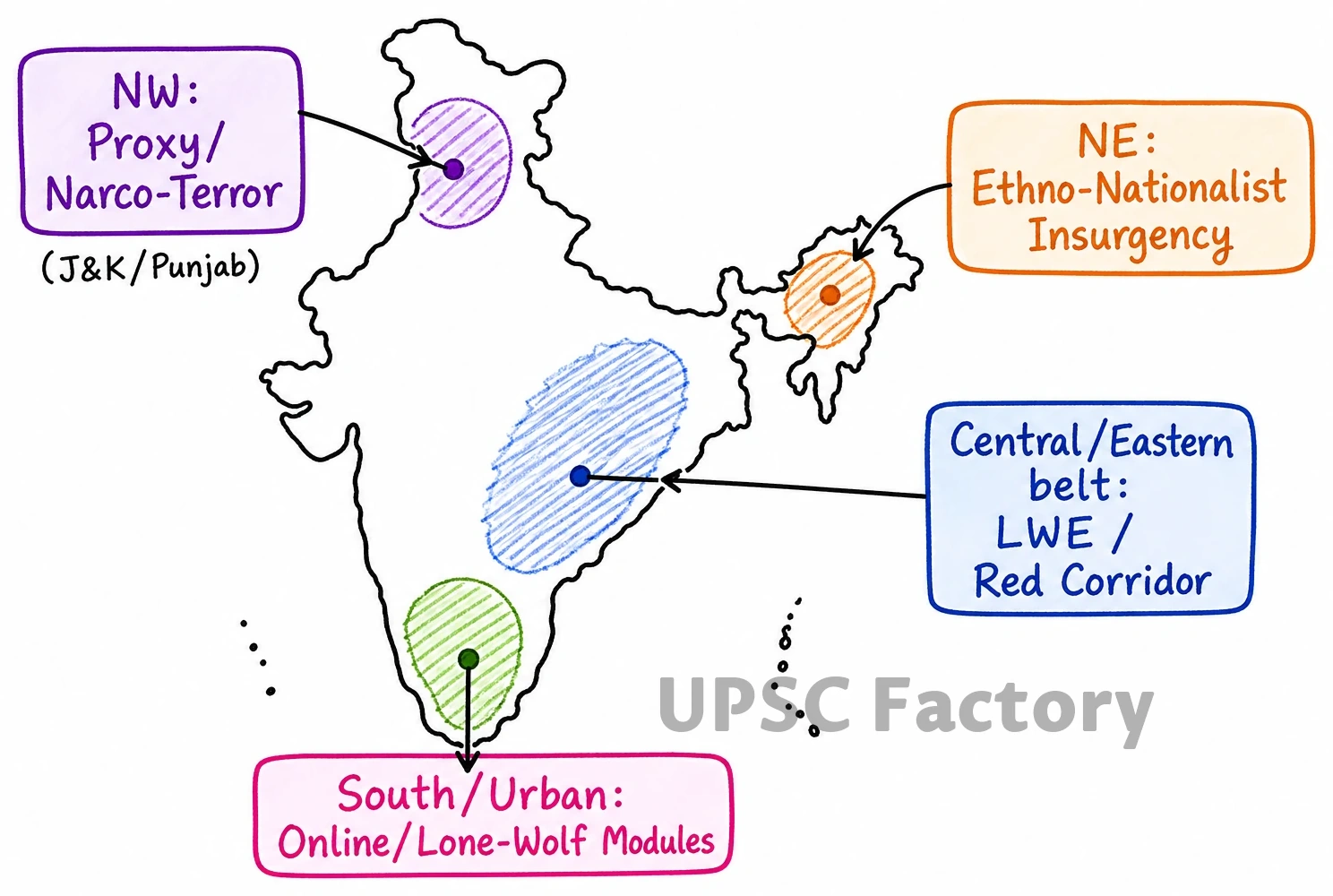
• Cross-border terrorism remains the gravest threat, with Pakistan-based groups orchestrating attacks. The Pulwama attack (2019, 40 CRPF killed) and Poonch ambush (2023, 5 soldiers) exemplify this menace.

• Left-Wing Extremism persists in central-eastern tribal belts. Recent incidents include Sukma-Bijapur ambush (2021, 22 personnel killed) and Dantewada IED blast (2023, 10 killed).

• Ethno-nationalist insurgencies continue in Northeast, though reduced intensity. Groups demand separate states or greater autonomy.

• Narco-terrorism exploits India’s proximity to Golden Crescent/Triangle, using drug proceeds for terror financing.

• Cyber-terrorism through online radicalization (ISIS modules) poses emerging threats.

State Counter-measures:

The government has adopted a comprehensive multi-pronged strategy:

• Legislative: UAPA amendments, PMLA provisions, strengthened legal framework

• Institutional: NIA establishment, NATGRID integration, MAC intelligence-sharing platforms

• Operational: Surgical strikes (2016), Balakot airstrikes (2019), NSG modernization, border fencing

• Financial: CFT cell creation, FATF participation, terror-financing disruption

• International: CCIT advocacy at UN, bilateral intelligence cooperation

• Preventive: De-radicalization programs, Counter-Violent Extremism strategies

Conclusion:
India’s evolving counter-terrorism approach balances kinetic operations with development initiatives, requiring sustained vigilance and adaptive strategies.

Q. Terrorism is a global scourge. How has it manifested in India? Elaborate with contemporary examples. What are the counter measures adopted by the State? Explain. Read More »

Q. Seawater intrusion in the coastal aquifers is a major concern in India. What are the causes of seawater intrusion and the remedial measures to combat this hazard?

Q. Seawater intrusion in the coastal aquifers is a major concern in India. What are the causes of seawater intrusion and the remedial measures to combat this hazard?

UPSC Mains 2025 GS3 Paper

Model Answer:

Seawater Intrusion in Coastal Aquifers

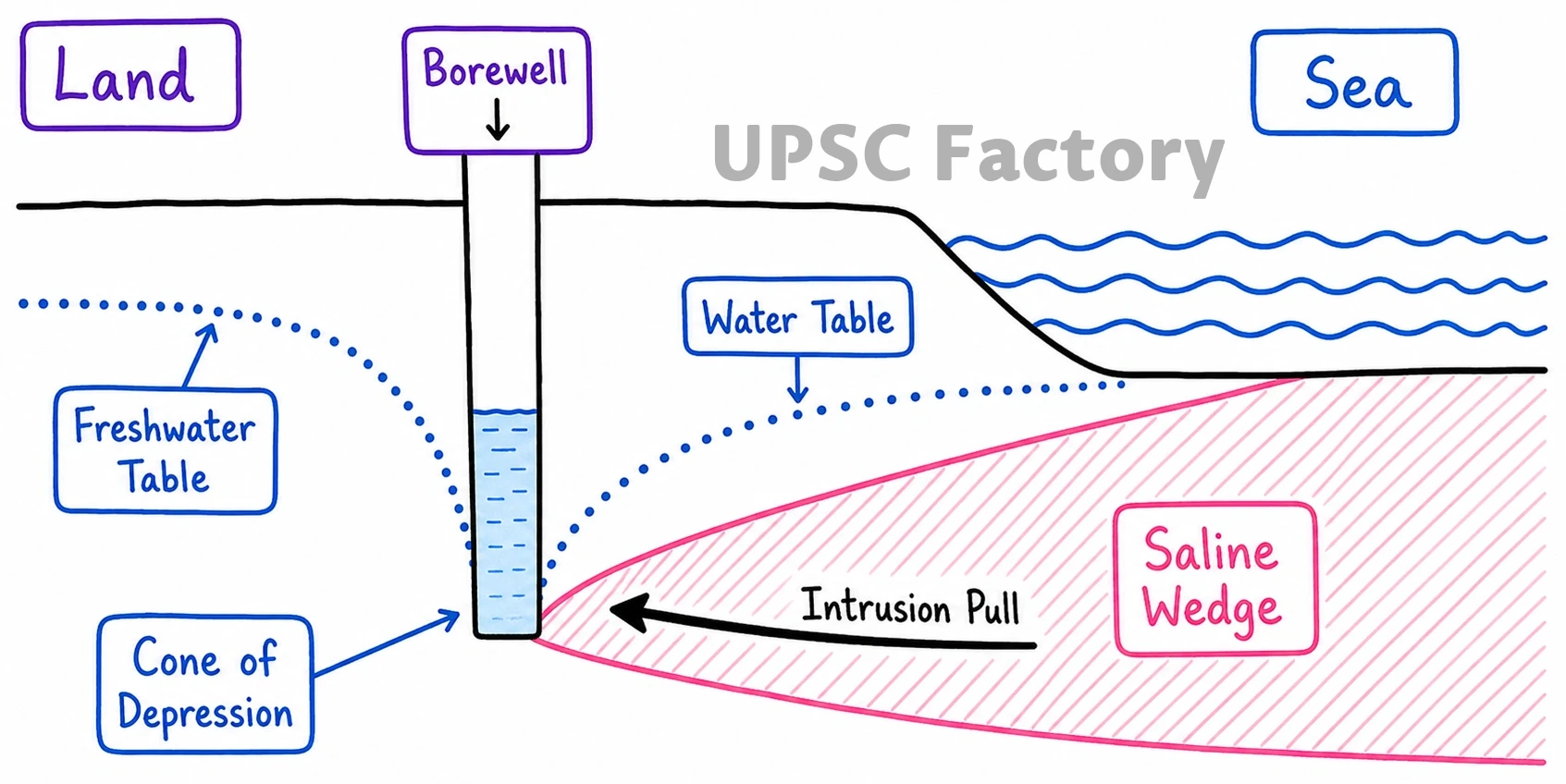
Seawater intrusion is the movement of saline water into freshwater aquifers, contaminating drinking water sources and damaging ecosystems. With a 7,500 km coastline, India faces severe vulnerability, particularly in Gujarat, Tamil Nadu, and Andhra Pradesh.

Causes of Seawater Intrusion

Anthropogenic Causes:
• Over-extraction of groundwater remains the primary driver, with excessive pumping for agriculture and industry lowering water tables (Chennai: 15 km inland ingress)
• Reduced aquifer recharge due to rapid urbanization, deforestation, and wetland destruction limits natural replenishment
• Unregulated borewell drilling disturbs the freshwater-saltwater balance in coastal regions

Natural Causes:
• Climate-induced sea-level rise increases hydraulic pressure, pushing saltwater into aquifers
• Extreme weather events like cyclones and tsunamis force seawater inland (2004 Tsunami, Cyclone Aila-2009)

Remedial Measures

Engineering Solutions:
• Subsurface barriers physically block seawater movement (Kalpakkam dyke, Tamil Nadu)
• Injection wells create freshwater pressure ridges to push back saltwater

Sustainable Management:
• Artificial recharge structures including check dams, percolation ponds enhance aquifer replenishment
• Rainwater harvesting reduces groundwater dependence
• Micro-irrigation techniques (drip, sprinkler systems) minimize agricultural water use

Nature-based Solutions:
• Mangrove restoration and coastal afforestation act as natural buffers
• Community-led water management ensures sustainable practices

Conclusion:
Combating seawater intrusion requires integrated scientific interventions, sustainable regulation, and community participation to protect India’s coastal freshwater resources.

Q. Seawater intrusion in the coastal aquifers is a major concern in India. What are the causes of seawater intrusion and the remedial measures to combat this hazard? Read More »

Q. What is Carbon Capture, Utilization and Storage (CCUS)? What is the potential role of CCUS in tackling climate change?

Q. What is Carbon Capture, Utilization and Storage (CCUS)? What is the potential role of CCUS in tackling climate change?

UPSC Mains 2025 GS3 Paper

Model Answer:

Carbon Capture, Utilization and Storage (CCUS)

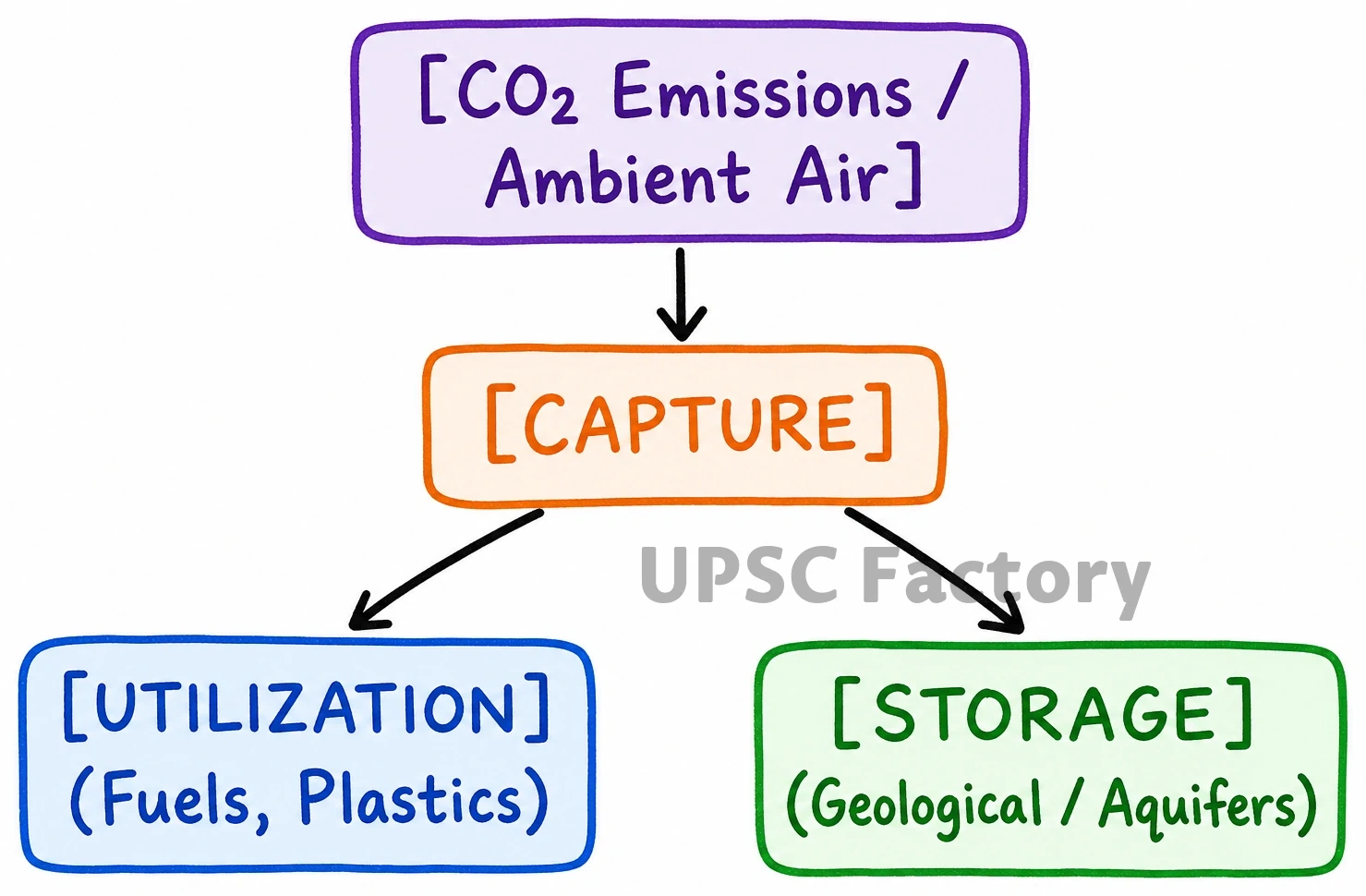
CCUS encompasses integrated technologies that capture CO2 emissions from industrial sources and power generation, followed by utilization in various applications or permanent underground storage to prevent atmospheric release.

Key Components of CCUS:

Carbon Capture involves separating CO2 through three methods:
• Pre-combustion, post-combustion, and oxy-combustion technologies
• Direct Air Capture (DAC) removes atmospheric CO2
• Captures up to 90% emissions from point sources

Transportation occurs via pipelines, ships, rail after compression into liquid/supercritical fluid.

Utilization and Storage pathways include:
• Utilization: Enhanced Oil Recovery (EOR), concrete manufacturing, synthetic fuel production, chemicals production
• Storage: Deep saline aquifers, depleted oil/gas reservoirs, unmineable coal seams

Role in Climate Change Mitigation:

CCUS is critical for achieving IPCC’s 1.5°C target through:
• Decarbonizing hard-to-abate sectors: cement, steel, chemicals industries
• Enabling blue hydrogen production from natural gas
• Creating negative emissions through BECCS (bioenergy with CCS)
• Supporting energy transition while maintaining energy security

India’s net-zero 2070 target requires strategic CCUS deployment. ONGC’s Gujarat CO2 injection project demonstrates early adoption. Significant geological storage potential exists in sedimentary basins.

Challenges: High capital costs, energy-intensive processes, infrastructure requirements, regulatory frameworks needed.

Conclusion:
CCUS remains indispensable for deep decarbonization, balancing India’s developmental aspirations with climate commitments effectively.

Q. What is Carbon Capture, Utilization and Storage (CCUS)? What is the potential role of CCUS in tackling climate change? Read More »

Q. How can India achieve energy independence through clean technology by 2047? How can biotechnology can play a crucial role in this endeavour?

Q. How can India achieve energy independence through clean technology by 2047? How can biotechnology can play a crucial role in this endeavour?

UPSC Mains 2025 GS3 Paper

Model Answer:

India’s journey towards energy independence by 2047 necessitates transitioning from fossil fuel dependency to a clean technology-driven ecosystem, addressing our 85% oil import dependence and aligning with net-zero commitments.

Clean Technology Pathways:

Renewable Energy Expansion: India targets 500 GW non-fossil capacity by 2030, aiming for 90% clean grid by 2047. Solar parks (Bhadla, Pavagada) and offshore wind projects are expanding rapidly.

Green Hydrogen Revolution: The National Green Hydrogen Mission targets 5 MMT annual production by 2030, positioning India as a global hub while decarbonizing refineries, fertilizers, and heavy transport sectors.

Electric Mobility Transition: Achieving near-100% EV sales by 2035 could save 90% crude imports. PLI schemes for battery manufacturing (Ola Gigafactory) strengthen domestic capabilities.

Energy Storage Solutions: Battery storage systems and pumped hydro projects ensure grid stability managing renewable intermittency.

Biotechnology’s Crucial Role:

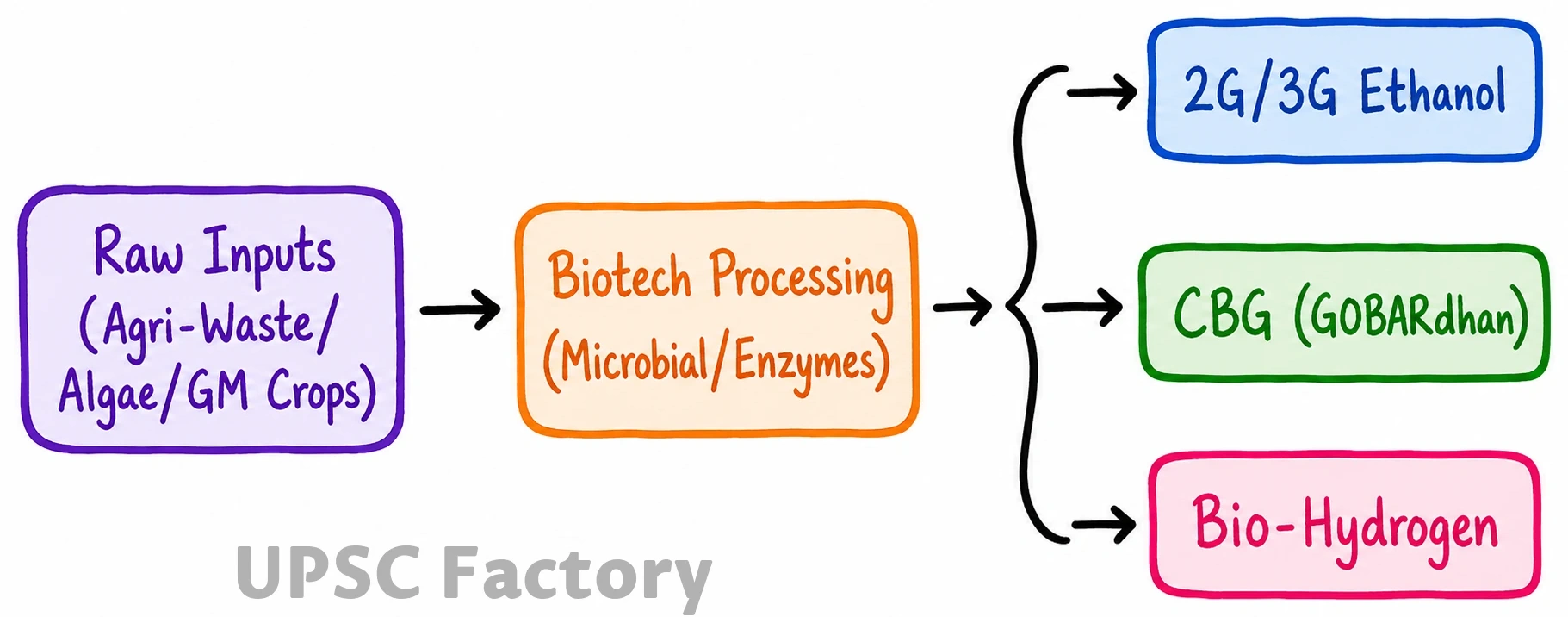
Biotechnology enables sustainable bio-based energy solutions through:
– Biofuels Development: E20 blending by 2025-26; 2G ethanol from agricultural waste (Panipat biorefinery); 3G algae-based fuels
– Waste-to-Energy: GOBAR-DHAN converts cattle dung to Bio-CNG; municipal waste generates electricity through biogas
– Biohydrogen Production: Cyanobacteria and algae offer photobiological hydrogen pathways
– Carbon Management: Microbial Enhanced Oil Recovery; algal carbon capture systems

Conclusion: Integrating clean technologies with biotechnology innovations ensures India’s energy Atmanirbharta while saving $2.5 trillion by 2047.

Q. How can India achieve energy independence through clean technology by 2047? How can biotechnology can play a crucial role in this endeavour? Read More »

Q. The fusion energy programme in India has steadily evolved over the past few decades. Mention India’s contributions to the international fusion energy project – International Thermonuclear Experimental Reactor (ITER).

Q. The fusion energy programme in India has steadily evolved over the past few decades. Mention India’s contributions to the international fusion energy project – International Thermonuclear Experimental Reactor (ITER). What will be the implications of the success of this project for the future of global energy?

UPSC Mains 2025 GS3 Paper

Model Answer:

India’s Contributions to ITER and Global Energy Implications

India’s fusion journey, beginning with ADITYA tokamak (1989) and advancing through SST-1 development, positioned the nation to join ITER as a founding partner in 2005. This 35-nation collaboration in France aims to demonstrate fusion’s feasibility by achieving 500 MW output from 50 MW input.

India’s Key Contributions (9% of construction costs):

ITER-India, a special project of IPR Gandhinagar, manages India’s in-kind procurement deliverables:

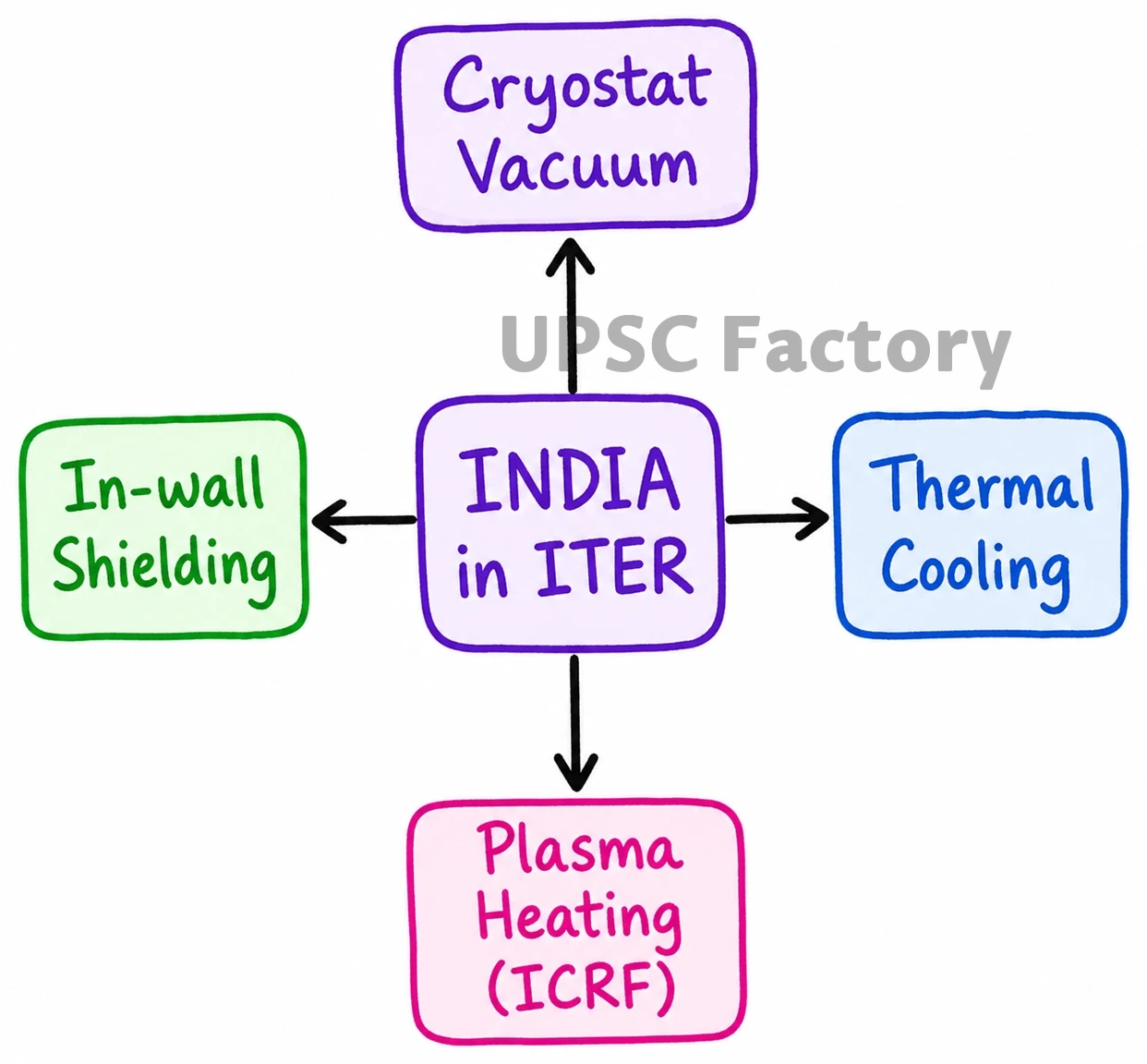
• Cryostat Manufacturing: L&T fabricates the world’s largest stainless steel vacuum vessel (30m height/diameter, 3,850 tonnes) providing ultra-cool vacuum environment
• Critical Systems: Cryogenic systems (cooling magnets to -269°C), RF heating systems (plasma heating to 150 million°C), cooling water systems, and in-wall neutron shielding
• Industrial Ecosystem: Major participation from L&T, Inox India, Tata Consulting Engineers; 200 Indian scientists/engineers working on-site
• Technology Access: India gains complete access to all ITER-developed technology, patents, and data

Global Energy Implications:

ITER’s success will revolutionize energy landscapes fundamentally. Abundant fuel availability – deuterium from seawater, tritium from lithium – ensures energy security. Environmental advantages include zero carbon emissions, no long-lived radioactive waste, and meltdown-proof design. Technological spillovers in superconductivity, cryogenics, robotics will benefit multiple sectors. Commercial fusion plants (DEMO) will follow ITER’s validation.

Conclusion:
ITER positions India at fusion energy’s forefront, ensuring clean energy leadership and technological sovereignty.

Q. The fusion energy programme in India has steadily evolved over the past few decades. Mention India’s contributions to the international fusion energy project – International Thermonuclear Experimental Reactor (ITER). Read More »

Q. Elaborate the scope and significance of supply chain management of agricultural commodities in India.

Q. Elaborate the scope and significance of supply chain management of agricultural commodities in India.

UPSC Mains 2025 GS3 Paper

Model Answer:

Supply Chain Management of Agricultural Commodities in India

Agricultural supply chain management encompasses the entire network from farm inputs to consumer plates, integrating production, post-harvest management, processing, and distribution networks to ensure efficient commodity flow.

Scope:

The scope spans multiple interconnected stages:
• Input Management: Timely supply of seeds, fertilizers, credit, and machinery determines yield quality
• Post-harvest Operations: Storage infrastructure including cold chains (for fruits/vegetables) and modern silos reduce the current 15-20% perishable losses
• Processing & Value Addition: Converting raw produce into processed goods (tomatoes to puree) enhances shelf-life and market value
• Marketing Channels: Integration of traditional mandis, e-NAM platform, and retail chains ensures wider market access

Significance:

Efficient SCM directly impacts farmer incomes by reducing intermediaries and ensuring better price realization, crucial for doubling farmers’ income goal. It addresses India’s ₹90,000 crore annual post-harvest losses through improved infrastructure. The system ensures food security by facilitating surplus-to-deficit region movement, stabilizing prices of essentials (like onions).

SCM catalyzes the food processing sector while generating substantial rural non-farm employment in logistics and warehousing. Government initiatives like Agriculture Infrastructure Fund, PM Kisan SAMPADA Yojana, and 10,000 FPO formation strengthen this ecosystem.

Conclusion:
Robust agricultural SCM is indispensable for farmer prosperity, food security, and positioning India as global agri-powerhouse.

Q. Elaborate the scope and significance of supply chain management of agricultural commodities in India. Read More »

Q. Explain the factors influencing the decision of the farmers on the selection of high value crops in India.

Q. Explain the factors influencing the decision of the farmers on the selection of high value crops in India.

UPSC Mains 2025 GS3 Paper

Model Answer:

Factors Influencing Farmers’ Selection of High-Value Crops in India

High-value crops (HVCs) including fruits, vegetables, spices, and floriculture offer superior returns compared to traditional cereals. Farmers’ adoption depends on multiple interrelated factors:

Economic and Market Factors:

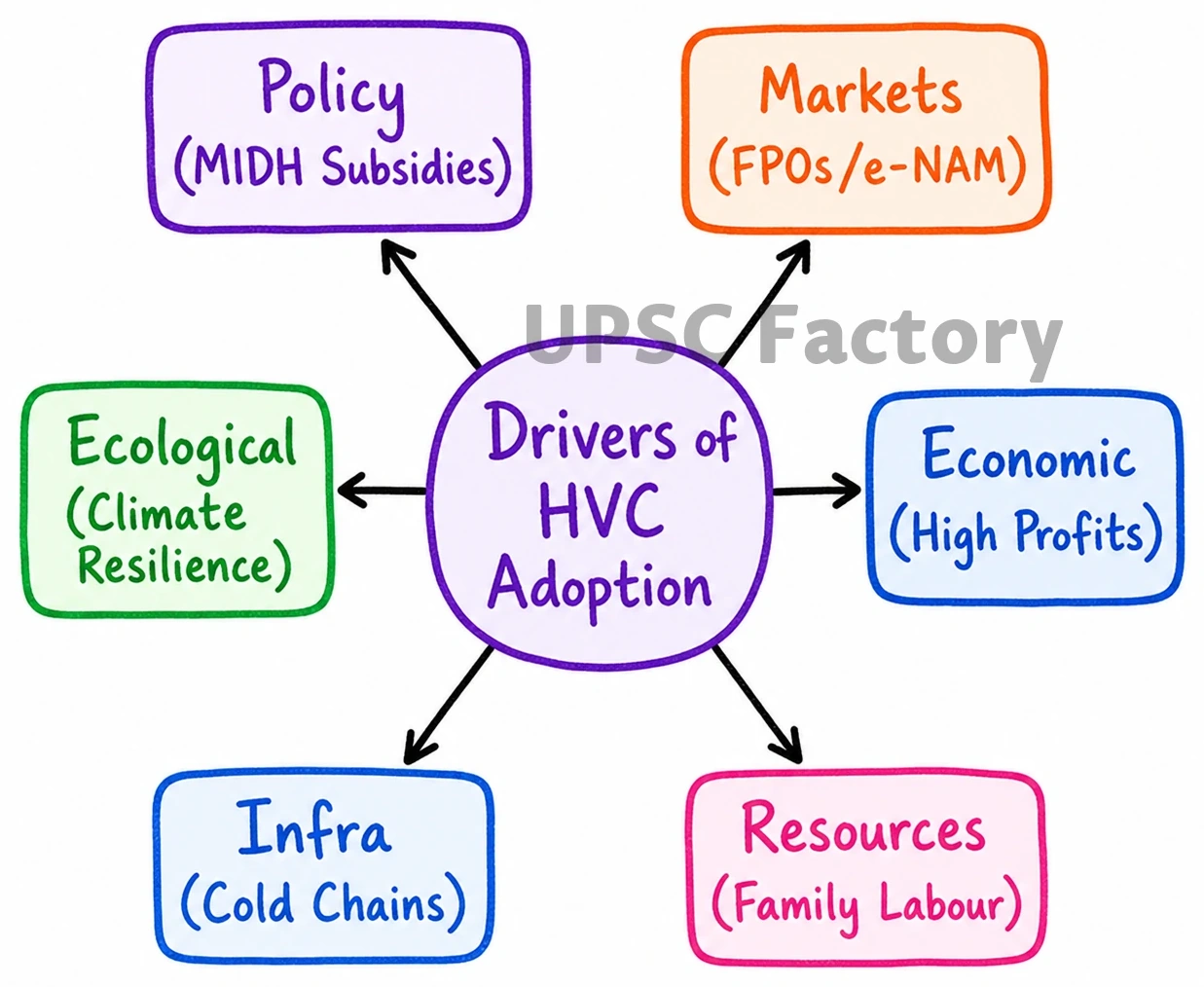
• Profitability potential – HVCs generate 2-3 times higher returns per hectare (tomatoes vs wheat in Punjab)
• Urban demand surge – Rising incomes and dietary changes create steady markets
• Export opportunities – Grapes from Maharashtra, Kashmir saffron
• Price volatility risks – Absence of MSP for most HVCs creates uncertainty

Agro-ecological Determinants:

The suitability of soil-climate conditions fundamentally determines crop selection. Water availability through micro-irrigation (drip systems in Gujarat) enables HVC cultivation even in water-scarce regions. Region-specific advantages like Kashmir’s saffron cultivation demonstrate geographical constraints.

Institutional Support:

• Government schemes – MIDH, RKVY, Operation Greens for TOP crops
• Market infrastructure – e-NAM platform, cold storage networks
• Credit and insurance availability influences risk-taking capacity
• FPOs presence enables small farmers’ participation

Socio-personal Factors:
Small landholdings favor labor-intensive vegetables. Farmers’ entrepreneurial spirit, access to extension services, and demonstration effects from progressive farmers significantly impact adoption decisions.

Conclusion:
Transitioning to HVCs requires addressing economic incentives, infrastructure gaps, and risk mitigation simultaneously for sustainable farmer income enhancement.

Q. Explain the factors influencing the decision of the farmers on the selection of high value crops in India. Read More »

Q. What are the challenges before the Indian economy when the world is moving away from free trade and multilateralism to protectionism and bilateralism? How can these challenges be met?

Q. What are the challenges before the Indian economy when the world is moving away from free trade and multilateralism to protectionism and bilateralism? How can these challenges be met?

UPSC Mains 2025 GS3 Paper

Model Answer:

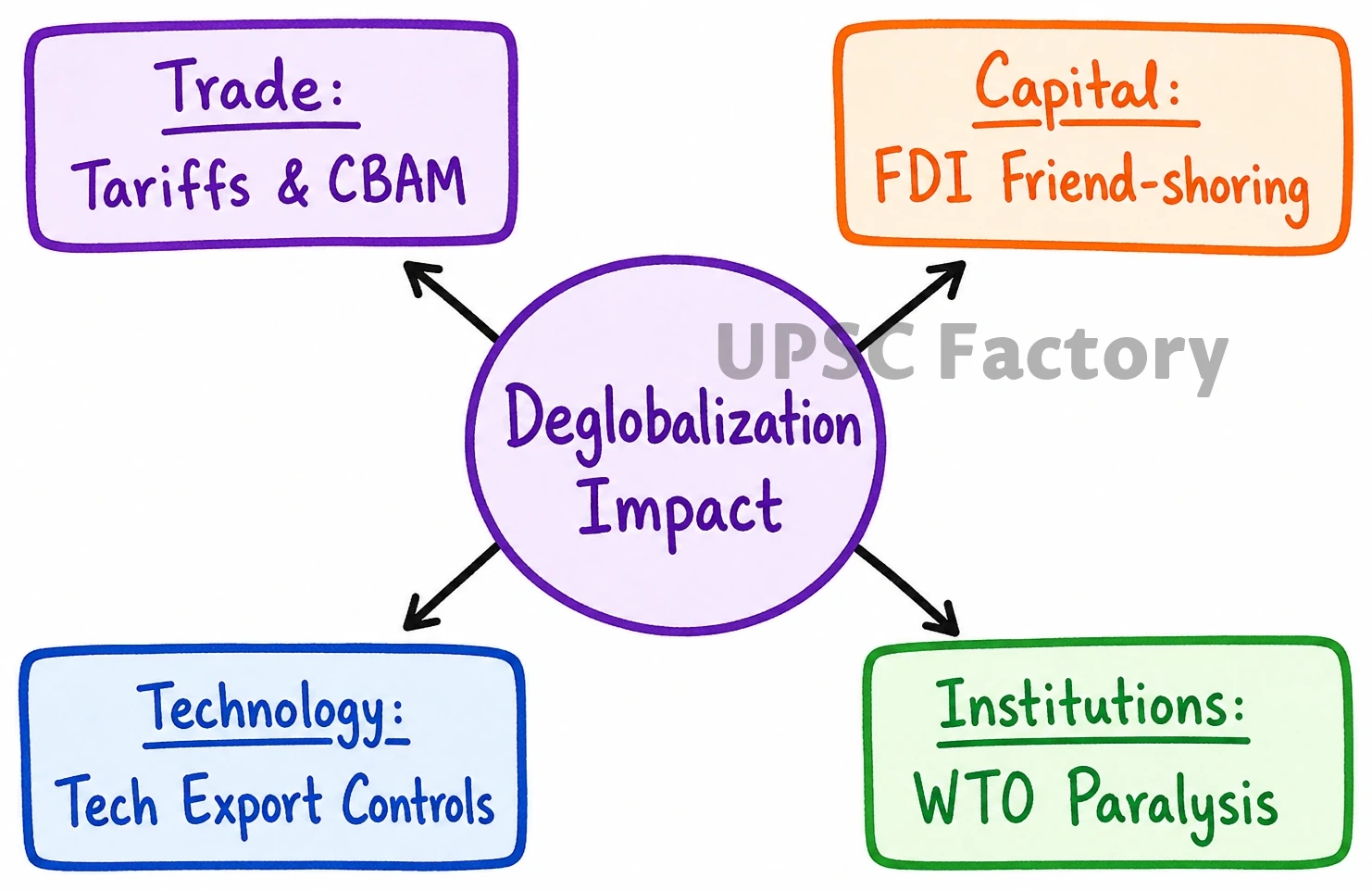
The global shift from multilateralism to protectionism, accelerated post-COVID-19 and Russia-Ukraine conflict, poses significant challenges for India’s growth trajectory as nations prioritize bilateral arrangements over WTO-based trade systems.

Key Challenges facing Indian economy:

• Market Access Barriers: Rising tariffs and non-tariff barriers threaten Indian exports in textiles, pharmaceuticals, and gems sectors. EU’s Carbon Border Adjustment Mechanism impacts steel-aluminum exports, while stricter standards reduce competitiveness.

• Supply Chain Vulnerabilities: Disruptions increase imported component costs, affecting electronics and automotive manufacturing. India’s import dependence for critical materials undermines the Make in India initiative’s effectiveness.

• Trade Deficit Concerns: Bilateral FTAs have widened deficits, particularly with ASEAN partners, questioning the reciprocal benefits of such agreements.

• Investment Uncertainties: Declining FDI flows and stricter screening mechanisms in developed economies limit technology acquisition and global expansion opportunities.

Strategic Response Measures:

India must enhance trade diplomacy through G20, BRICS engagement while expediting EU-UK FTAs. Strengthening domestic competitiveness via PLI schemes expansion and PM GatiShakti infrastructure development is crucial. Diversifying export markets to Africa, Latin America, and focusing on IT-digital services leveraging comparative advantages offers resilience. Building alternative supply chains through partnerships with like-minded nations and promoting Atmanirbhar Bharat without isolationism ensures strategic autonomy.

Conclusion:
India must transform protectionist challenges into opportunities for building resilient, self-reliant economy while maintaining global engagement.

Q. What are the challenges before the Indian economy when the world is moving away from free trade and multilateralism to protectionism and bilateralism? How can these challenges be met? Read More »

Q. Distinguish between the Human Development Index (HDI) and the Inequality-adjusted Human Development Index (IHDI) with special reference to India. Why is the IHDI considered a better indicator of inclusive growth?

Q. Distinguish between the Human Development Index (HDI) and the Inequality-adjusted Human Development Index (IHDI) with special reference to India. Why is the IHDI considered a better indicator of inclusive growth?

UPSC Mains 2025 GS3 Paper

Model Answer:

Distinguishing HDI and IHDI with Reference to India

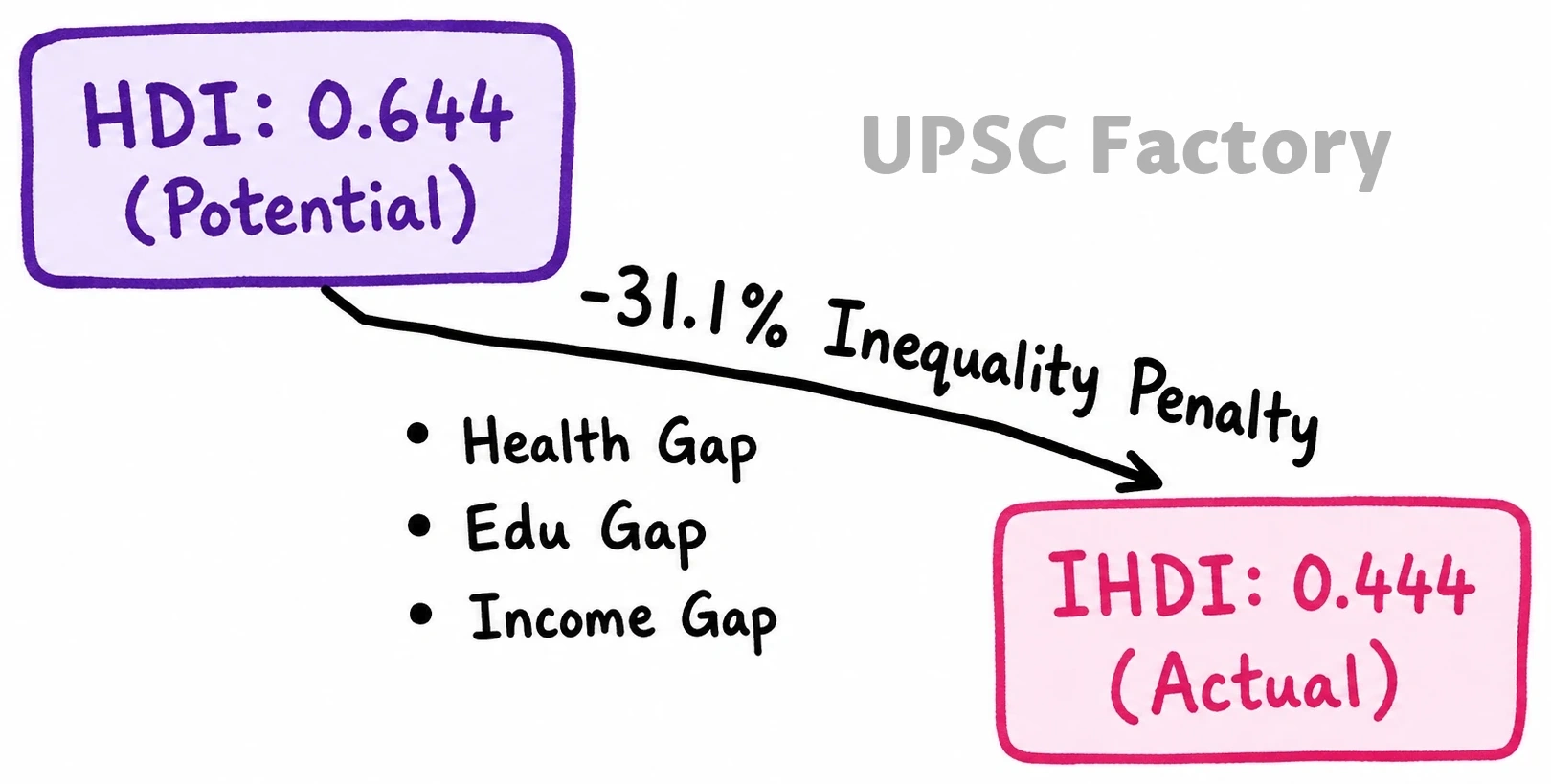
The Human Development Index (HDI) measures a country’s average achievements in three dimensions: health (life expectancy), education (schooling years), and living standards (GNI per capita). It provides a composite score between 0-1 for international comparison. India’s HDI stands at 0.644, ranking 134th globally in 2022.

The Inequality-adjusted Human Development Index (IHDI) adjusts HDI by accounting for inequalities in distribution of these achievements across the population. While HDI represents potential development assuming perfect equality, IHDI reflects actual human development experienced by citizens.

India’s Reality:
• HDI (2022): 0.644 (medium development category)
• IHDI (2022): 0.444 – representing 31.1% loss due to inequality
• Major disparities: Urban-rural divide, caste differences, gender gaps
• Regional variations: Kerala vs Bihar, Northeast vs BIMARU states

Why IHDI is Superior for Inclusive Growth:

• Reveals hidden disparities: HDI’s national averages mask internal inequalities; IHDI exposes the reality of marginalized sections (tribal areas, urban slums)

• Quantifies inequality cost: The 31.1% loss clearly shows development not reaching all citizens equally

• Enables targeted interventions: Identifies specific dimensions needing attention – education inequality highest in India

• Aligns with SDGs: Directly measures “leaving no one behind” principle, especially SDG-10

Conclusion: IHDI provides honest assessment of inclusive development, crucial for India’s equitable growth trajectory.

Q. Distinguish between the Human Development Index (HDI) and the Inequality-adjusted Human Development Index (IHDI) with special reference to India. Why is the IHDI considered a better indicator of inclusive growth? Read More »