UPSC Mains 2025 GS3 Model Answer

Q. Why is maritime security vital to protect India’s sea trade? Discuss maritime and coastal security challenges and the way forward.

Q. Why is maritime security vital to protect India’s sea trade? Discuss maritime and coastal security challenges and the way forward.

UPSC Mains 2025 GS3 Paper

Model Answer:

Maritime security forms the bedrock of India’s economic prosperity, with over 90% of trade by volume and 75% by value conducted through sea routes. India’s 7,500 km coastline and strategic location in the Indian Ocean Region make secure Sea Lanes of Communication (SLOCs) indispensable for uninterrupted flow of energy resources, raw materials, and finished goods. Additionally, maritime security protects India’s blue economy aspirations, including fisheries and polymetallic nodules, while ensuring energy security through crude oil imports.

Maritime and Coastal Security Challenges

India faces multifaceted threats to its maritime domain:

Traditional Security Threats:
• Maritime terrorism – The 2008 Mumbai attacks exposed coastal vulnerabilities, with continued threats to ports and critical infrastructure
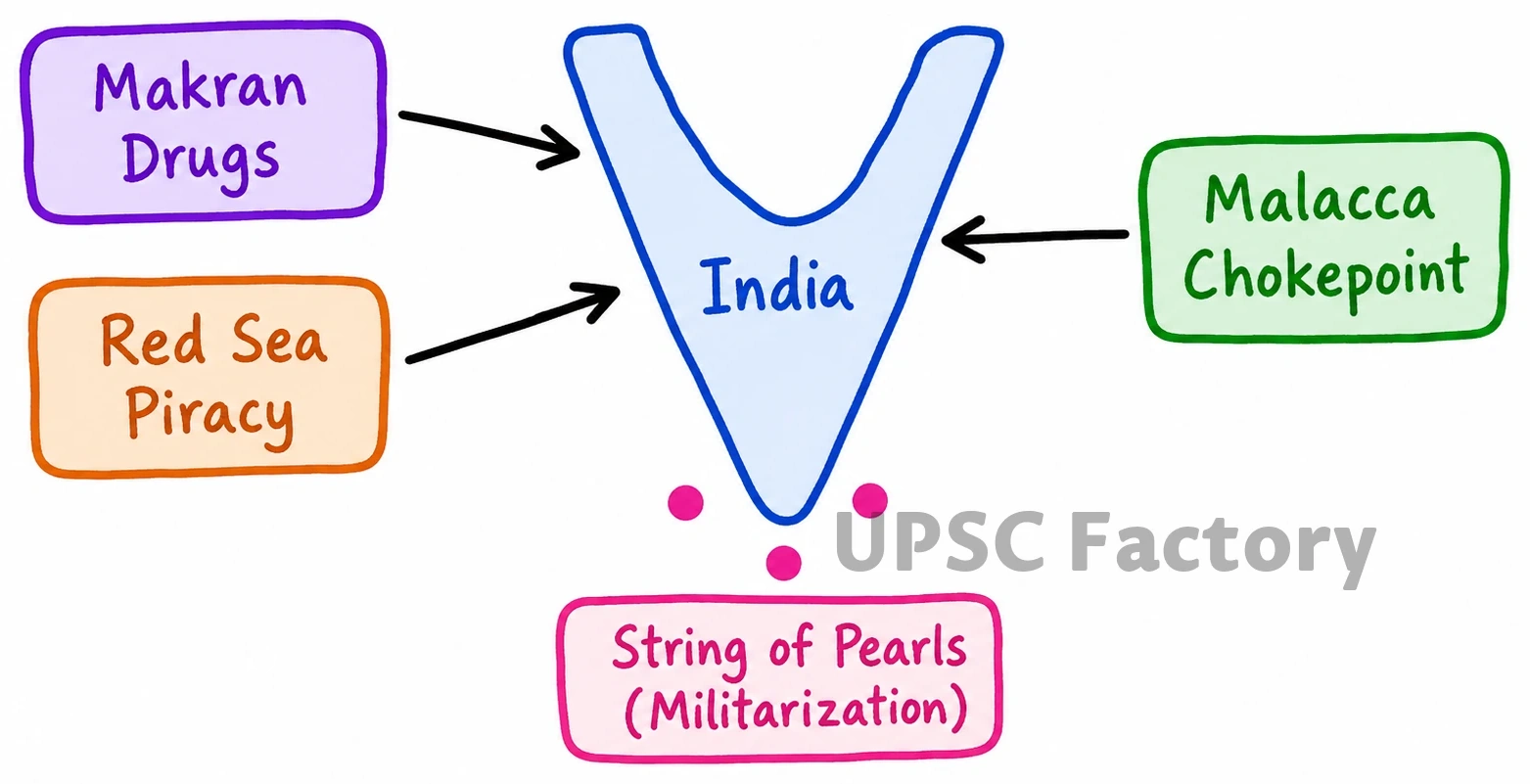
• Piracy and armed robbery – Gulf of Aden and Malacca Straits remain hotspots, disrupting trade and endangering seafarers
• Geopolitical tensions – China’s “String of Pearls” strategy challenges India’s maritime interests
• Unsettled boundaries – Sir Creek dispute with Pakistan creates persistent tensions

Non-Traditional Threats:
• Smuggling and trafficking – Narcotics, arms, and human trafficking through porous borders (Sundarbans delta, Palk Strait)
• IUU fishing – Depletes marine resources while vessels enable illicit activities
• Cybersecurity threats – Digital port infrastructure vulnerable to disruptions

Way Forward

Technological Enhancement:
The National Command Control Communication and Intelligence Network (NC3I) integrates real-time maritime data. Investment in coastal radars, automatic identification systems, and unmanned aerial vehicles strengthens surveillance capabilities.

Institutional Coordination:
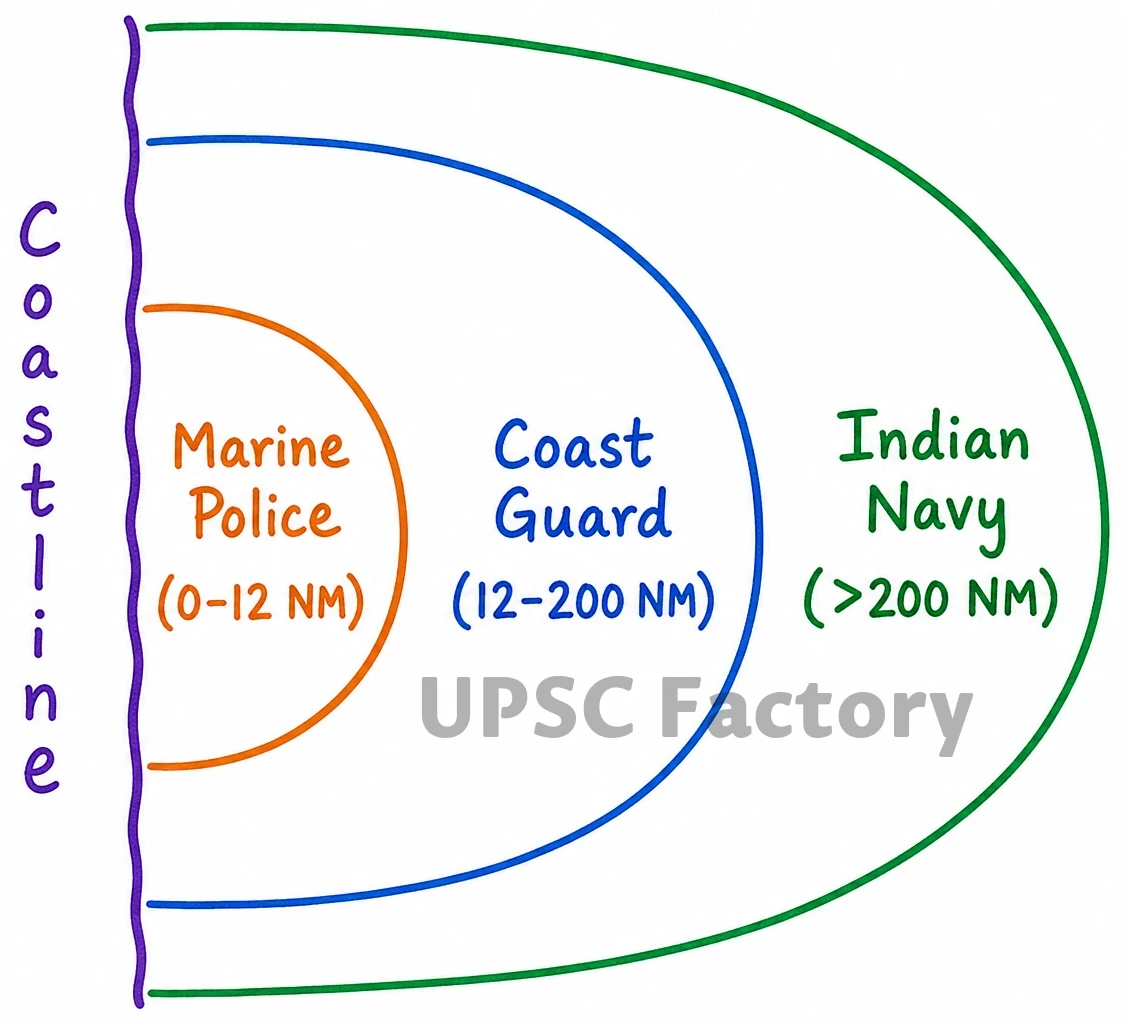
The National Committee for Strengthening Maritime and Coastal Security (NCSMCS) ensures inter-agency coordination. The three-tiered security grid (Navy-Coast Guard-Marine Police) enables joint patrolling.

Regional Cooperation:
India’s SAGAR doctrine promotes collaboration through Indian Ocean Naval Symposium (IONS) and joint exercises like MALABAR. Information sharing and capacity building with IOR nations enhance collective security.

Community Participation:
Fishing communities serve as “eyes and ears” through biometric ID cards and interaction programs, strengthening coastal vigilance.

Conclusion: Maritime security remains indispensable for India’s $5 trillion economy vision and regional leadership aspirations.

Q. Why is maritime security vital to protect India’s sea trade? Discuss maritime and coastal security challenges and the way forward. Read More »

Q. What are the major challenges to internal security and peace process in the North-Eastern States? Map the various peace accords and agreements initiated by the government in the past decade.

Q. What are the major challenges to internal security and peace process in the North-Eastern States? Map the various peace accords and agreements initiated by the government in the past decade.

UPSC Mains 2025 GS3 Paper

Model Answer:

Major Challenges to Internal Security and Peace Process in North-Eastern States

The North-Eastern region, sharing 98% of its borders with five countries, faces multifaceted security challenges stemming from historical grievances, ethnic diversity, and economic disparities. Despite declining violence, the peace process remains complex due to overlapping issues requiring sustained dialogue and development initiatives.

Major Internal Security Challenges:

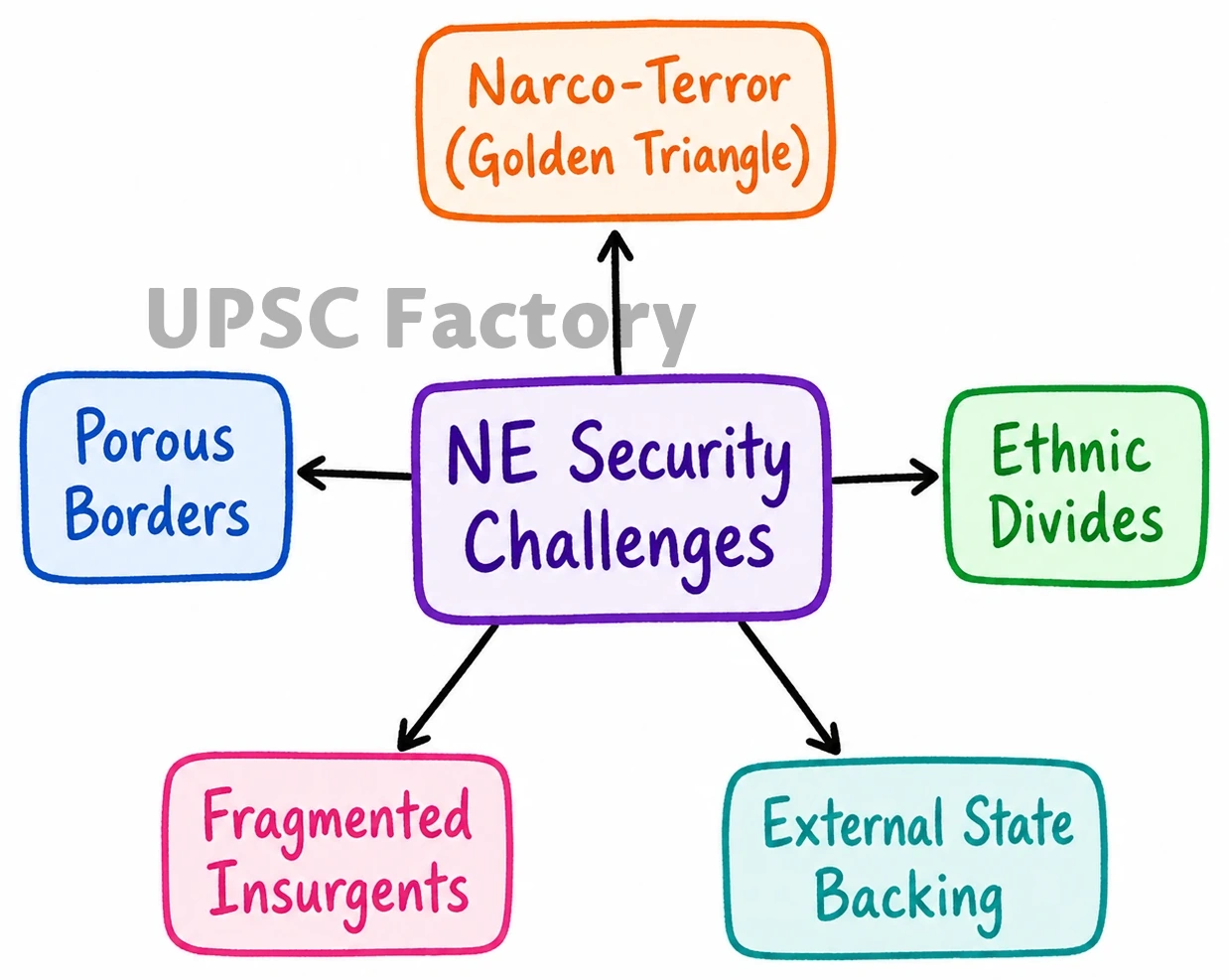
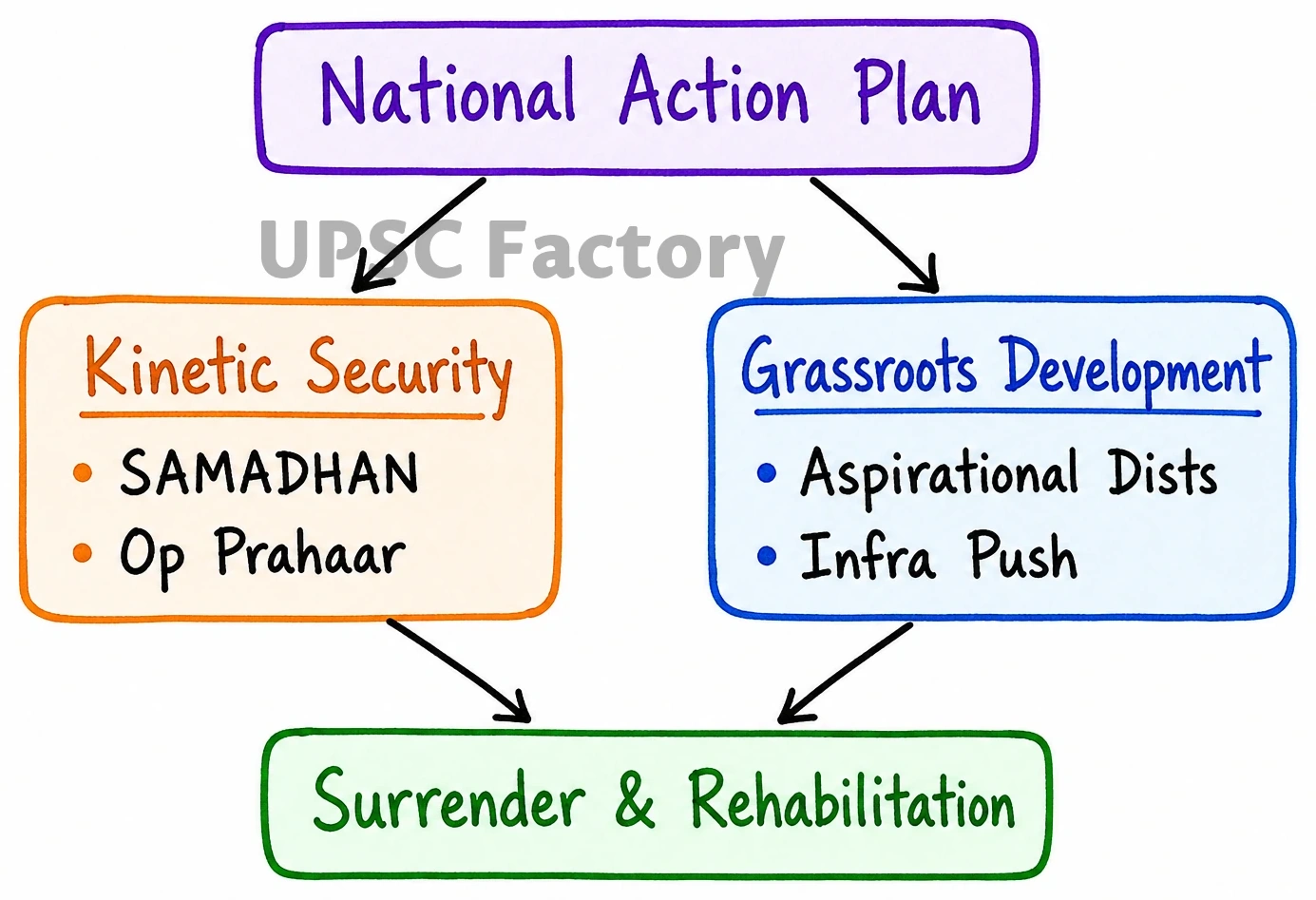
• Persistent Insurgency: Multiple armed groups continue operating despite peace efforts – ULFA-I in Assam, NSCN factions in Nagaland, and Meitei extremist groups in Manipur. Their nexus with criminal networks involving extortion and illegal trade compounds security threats.

• Ethnic Conflicts: The region’s 200+ ethnic groups face competing claims over resources and representation. Recent Meitei-Kuki violence in Manipur exemplifies these deep-seated tensions, causing displacement and casualties.

• Inter-State Border Disputes: Colonial-era demarcations created disputes between Assam-Mizoram, Assam-Nagaland, and Assam-Meghalaya, often escalating into violent clashes over territorial control.

• Economic Underdevelopment: Poor infrastructure, limited industrialization, and high unemployment create recruitment grounds for insurgents, fostering alienation among youth vulnerable to radical ideologies.

• Porous International Borders: The 5,182 km international boundary facilitates arms trafficking, drug trade (Golden Triangle proximity), and cross-border sanctuary for insurgents, particularly along Myanmar-Bangladesh borders.

Key Peace Accords (2015-2025):

The government’s intensified dialogue approach yielded significant breakthroughs:

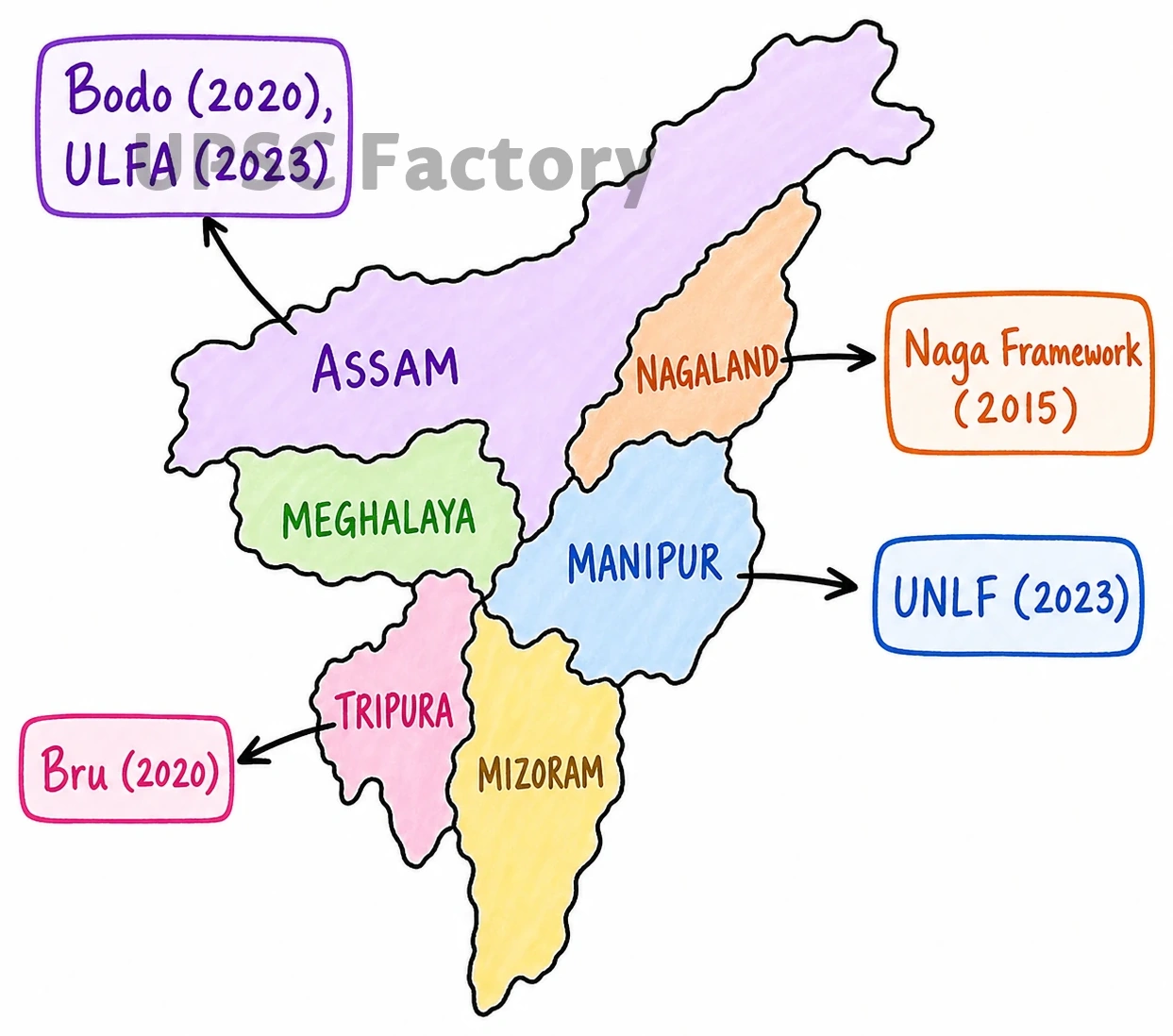
• Naga Framework Agreement (2015): Recognized unique Naga history, negotiations ongoing
• Bodo Peace Accord (2020): Created BTR, rehabilitated 1,600+ NDFB cadres
• Bru-Reang Agreement (2020): Settled 34,000 displaced people in Tripura
• Karbi Anglong Agreement (2021): ₹1,000 crore package, 1,000 cadres surrendered
• Assam-Meghalaya Border Settlement (2022): Resolved six disputed areas
• UNLF Peace Agreement (2023): Historic Manipur breakthrough

These accords demonstrate progress through inclusive dialogue, rehabilitation packages, and autonomy provisions addressing ethnic aspirations.

Conclusion:
Sustained implementation of accords with development initiatives remains crucial for transforming North-East into India’s growth engine.

Q. What are the major challenges to internal security and peace process in the North-Eastern States? Map the various peace accords and agreements initiated by the government in the past decade. Read More »

Q. Write a review on India’s climate commitments under the Paris Agreement (2015) and mention how these have been further strengthened in COP26 (2021). In this direction, how has the first Nationally Determined Contribution intended by India been updated in 2022?

Q. Write a review on India’s climate commitments under the Paris Agreement (2015) and mention how these have been further strengthened in COP26 (2021). In this direction, how has the first Nationally Determined Contribution intended by India been updated in 2022?

UPSC Mains 2025 GS3 Paper

Model Answer:

India’s Climate Commitments: From Paris Agreement to Updated NDC

India, accounting for 7% of global emissions while supporting 17% of world population, has demonstrated exemplary climate leadership through progressively strengthened commitments since the Paris Agreement, balancing developmental imperatives with environmental responsibilities.

Paris Agreement (2015) – Foundation Commitments

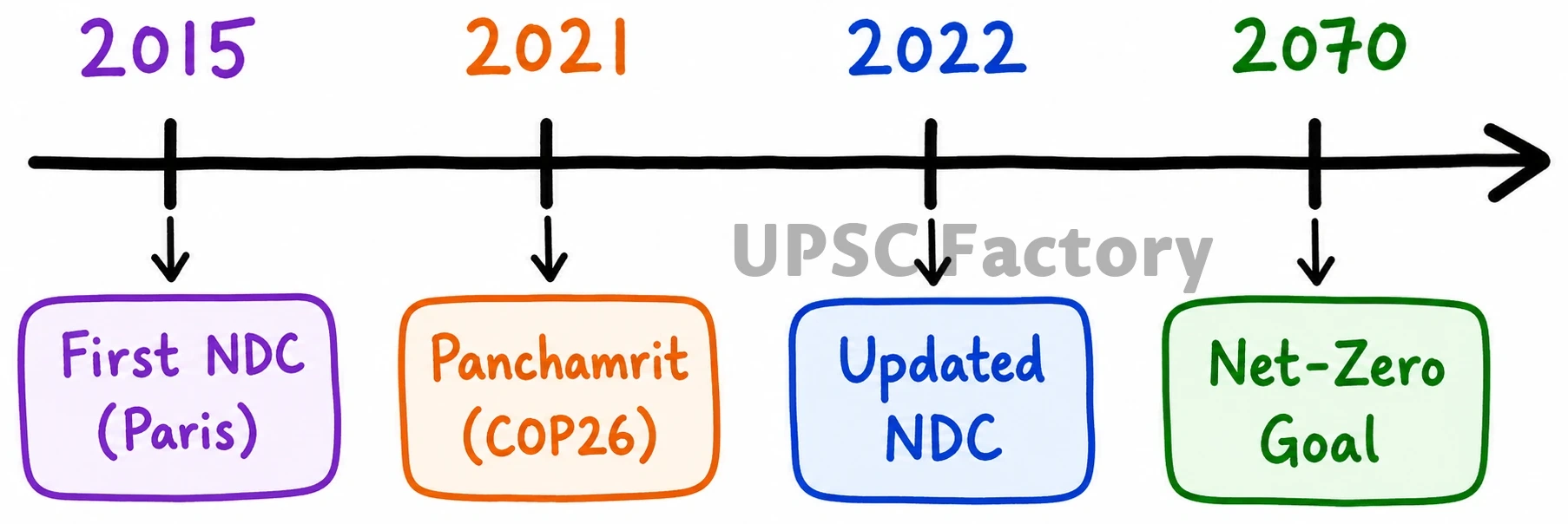
India’s original Intended Nationally Determined Contribution (INDC) under the Paris Agreement established three quantifiable targets for 2030:

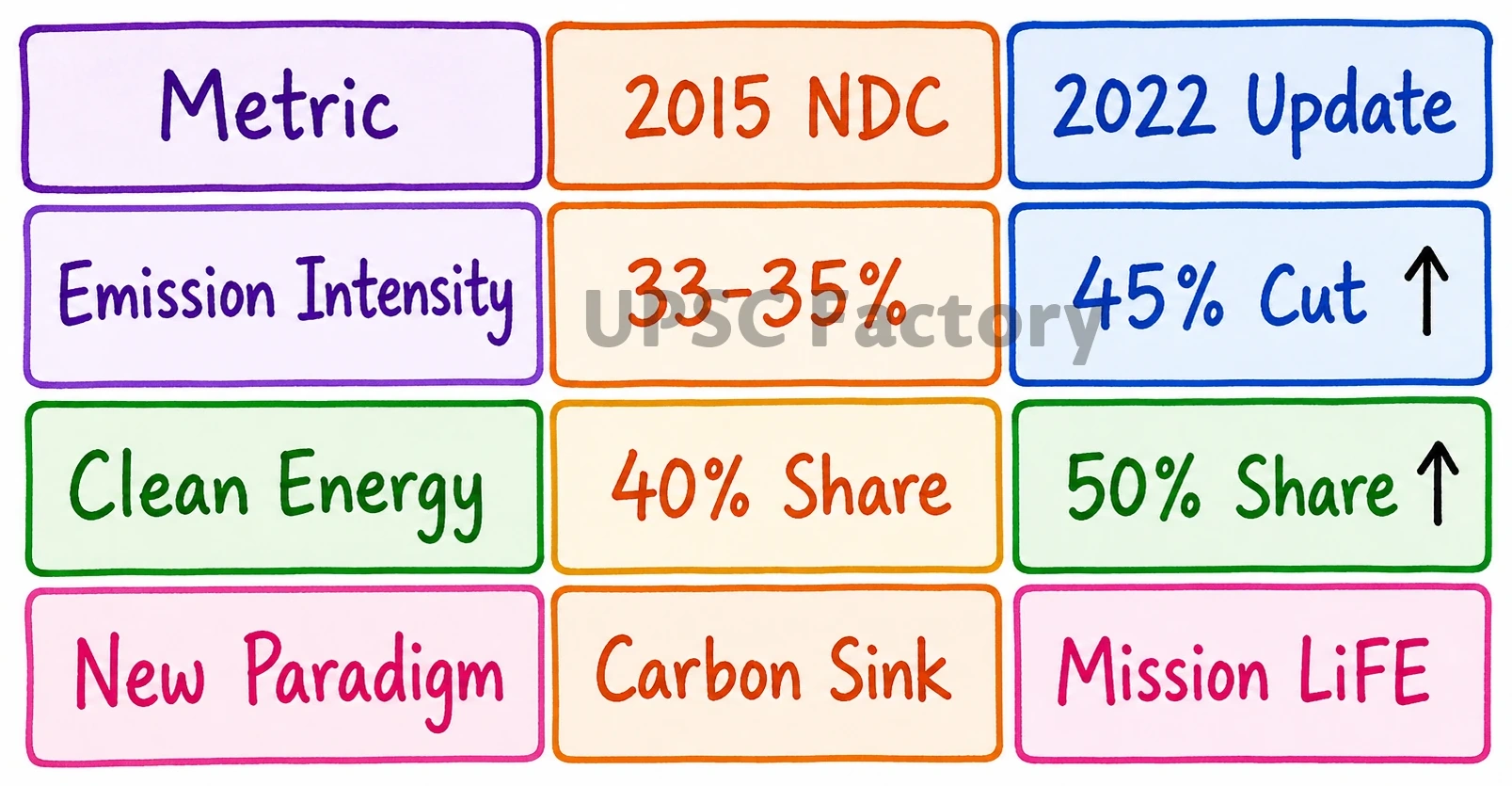
• Emissions Intensity Reduction: Committed to reduce emissions intensity of GDP by 33-35% from 2005 levels, decoupling economic growth from carbon emissions through initiatives like PAT scheme, LED distribution.

• Clean Energy Transition: Targeted 40% cumulative electric power capacity from non-fossil fuel sources, accelerating renewable deployment through National Solar Mission, wind energy programs.

• Natural Carbon Sink: Pledged to create additional carbon sink of 2.5-3 billion tonnes CO2 equivalent through enhanced forest cover via Green India Mission, compensatory afforestation.

COP26 Glasgow (2021) – Panchamrit Pledges

Prime Minister Modi’s “Panchamrit” announcement marked a transformative leap in India’s climate ambition:

• Renewable Capacity: Increased non-fossil energy target to 500 GW by 2030, quintupling solar parks, offshore wind projects.

• Energy Mix: Committed 50% energy requirements from renewable sources, promoting rooftop solar, green hydrogen mission.

• Absolute Emissions: Pledged reducing one billion tonnes projected carbon emissions by 2030, emphasizing energy efficiency, electric mobility.

• Enhanced Intensity Target: Raised carbon intensity reduction to 45% from earlier 33-35%, strengthening industrial decarbonization.

• Long-term Vision: Announced Net-Zero by 2070, aligning with global temperature goals.

Updated NDC (August 2022) – Formalized Ambitions

India’s revised NDC formally incorporated key Panchamrit commitments while introducing innovative approaches. The emissions intensity reduction target was officially enhanced to 45%, while non-fossil fuel power capacity goal increased to 50%. Significantly, it introduced ‘LIFE’ (Lifestyle for Environment) movement, promoting sustainable consumption patterns through behavioral change campaigns, circular economy principles.

Conclusion:
India’s evolving climate commitments demonstrate responsible leadership, balancing ambitious mitigation with equitable development while championing climate justice.

Q. Write a review on India’s climate commitments under the Paris Agreement (2015) and mention how these have been further strengthened in COP26 (2021). In this direction, how has the first Nationally Determined Contribution intended by India been updated in 2022? Read More »

Q. Mineral resources are fundamental to the country’s economy and these are exploited by mining. Why is mining considered an environmental hazard? Explain the remedial measures required to reduce the environmental hazard due to mining.

Q. Mineral resources are fundamental to the country’s economy and these are exploited by mining. Why is mining considered an environmental hazard? Explain the remedial measures required to reduce the environmental hazard due to mining.

UPSC Mains 2025 GS3 Paper

Model Answer:

Mining and Environmental Hazards: Challenges and Solutions

Mining contributes significantly to India’s economy, producing 95 minerals and supporting industrial growth. However, its extractive nature poses severe environmental challenges that demand urgent attention and comprehensive remedial measures.

Why Mining is an Environmental Hazard

Mining operations fundamentally disrupt ecological balance through multiple pathways:

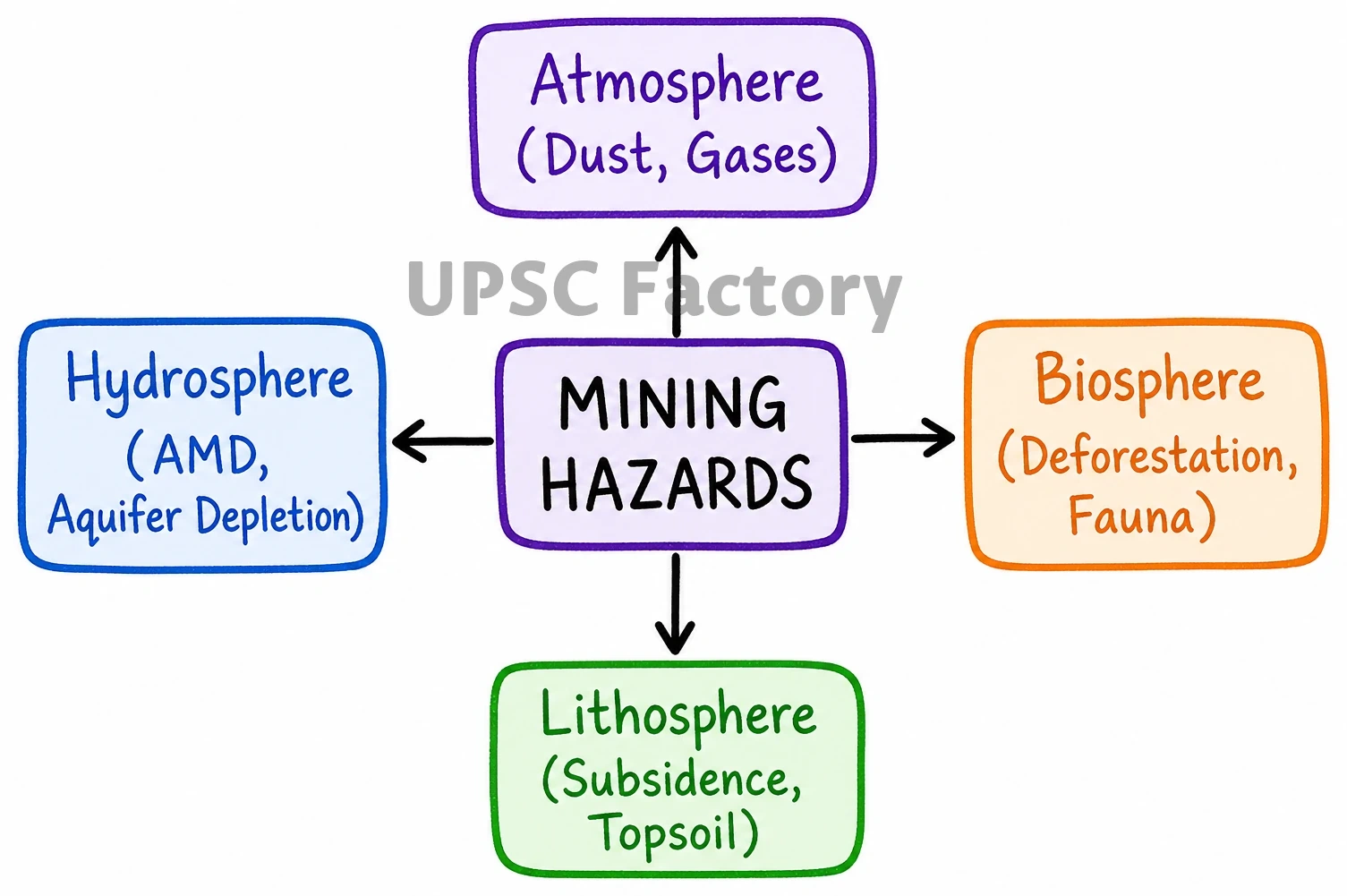
Land and Forest Degradation: Open-cast mining necessitates clearing vast forest areas, with coal mining alone diverting over 1.3 lakh hectares of forest land since 1980. This causes irreversible damage through topsoil removal, habitat destruction, and potential desertification (Jharia coalfields degradation).

Water Contamination: Mining activities generate Acid Mine Drainage (AMD), contaminating water bodies with heavy metals like arsenic, lead, and mercury. Untreated wastewater discharge further pollutes rivers and groundwater, rendering them unfit for consumption (Jaduguda uranium mining).

Air Quality Deterioration: Mineral extraction releases suspended particulate matter, sulfur dioxide, and methane, causing respiratory ailments in nearby communities and contributing to climate change (Rajasthan stone quarrying).

Biodiversity Loss: Endemic species face extinction due to habitat destruction and ecosystem disruption (Western Ghats mining impact).

Remedial Measures Required

Regulatory Framework:
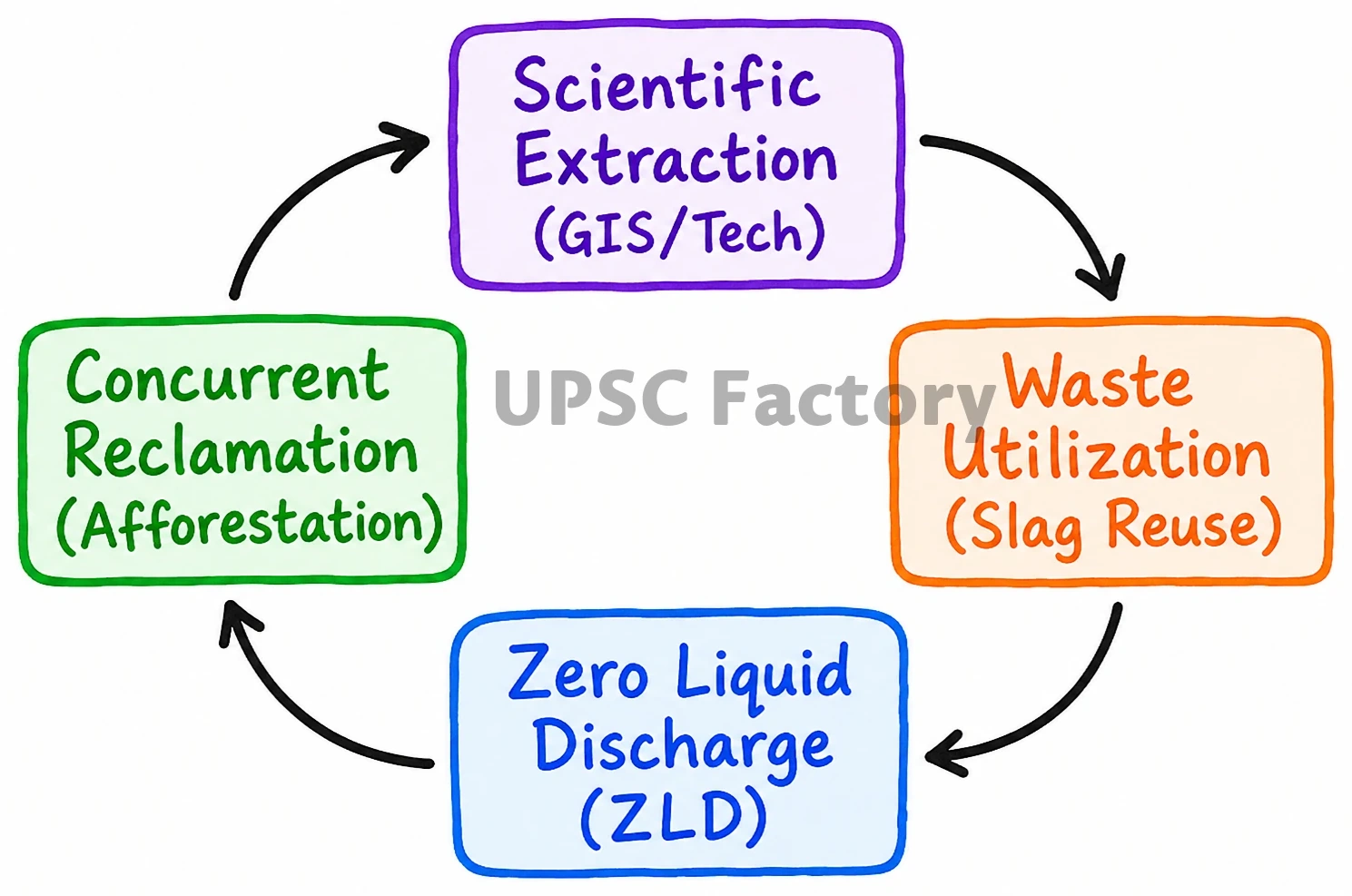
• Strict enforcement of environmental laws including Environment Protection Act, 1986, and Forest Conservation Act, 1980, with transparent implementation mechanisms
• Mandatory comprehensive Environmental Impact Assessment (EIA) for all projects before approval
• Compulsory mine closure plans with detailed reclamation strategies following “polluter pays” principle
• Implementation of National Mineral Policy 2019 and District Mineral Foundations for community benefit

Technological Solutions:
• Adoption of eco-friendly technologies like controlled blasting, in-situ leaching, and bio-mining to minimize surface impact
• Water recycling systems and effluent treatment plants for contaminated water management
• Phytoremediation using specific plants to absorb heavy metals from soil
• Scientific waste disposal and conversion of mine tailings into useful materials

Community Participation:
• Stakeholder consultation from planning to implementation stages
• Alternative livelihood programs and skill development for displaced populations
• Healthcare facilities and occupational safety standards for workers

Conclusion: Sustainable mining through technology, regulation, and community participation can balance economic development with environmental protection.

Q. Mineral resources are fundamental to the country’s economy and these are exploited by mining. Why is mining considered an environmental hazard? Explain the remedial measures required to reduce the environmental hazard due to mining. Read More »

Q. India aims to become a semiconductor manufacturing hub. What are the challenges faced by the semiconductor industry in India? Mention the salient features of the India Semiconductor Mission.

Q. India aims to become a semiconductor manufacturing hub. What are the challenges faced by the semiconductor industry in India? Mention the salient features of the India Semiconductor Mission.

UPSC Mains 2025 GS3 Paper

Model Answer:

India’s Semiconductor Manufacturing Ambitions

India, currently import-dependent for semiconductors worth $24 billion annually, aims to establish itself as a global manufacturing hub. Semiconductors, foundational to modern electronics, are crucial for economic growth and national security. This strategic push towards technological self-reliance faces significant challenges but is supported by comprehensive government initiatives.

Challenges Faced by the Semiconductor Industry in India:

The semiconductor ecosystem development encounters multifaceted obstacles:

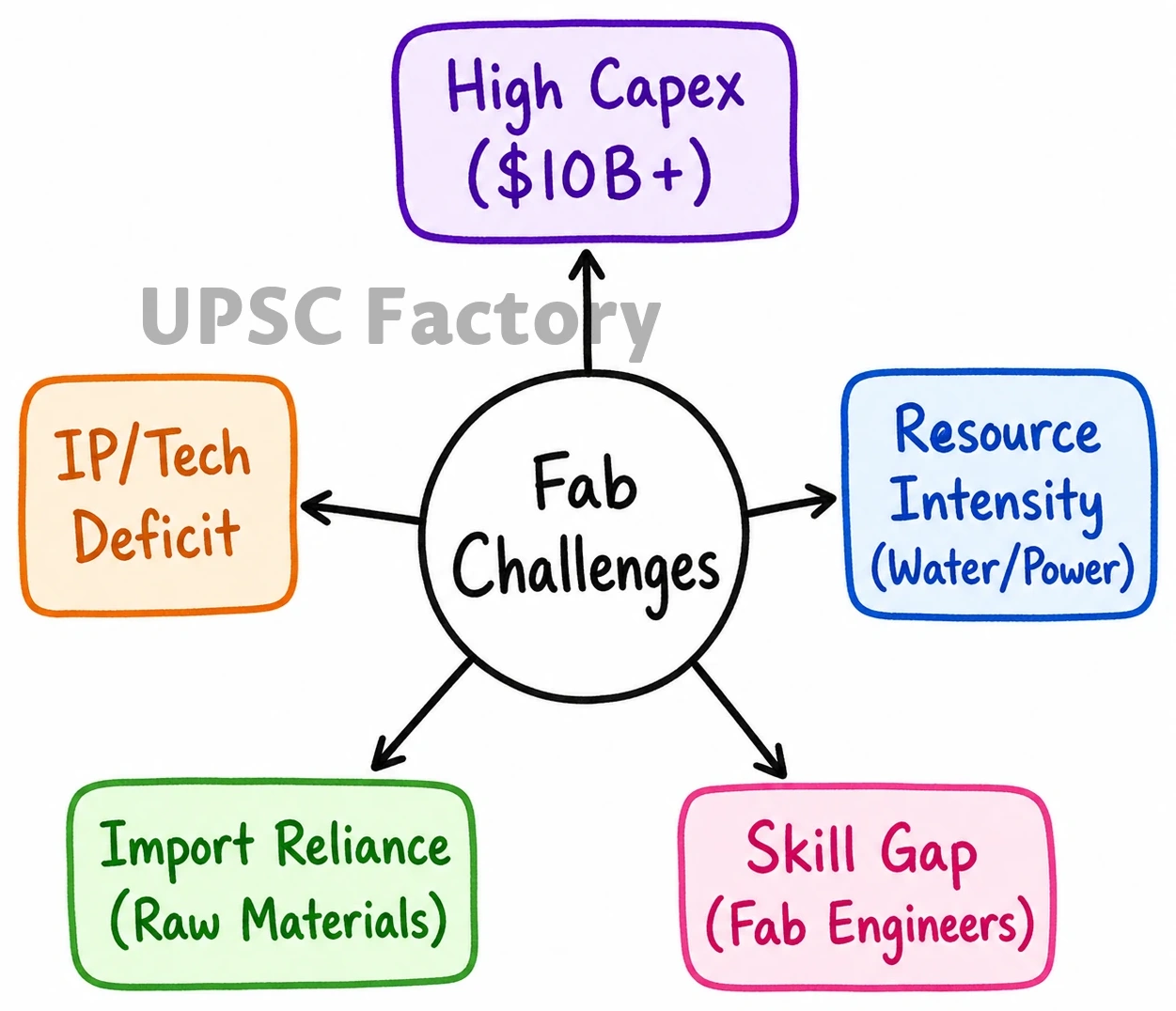
• Capital and Infrastructure Barriers:
– Massive investment requirements of $5-7 billion per fab with long gestation periods
– Inadequate 24/7 ultra-pure water supply and stable power infrastructure
– Example: Frequent power disruptions

• Ecosystem Deficiencies:
– Absence of domestic supply chain for silicon wafers, specialty chemicals, and gases
– Limited R&D ecosystem with dependency on foreign firms for critical IP
– Nascent industry-academia linkages hindering innovation
– Example: Import-dependent raw materials

• Human Resource Constraints:
– Projected shortfall of 250,000-300,000 skilled professionals by 2027
– Expertise gap in fabrication and advanced packaging despite strong design capabilities
– Example: Brain-drain to Taiwan

• Market Competition:
– Established players like Taiwan, South Korea dominating with decades-old mature ecosystems
– Bureaucratic hurdles causing implementation delays

Salient Features of India Semiconductor Mission (ISM):

Launched in 2021 with ₹76,000 crore outlay, ISM operates under Digital India Corporation as specialized division addressing these challenges through:

• Financial Architecture:
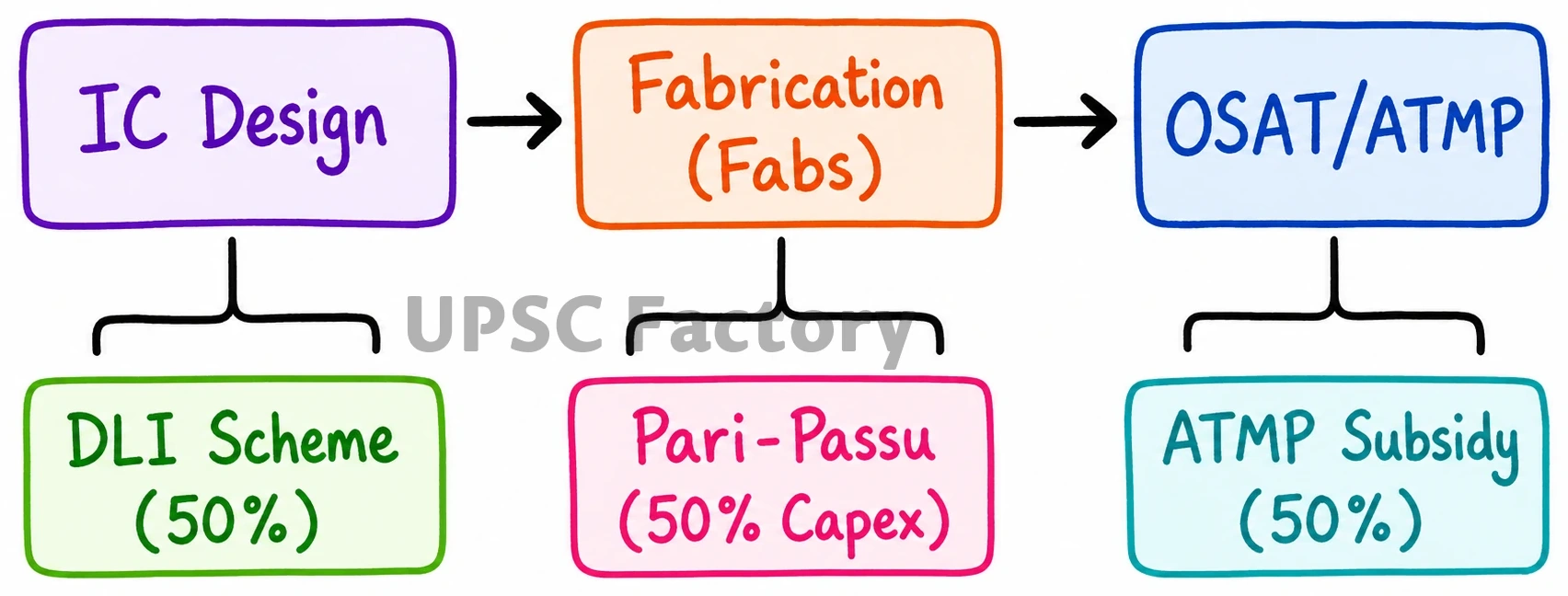
– 50% project cost support for semiconductor and display fabs
– 50% capital expenditure support for Compound Semiconductors, Silicon Photonics, ATMP/OSAT facilities
– Design Linked Incentive targeting 20 companies (₹1500 crore turnover goal)

• Ecosystem Development:
– Semiconductor Laboratory Mohali modernization for R&D strengthening
– “Semicon India Future Skills” program training 85,000 engineers/technicians
– Single-window clearance through nodal agency
– Example: Micron’s Gujarat facility

• Strategic Initiatives:
– Global partnerships for technology transfer
– Resilient supply chain development
– Support for domestic startups and MSMEs

Conclusion:
ISM’s comprehensive approach positions India strategically in global semiconductor value chains, advancing Atmanirbhar Bharat vision effectively.

Q. India aims to become a semiconductor manufacturing hub. What are the challenges faced by the semiconductor industry in India? Mention the salient features of the India Semiconductor Mission. Read More »

Q. How does nanotechnology offer significant advancements in the field of agriculture? How can this technology help to uplift the socio-economic status of farmers?

Q. How does nanotechnology offer significant advancements in the field of agriculture? How can this technology help to uplift the socio-economic status of farmers?

UPSC Mains 2025 GS3 Paper

Model Answer:

Nanotechnology in Agriculture: Advancements and Socio-Economic Impact

Nanotechnology, involving manipulation of materials at 1-100 nanometer scale, is revolutionizing agriculture through precision interventions across the entire crop lifecycle, offering transformative solutions for productivity and sustainability.

Significant Advancements in Agriculture

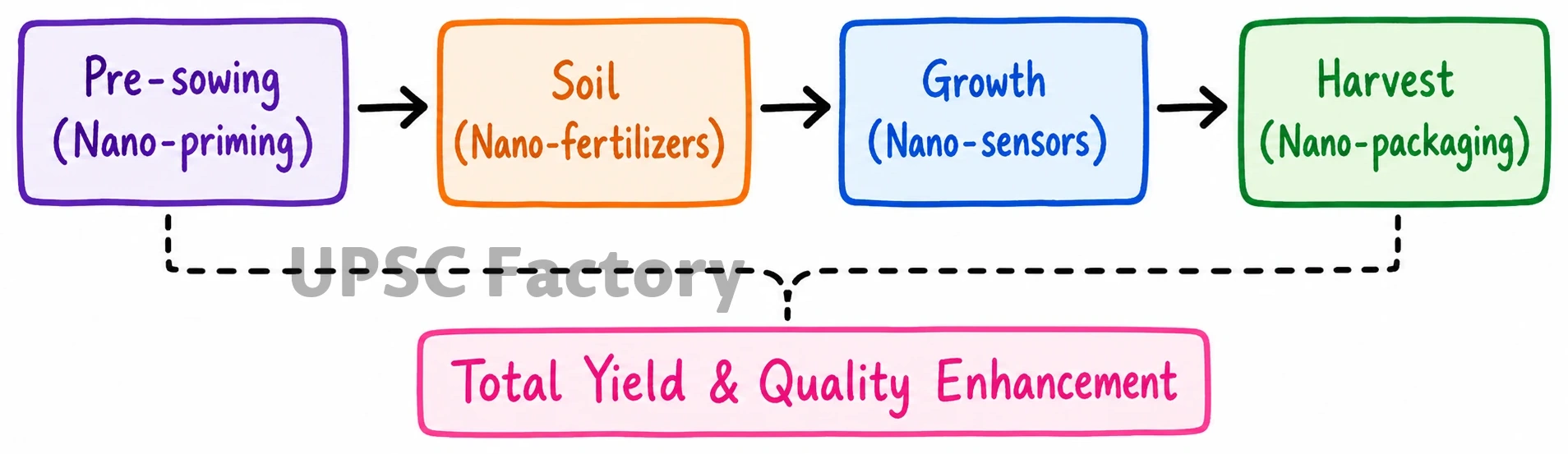
Enhanced Production Systems:
• Nano-fertilizers: Achieve 90-100% nutrient utilization efficiency compared to 30-40% in conventional fertilizers, drastically reducing input requirements while improving yields
• Seed Enhancement: Carbon nanotube coatings boost germination rates; nano-polymeric coatings ensure optimal sprouting conditions (example: nano-primed cotton seeds)
• Controlled Release: High surface-to-volume ratio enables targeted nutrient delivery, minimizing losses through leaching and volatilization

Precision Management Technologies:
• Smart Pest Control: Encapsulated nano-pesticides enable controlled, targeted release, reducing chemical usage by 40-50% (example: IFFCO nano-urea)
• Early Detection Systems: Nanosensors detect pathogens and nutrient deficiencies at molecular levels before visible symptoms appear
• Water Conservation: Nano-zeolites improve soil water retention by 30-40%, crucial for drought-prone areas (example: nano-clay applications)
• Real-time Monitoring: ‘Smart dust’ sensor networks track soil moisture, temperature, nutrients, enabling automated precision farming
• Soil Remediation: Iron nanoparticles effectively remove heavy metals and pesticide residues from contaminated soils

Post-Harvest Innovations:
• Smart Packaging: Nano-coatings extend shelf life by 2-3 times; embedded nanosensors indicate food freshness
• Loss Reduction: Technology reduces post-harvest losses from current 20-25% to below 10%
• Food Safety: Nanosensors detect contaminants with high sensitivity, ensuring quality standards

Socio-Economic Upliftment of Farmers

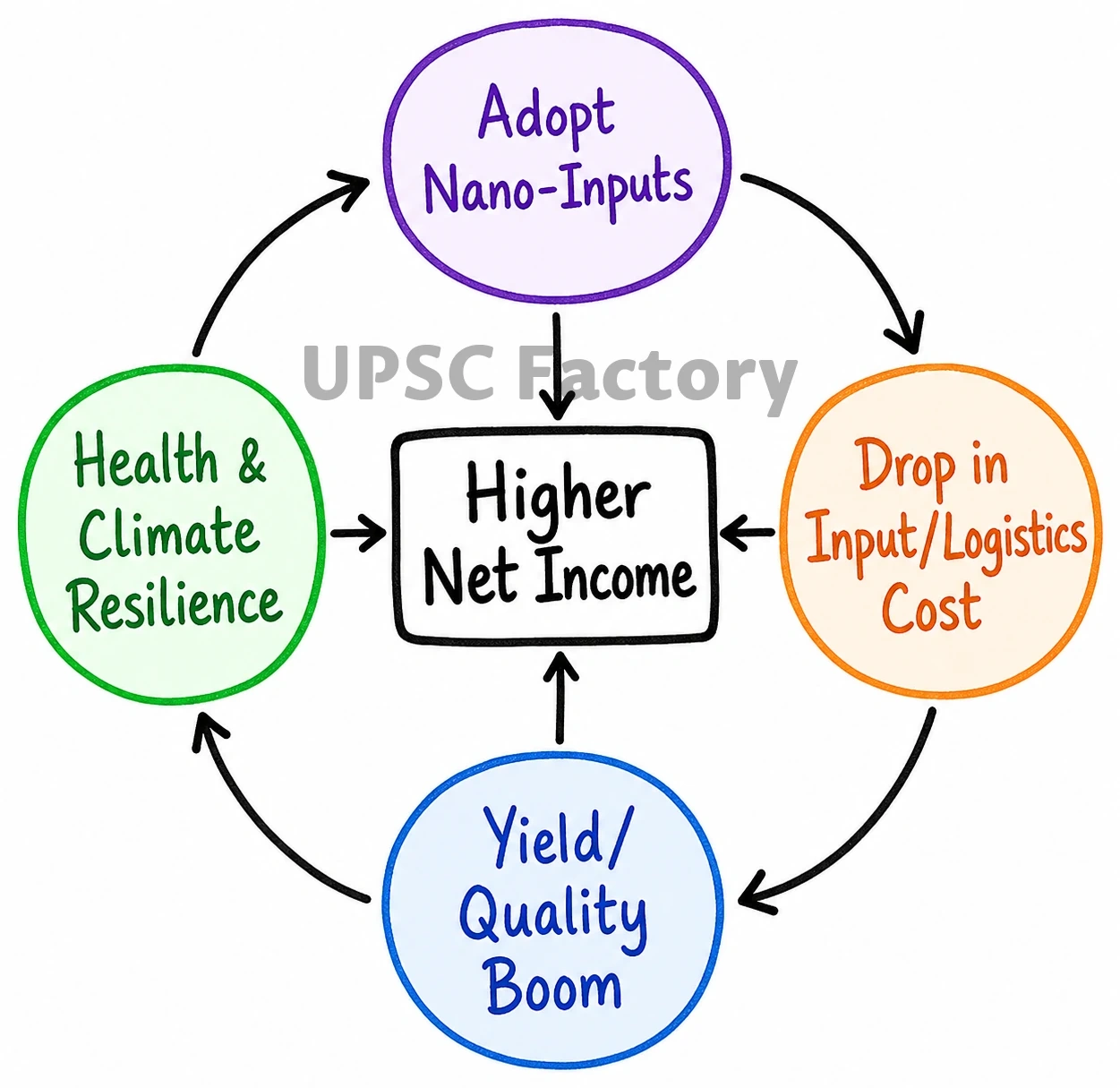
Economic Benefits:
• Cost Reduction: Saves ₹3000-5000 per hectare through efficient input use
• Yield Enhancement: 20-30% productivity improvement directly increases farm income
• Premium Markets: Smart packaging enables export access, fetching 15-20% higher prices (example: nano-packed mangoes)
• Reduced Wastage: Lower post-harvest losses mean more marketable produce

Social Impact:
• Health Protection: Reduced chemical exposure minimizes occupational health hazards
• Employment Generation: Nano-input manufacturing creates rural job opportunities
• Knowledge Empowerment: Technology adoption enhances farmers’ technical capabilities
• Sustainable Livelihoods: Soil fertility preservation ensures intergenerational farming viability
• Cooperative Benefits: Shared nanosensor networks particularly help small farmers

Challenges and Way Forward

• Implementation Hurdles: High initial costs, knowledge gaps, regulatory framework absence
• Government Initiatives: Nano-Mission, demonstration projects, farmer training programs essential
• Partnership Models: Public-private collaboration for subsidized nano-inputs and technology transfer

Conclusion:
Nanotechnology can double farmers’ income while ensuring food security through sustainable agricultural intensification.

Q. How does nanotechnology offer significant advancements in the field of agriculture? How can this technology help to uplift the socio-economic status of farmers? Read More »

Q. Examine the scope of the food processing industries in India. Elaborate the measures taken by the government in the food processing industries for generating employment opportunities.

Q. Examine the scope of the food processing industries in India. Elaborate the measures taken by the government in the food processing industries for generating employment opportunities.

UPSC Mains 2025 GS3 Paper

Model Answer:

Food Processing Industries in India: Scope and Employment Generation

India’s food processing industry, recognized as a “sunrise sector,” bridges agriculture and manufacturing, contributing 32% to the country’s total food market while offering immense potential for employment generation and farmer income enhancement.

Scope of Food Processing Industries

India’s strong agricultural foundation provides unparalleled opportunities for food processing expansion. The country ranks first globally in milk, pulses, and mango production, and second in rice, wheat, fruits, and vegetables production.

Economic Significance and Growth Potential:
• The industry contributes approximately 32% of India’s food market and ranks fifth globally in production, consumption, and exports
• Growing at 8.3% annually, the sector is projected to reach USD 535 billion by 2025-26
• Despite abundant raw materials, only 10% of produce is processed compared to USA (65-70%) and China (40%), indicating vast untapped potential
• Post-harvest losses remain high at 15-20% for fruits and vegetables, necessitating enhanced processing infrastructure

Rising disposable incomes, urbanization, changing lifestyles, and the exponential growth of online food delivery are driving demand for processed foods. The sector’s export potential continues expanding with growing global demand for Indian cuisine.

Government Measures for Employment Generation

The government has launched comprehensive schemes targeting infrastructure development and formalization of the unorganized sector:

Key Initiatives:
• Pradhan Mantri Kisan SAMPADA Yojana – Created employment for 7.6 lakh people while supporting 53 lakh farmers through Mega Food Parks, cold chain infrastructure, and value addition facilities
• PMFME Scheme – Sanctioned 1.41 lakh loans supporting 3.3 lakh SHG members, focusing on micro-enterprises (like pickle units, bakeries)
• PLI Scheme – With ₹10,900 crore outlay, expected to generate 2.5 lakh jobs by 2026-27 while creating global champions
• Financial Support – Priority Sector Lending status and 100% FDI through automatic route facilitate investment and job creation

These measures address critical gaps in infrastructure, credit access, and skill development, particularly benefiting rural areas where most processing units operate.

Conclusion:
Food processing industry’s multiplier effect on employment, farmer incomes, and export earnings makes it crucial for India’s economic transformation.

Q. Examine the scope of the food processing industries in India. Elaborate the measures taken by the government in the food processing industries for generating employment opportunities. Read More »

Q. Examine the factors responsible for depleting groundwater in India. What are the steps taken by the government to mitigate such depletion of groundwater?

Q. Examine the factors responsible for depleting groundwater in India. What are the steps taken by the government to mitigate such depletion of groundwater?

UPSC Mains 2025 GS3 Paper

Model Answer:

Groundwater Depletion in India: Causes and Government Response

India, the world’s largest groundwater user extracting ~250 cubic km annually, faces a critical water crisis with groundwater levels declining at 0.3-0.7 meters yearly, threatening water security for millions.

Factors Responsible for Depletion:

Agricultural Over-extraction (89% of total usage):
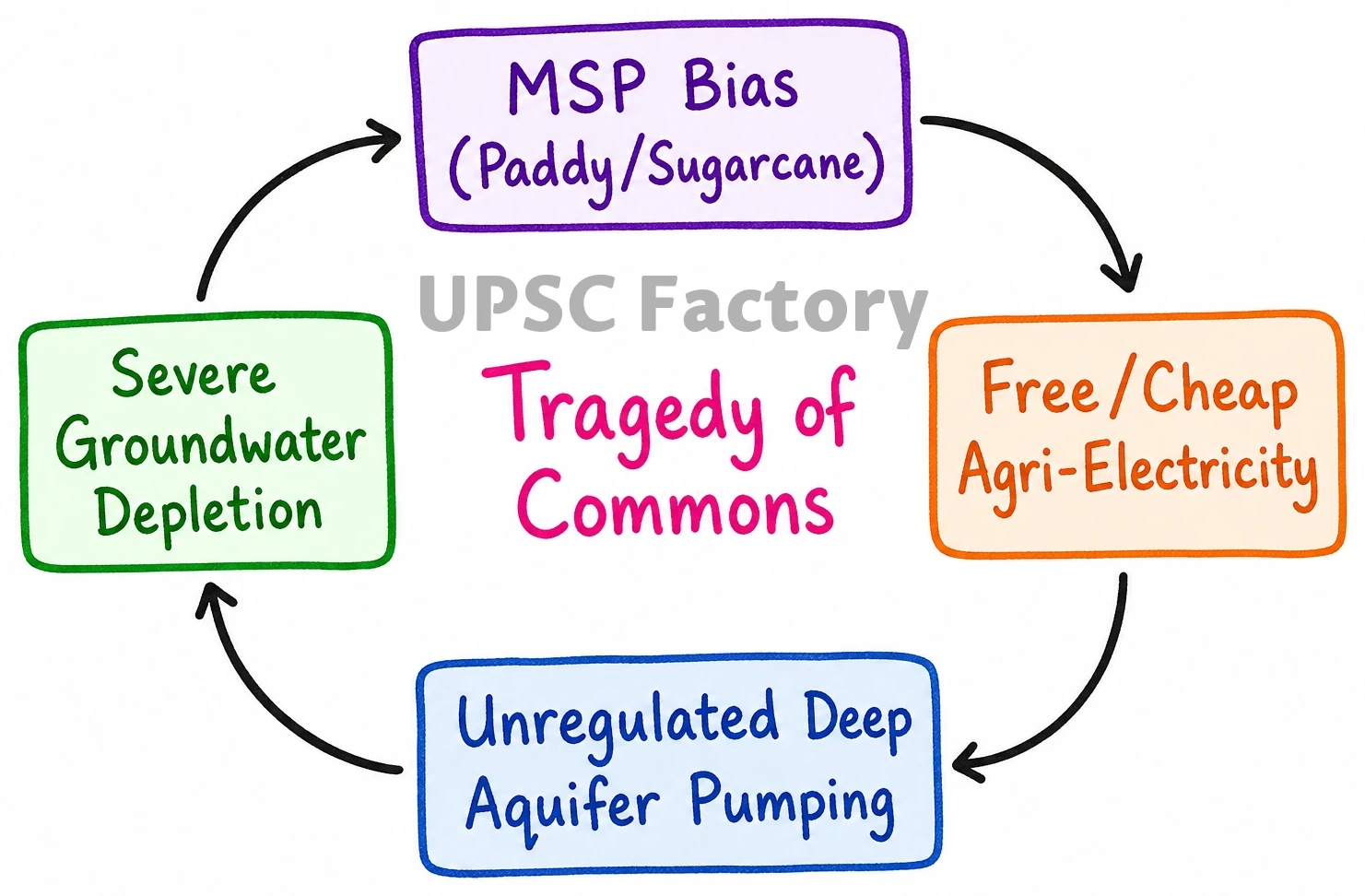
• Green Revolution’s legacy of water-intensive crops continues with paddy cultivation in Punjab-Haryana witnessing 0.7-1.2m annual decline
• Free/subsidized electricity enables excessive pumping, making over-extraction economically viable (Punjab’s free power policy)
• MSP-driven cropping patterns ignore regional water availability (sugarcane in Maharashtra)

Urban-Industrial Pressures:
The rapid urbanization has intensified groundwater dependency with Delhi’s water table plummeting 24 meters (2011-2020). Industrial growth coupled with inadequate piped water supply forces cities to rely heavily on groundwater. Concretization reduces natural recharge areas while industrial effluents contaminate aquifers.

Structural-Climate Factors:
• Weak regulatory framework treats groundwater as private property linked to land ownership
• Climate change brings erratic monsoons affecting natural aquifer recharge
• Rising temperatures increase evaporation rates, stressing water availability further

Government Mitigation Measures:

Major Schemes Launched:
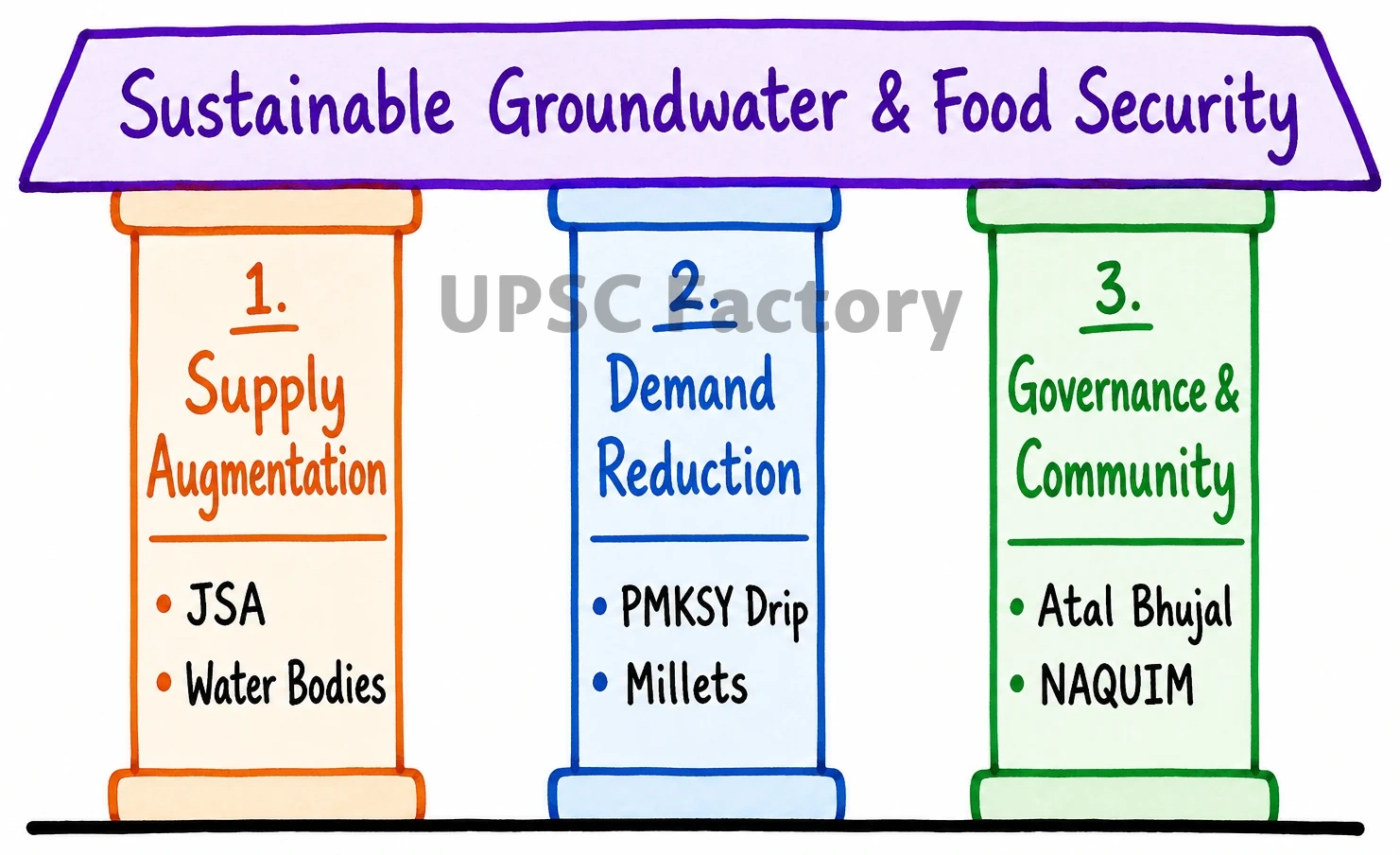
• Atal Bhujal Yojana – World Bank-supported community participation program in seven water-stressed states focusing on demand-side management
• Jal Shakti Abhiyan (2019) – Targets 256 water-stressed districts through rainwater harvesting and water body renovation
• NAQUI – Scientific aquifer mapping by CGWB for area-specific management plans
• PM Krishi Sinchayee Yojana – “Per Drop More Crop” promoting micro-irrigation (drip/sprinkler systems)

Regulatory-Conservation Initiatives:
The Central Ground Water Authority regulates extraction while the Model Groundwater Bill (2017) enables state-level legislation. MGNREGA convergence creates water harvesting structures (check dams, percolation tanks). The Amrit Sarovar Mission targets rejuvenating 75 water bodies per district.

Conclusion:
Success requires integrating traditional wisdom with modern technology, rationalizing subsidies, and strengthening community-led water governance for sustainability.

Q. Examine the factors responsible for depleting groundwater in India. What are the steps taken by the government to mitigate such depletion of groundwater? Read More »

Q. Discuss the rationale of the Production Linked Incentive (PLI) scheme. What are its achievements? In what way can the functioning and outcomes of the scheme be improved?

Q. Discuss the rationale of the Production Linked Incentive (PLI) scheme. What are its achievements? In what way can the functioning and outcomes of the scheme be improved?

UPSC Mains 2025 GS3 Paper

Model Answer:

Production Linked Incentive (PLI) Scheme: Rationale, Achievements and Way Forward

The Production Linked Incentive (PLI) scheme, launched in 2020 under ‘Atmanirbhar Bharat’, provides performance-based incentives on incremental sales of domestically manufactured products across 14 strategic sectors with ₹1.97 lakh crore outlay.

Rationale of PLI Scheme

The scheme addresses critical economic imperatives through strategic interventions:

• Reduce import dependency: Curtail imports particularly in electronics and Active Pharmaceutical Ingredients (APIs) to strengthen economic resilience and reduce trade deficit.

• Boost manufacturing GDP contribution: Increase manufacturing sector’s share from stagnant 16-17% through targeted investments in high-potential sectors like automobiles, textiles, pharmaceuticals.

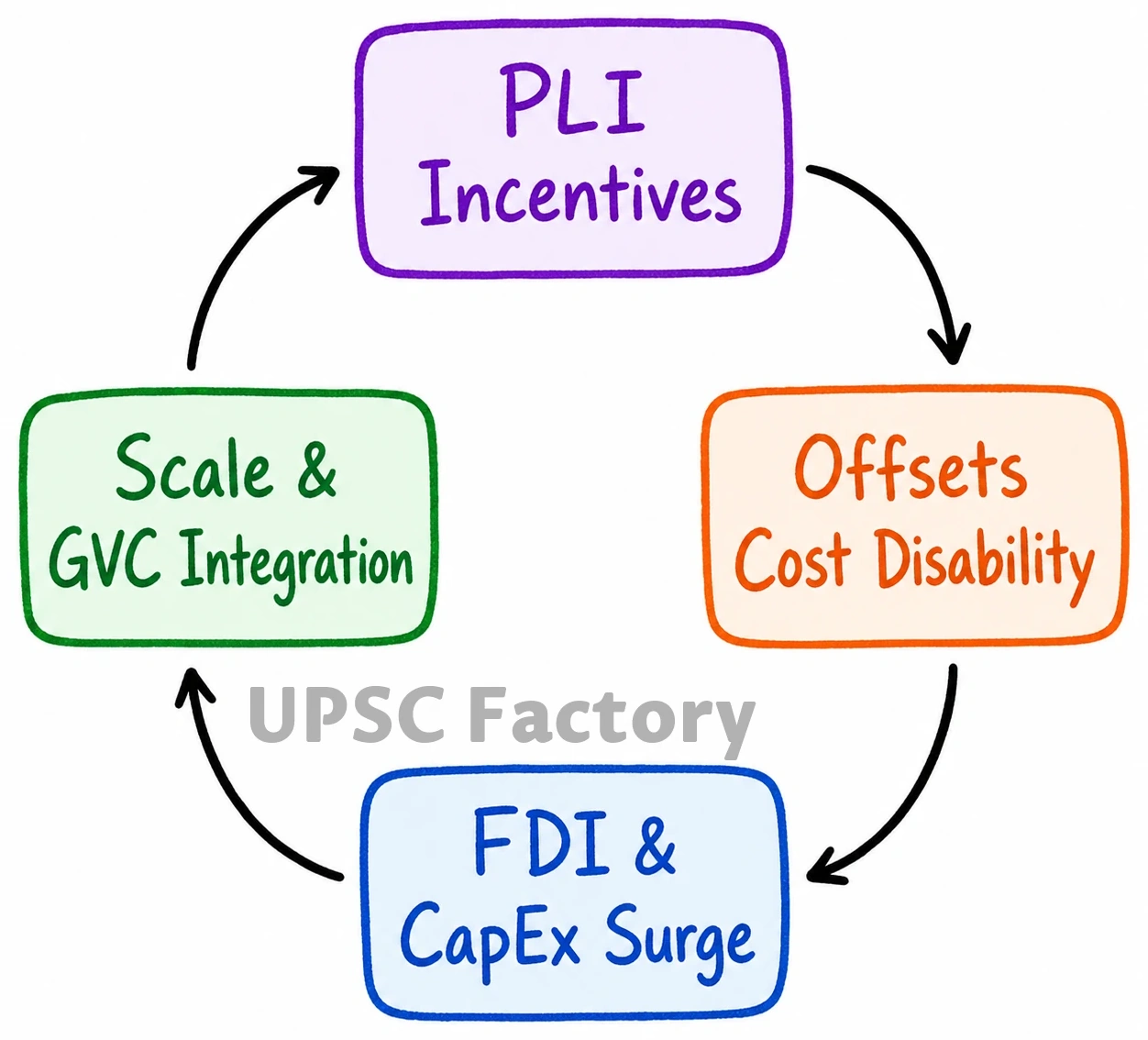
• Global value chain integration: Position India as alternative manufacturing hub leveraging “China Plus One” strategy adopted by multinational corporations post-pandemic.

• Employment generation: Create 60 lakh jobs addressing India’s demographic dividend through large-scale industrial expansion.

Key Achievements

The scheme has delivered impressive outcomes within a short span. It attracted actual investments of ₹1.46 lakh crore, generating production worth ₹12.50 lakh crore and creating 9.5 lakh employment opportunities. Exports surpassed ₹4 lakh crore, with electronics and pharmaceuticals leading growth.

Sector-specific successes include mobile phone manufacturing transformation (net importer to exporter), 60% import substitution in telecom equipment, and strengthened pharmaceutical production reducing API dependency. Global tech giants established 4G/5G manufacturing units, while drone manufacturing gained momentum.

Improvements Required

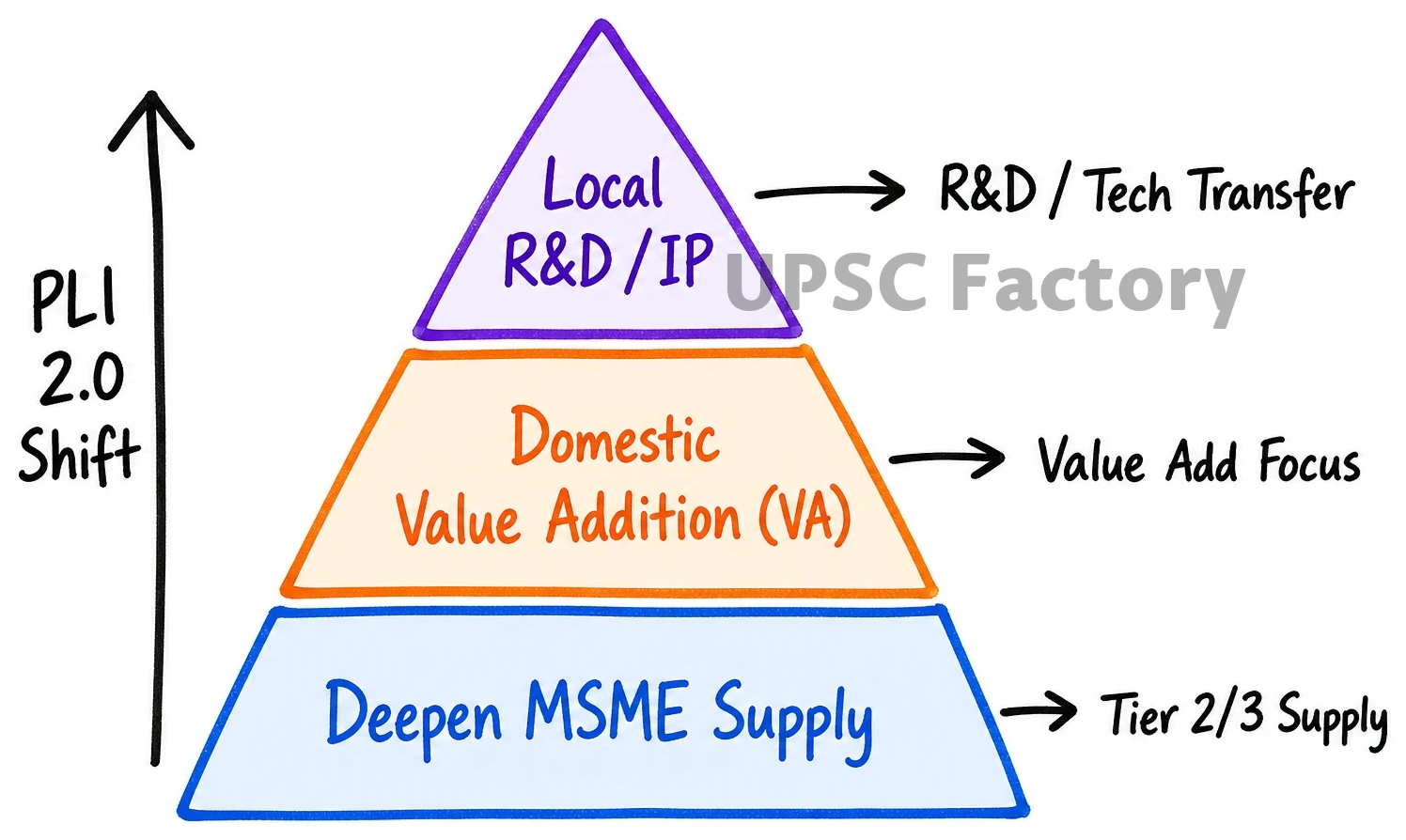
• Deepen value addition: Move beyond assembly to component manufacturing, reducing imported content especially in electronics sector.

• MSME integration: Simplify eligibility criteria and create dedicated provisions for small enterprises’ participation in global value chains.

• Innovation linkage: Link incentives to R&D investments and intellectual property creation rather than just production volume.

• Infrastructure strengthening: Develop robust logistics, power supply, and skill development programs aligned with manufacturing requirements.

• Streamline implementation: Simplify approval processes, ensure timely incentive disbursement, and address sectoral disparities through flexible structures.

Conclusion:

PLI scheme marks India’s strategic shift from protectionism to competitiveness, requiring continuous refinement for sustainable manufacturing transformation.

Q. Discuss the rationale of the Production Linked Incentive (PLI) scheme. What are its achievements? In what way can the functioning and outcomes of the scheme be improved? Read More »

Q. Explain how the Fiscal Health Index (FHI) can be used as a tool for assessing the fiscal performance of states in India. In what way would it encourage the states to adopt prudent and sustainable fiscal policies?

Q. Explain how the Fiscal Health Index (FHI) can be used as a tool for assessing the fiscal performance of states in India. In what way would it encourage the states to adopt prudent and sustainable fiscal policies?

UPSC Mains 2025 GS3 Paper

Model Answer:

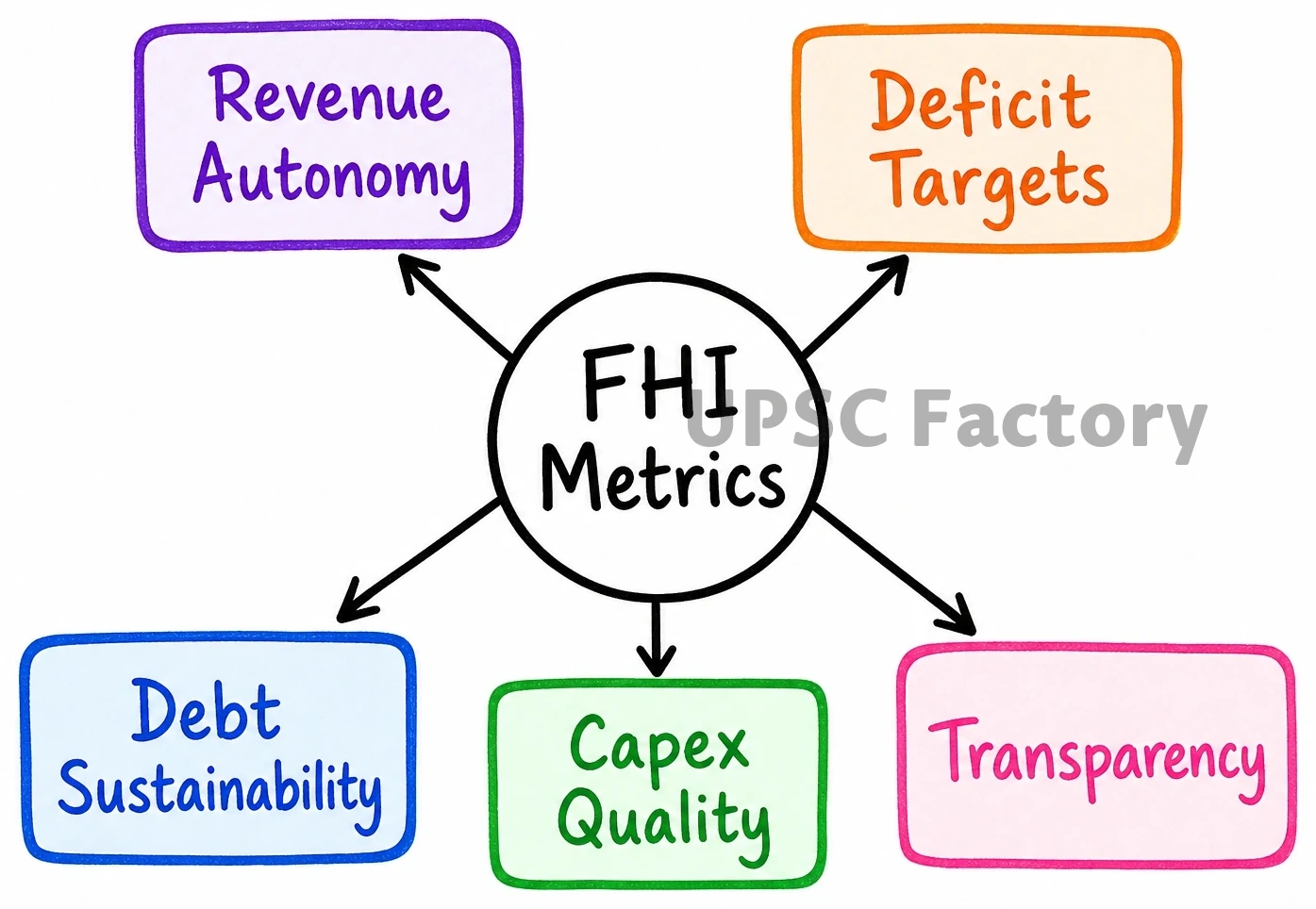
The Fiscal Health Index (FHI), developed by NITI Aayog, serves as a comprehensive multi-dimensional assessment tool that evaluates states’ fiscal performance beyond single-metric analysis like fiscal deficit alone. It provides a holistic evaluation framework through five critical sub-indices that capture the complete fiscal landscape of Indian states.

FHI as an Assessment Tool:

The index employs five key parameters for comprehensive evaluation:

• Quality of Expenditure: Assesses whether state spending prioritizes long-term growth through capital expenditure on infrastructure, health, and education versus non-developmental recurring items like subsidies and freebies. States like Odisha excel here.

• Revenue Mobilization: Measures states’ capacity to generate own revenue through taxes and non-tax sources, indicating self-sufficiency levels and reducing dependence on central transfers. Gujarat demonstrates strong performance.

• Fiscal Prudence: Evaluates deficit management (fiscal and revenue) against FRBM Act targets, ensuring states maintain discipline in borrowing and spending patterns.

• Debt Index: Tracks debt burden and servicing costs, measuring interest payments as share of revenue. Punjab faces challenges here.

• Debt Sustainability: Assesses whether economic growth sufficiently manages long-term debt obligations, crucial for states like Kerala requiring reforms.

Encouraging Prudent Fiscal Policies:

The FHI motivates states toward fiscal discipline through multiple mechanisms:

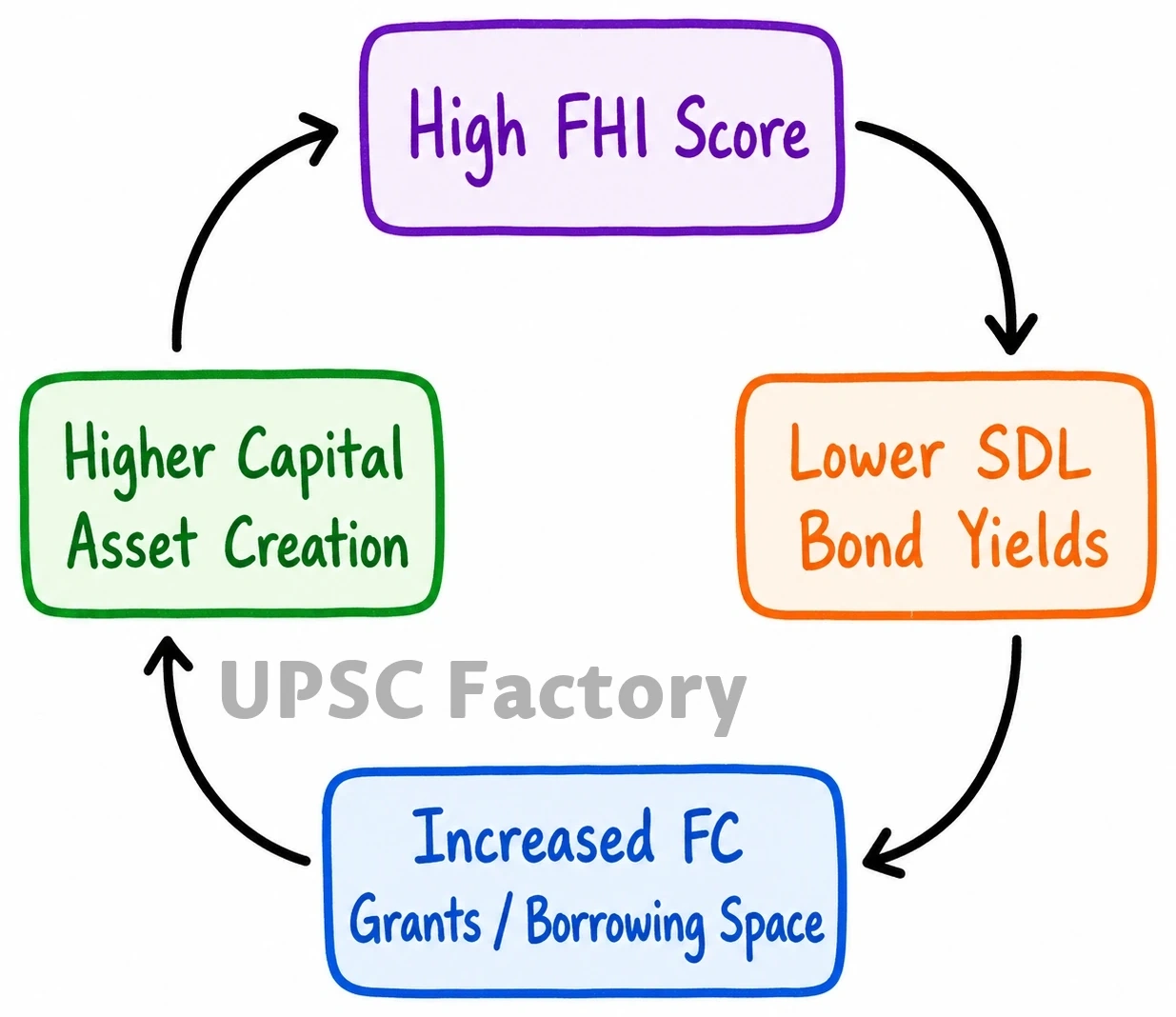
• Competitive Federalism: Creates healthy inter-state competition through rankings. Odisha’s 2025 top position sets benchmarks, motivating others to improve fiscal management for better reputation and investment attraction.

• Benchmarking and Peer Learning: Enables states to identify weaknesses and adopt best practices from high performers like Chhattisgarh, facilitating knowledge transfer across states.

• Policy Nudge: Highlights specific vulnerabilities requiring urgent action. Low scores in particular sub-indices signal immediate reform needs, prompting corrective measures.

• Transparency and Accountability: Makes fiscal data publicly comparable, holding governments responsible for financial decisions and reducing fiscal profligacy.

• Performance-Based Incentives: Informs Finance Commission recommendations for grants and transfers, rewarding states demonstrating fiscal discipline through improved rankings.

Conclusion: FHI transforms fiscal management from compliance to performance-oriented governance, balancing discipline with development imperatives effectively.

Q. Explain how the Fiscal Health Index (FHI) can be used as a tool for assessing the fiscal performance of states in India. In what way would it encourage the states to adopt prudent and sustainable fiscal policies? Read More »