Model Answer:
Food inflation, carrying a 39% weightage in the Consumer Price Index (CFPI), has remained stubbornly high, frequently breaching the RBI’s 4±2% flexible inflation targeting band.
1. Causes of Persistent High Food Inflation
- Climate Shocks: Erratic monsoons, El Niño, and unseasonal heatwaves severely disrupt agricultural yields (e.g., wheat, tomatoes).
- Cobweb Phenomenon: Cyclical supply gluts and shortages occur as farmers base current planting decisions on previous market prices (e.g., onions).
- Supply Chain Inefficiencies: High post-harvest losses, inadequate cold storage, and fragmented APMC mandis restrict seamless distribution.
- Input Cost Inflation: Global supply chain disruptions elevate the domestic costs of fertilizers, diesel, and livestock fodder.
- Structural Dietary Shifts: Agricultural supply struggles to match rising consumer demand for protein-rich diets (e.g., pulses, milk, meat).
2. Effectiveness of RBI’s Monetary Policy
- Inadequate Supply-Side Reach: Repo rate hikes successfully compress aggregate demand but cannot resolve structural supply shocks or weather-induced crop failures.
- Core vs. Headline Gap: RBI’s monetary tools effectively cool core inflation, yet headline inflation remains heavily skewed by volatile food prices.
- Anchoring Expectations: Despite limitations, RBI’s decisive rate tightening is highly effective in preventing food inflation from triggering generalized wage-price spirals (second-round effects).
- Fiscal Synergy Dependency: Monetary policy efficacy requires simultaneous government supply-side interventions (e.g., export curbs, Open Market Sales, Operation Greens).
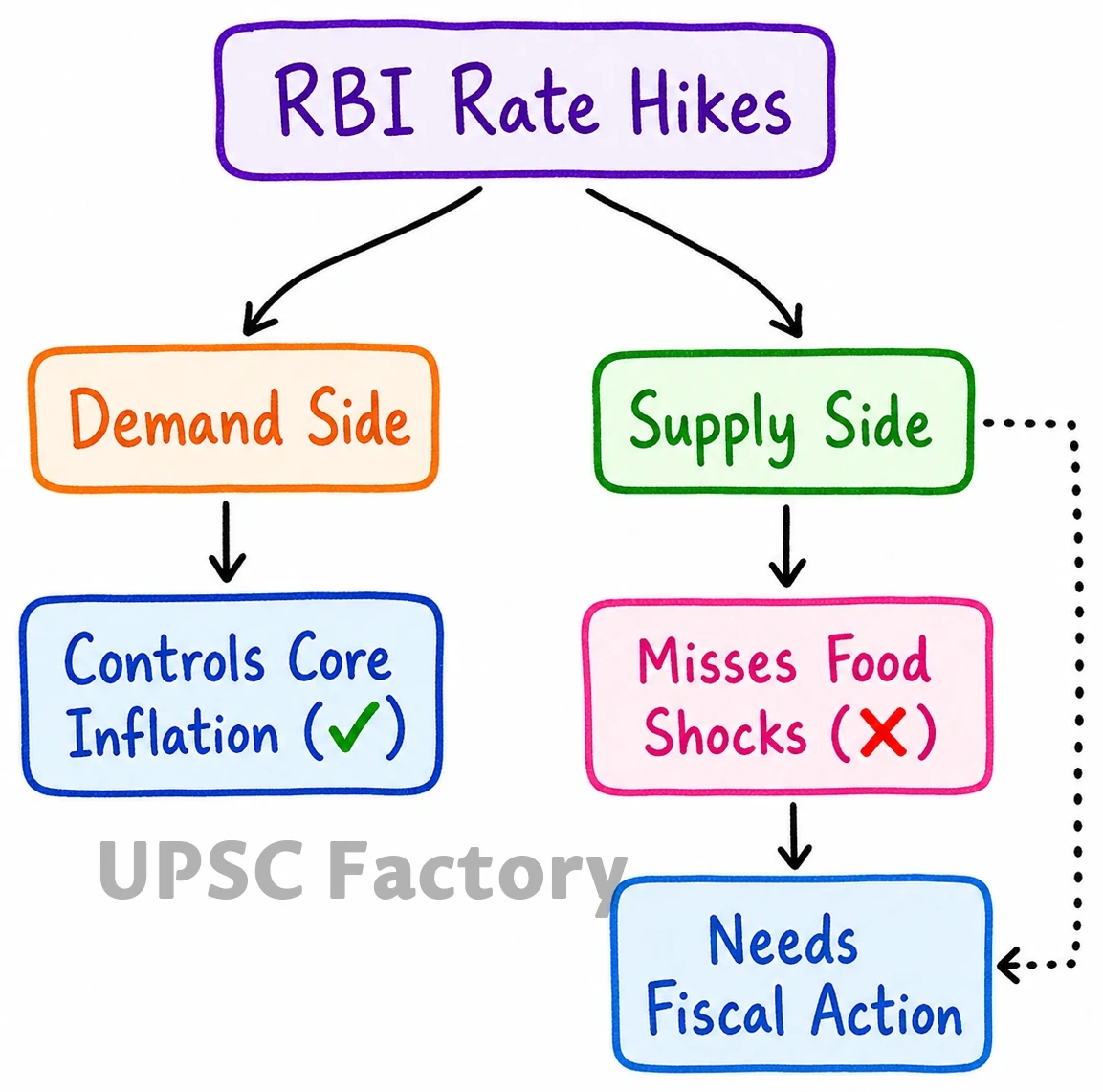
While the RBI effectively anchors general inflation expectations, sustainably taming persistent food inflation demands targeted structural reforms, specifically modernizing agri-logistics and adopting climate-resilient agriculture.