UPSC Mains 2024 GS3 Model Answer

Q. Explain how narco-terrorism has emerged as a serious threat across the country. Suggest suitable measures to counter narco-terrorism.

Q. Explain how narco-terrorism has emerged as a serious threat across the country. Suggest suitable measures to counter narco-terrorism.

UPSC Mains 2024 GS3 Paper

Model Answer:

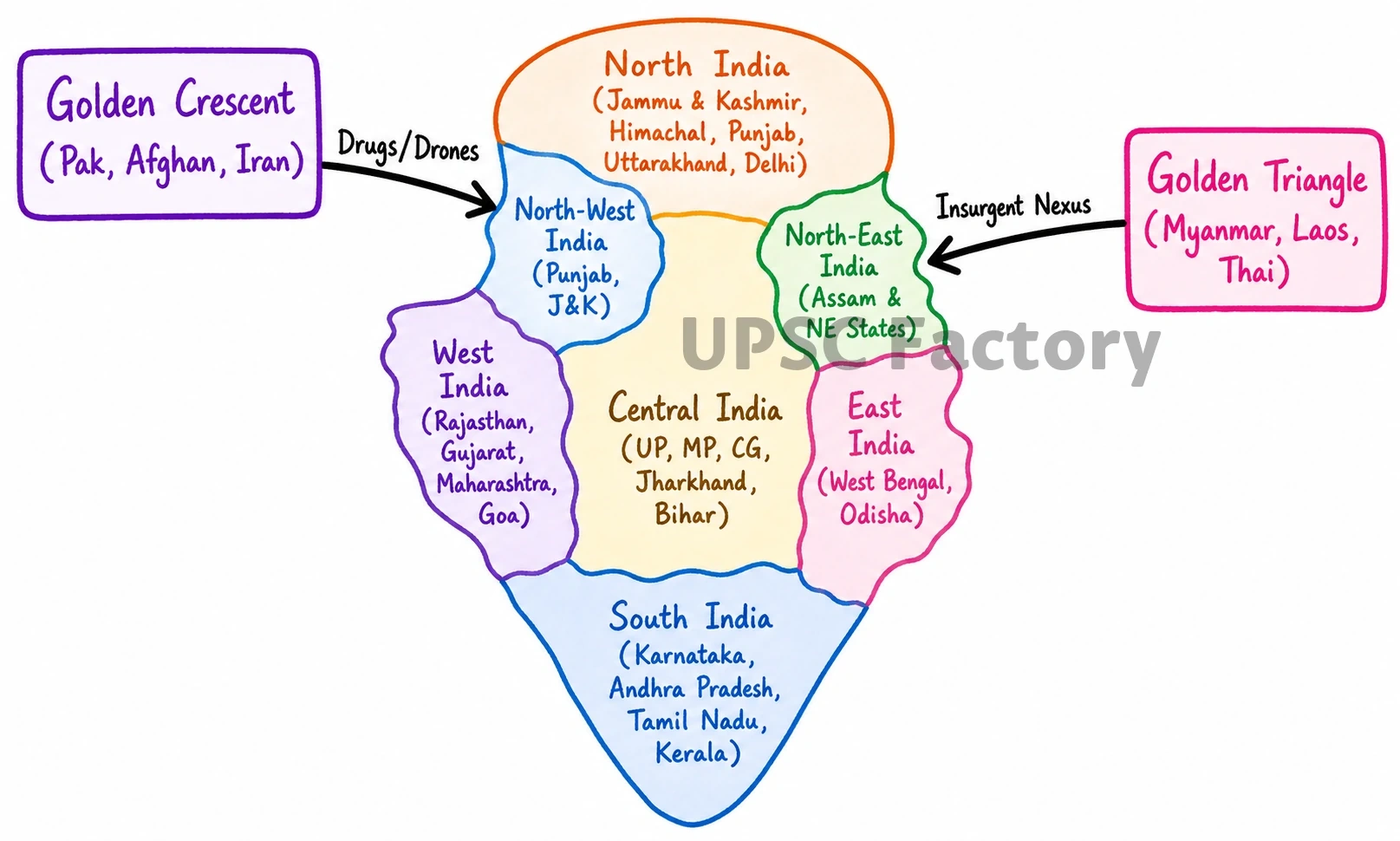
Narco-terrorism involves terrorist networks leveraging drug trafficking to fund operations. India’s proximity to the “Golden Crescent” and “Golden Triangle” severely exacerbates this pan-India security threat.
1. Emergence as a Serious Threat

  • Terror Financing: Cartels funnel illicit drug profits to procure arms, explosives, and sustain sleeper cells (e.g., Lashkar-e-Taiba, Hizbul Mujahideen).
  • Technological Penetration: Extremists increasingly leverage modern technology to bypass traditional border security (e.g., drone drug-droppings in Punjab and J&K).
  • Internal Destabilization: Drug syndicates form a symbiotic nexus with domestic insurgents to control trafficking routes (e.g., Northeast militant groups, Left-Wing Extremism).
  • Socio-Economic Sabotage: Widespread addiction erodes the demographic dividend, destabilizes local economies, and breeds organized urban crime (e.g., Punjab drug crisis).

2. Strategic Measures to Counter Narco-Terrorism

  • Institutional Synergy: Strengthen the Narco Coordination Centre (NCORD) and enhance NCB-NIA intelligence sharing to dismantle syndicates (e.g., CBI/NCB’s Operation Garuda).
  • Technological Upgrades: Deploy advanced Anti-Drone Systems, thermal imaging, and AI-driven dark web monitoring to intercept narco-crypto transactions.
  • Robust Border Management: Expedite the Comprehensive Integrated Border Management System (CIBMS) and smart fencing along vulnerable, porous land borders.
  • Legal & Global Action: Ensure stringent enforcement of the NDPS Act, 1985, alongside multilateral financial tracking (e.g., FATF, UNODC) to freeze illicit assets.

Dismantling narco-terrorism requires a “Whole-of-Government” approach, blending advanced border sanitization, strict financial tracking, and community-led youth rehabilitation to secure India’s internal sovereignty.
Q. Explain how narco-terrorism has emerged as a serious threat across the country. Suggest suitable measures to counter narco-terrorism. Read More »

Q. What role do environmental NGOs and activists play in influencing Environmental Impact Assessment (EIA) outcomes for major projects in India? Cite four examples with all important details.

Q. What role do environmental NGOs and activists play in influencing Environmental Impact Assessment (EIA) outcomes for major projects in India? Cite four examples with all important details.

UPSC Mains 2024 GS3 Paper

Model Answer:

Environmental NGOs and activists act as vital ecological watchdogs, leveraging the EIA Notification 2006 to democratize environmental governance and ensure project accountability.

1. Mechanisms Influencing EIA Outcomes

  • Public Consultations: Mobilizing marginalized communities during mandated public hearings to articulate ecological and socio-economic concerns.
  • Scientific Scrutiny: Exposing plagiarized, inadequate, or suppressed baseline data in Draft EIA reports.
  • Judicial Intervention: Petitioning the National Green Tribunal (NGT) and Supreme Court to quash arbitrary Environmental Clearances (EC).
  • Policy Advocacy: Utilizing the Environment (Protection) Act, 1986 to push for mandatory cumulative and carrying-capacity assessments.

2. Four Key Examples of Civil Society Impact

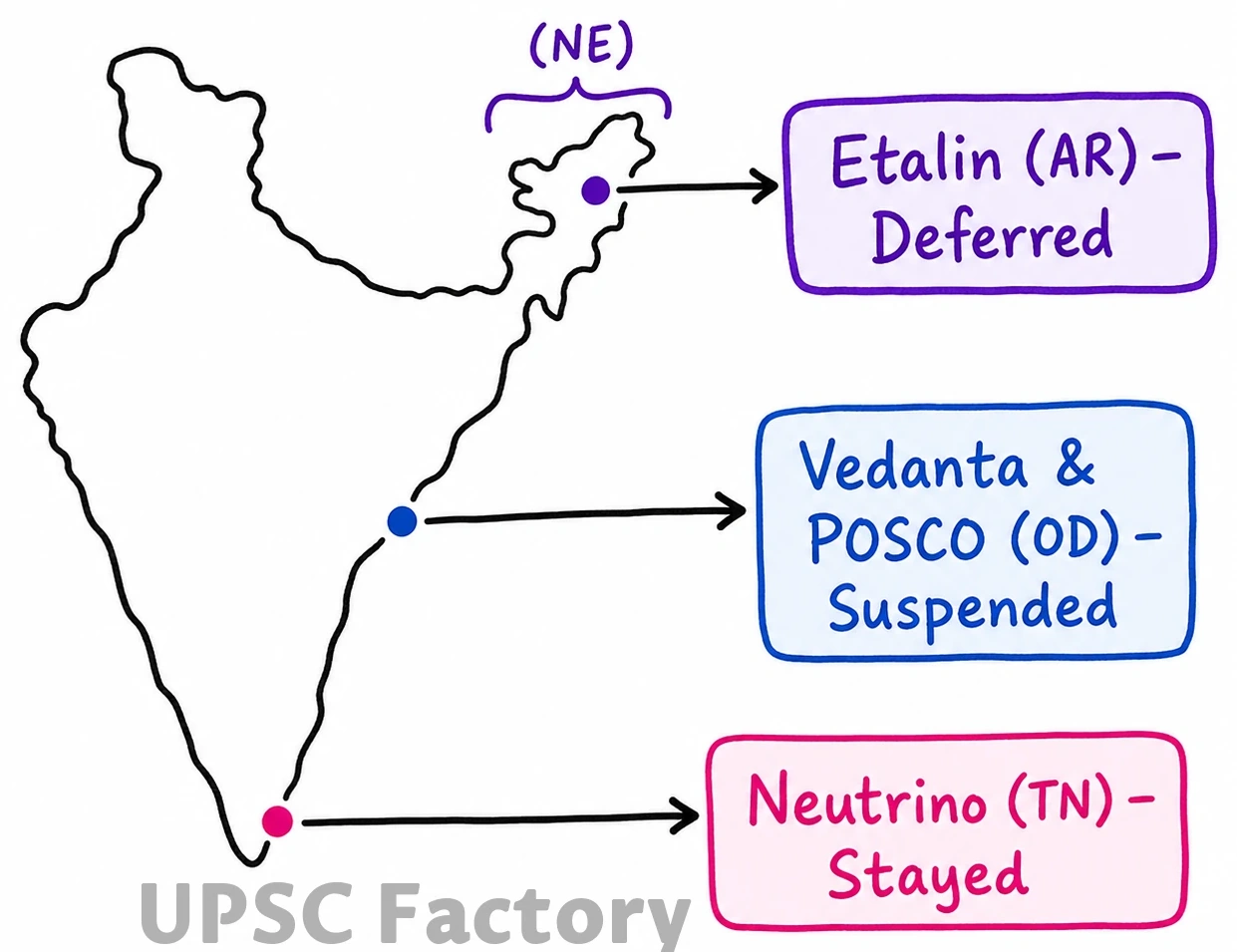
  1. Vedanta-Niyamgiri Mining (Odisha): Survival International and activists empowered Dongria Kondh Gram Sabhas to reject bauxite mining, leading to project cancellation.
  2. POSCO Steel Plant (Odisha): POSCO Pratirodh Sangram Samiti exposed heavily flawed EIA data, prompting the NGT to suspend the mega-project’s clearance.
  3. Neutrino Observatory (Tamil Nadu): Environmental NGO Poovulagin Nanbargal successfully petitioned the NGT to suspend the EC until a comprehensive cumulative EIA was conducted.
  4. Etalin Hydropower Project (Arunachal Pradesh): Researchers and Conservation India highlighted critical biodiversity omissions in the EIA, forcing authorities to defer forest clearances.

Robust civil society participation in the EIA process is indispensable for balancing India’s rapid infrastructural ambitions with its constitutional environmental mandates (Article 48A).

Q. What role do environmental NGOs and activists play in influencing Environmental Impact Assessment (EIA) outcomes for major projects in India? Cite four examples with all important details. Read More »

Q. Industrial pollution of river water is a significant environmental issue in India. Discuss the various mitigation measures to deal with this problem and also the government’s initiatives in this regard.

Q. Industrial pollution of river water is a significant environmental issue in India. Discuss the various mitigation measures to deal with this problem and also the government’s initiatives in this regard.

UPSC Mains 2024 GS3 Paper

Model Answer:

Industrial effluents containing heavy metals and toxic chemicals severely degrade India’s riverine ecosystems, threatening both water security and public health.

Mitigation Measures for Industrial River Pollution

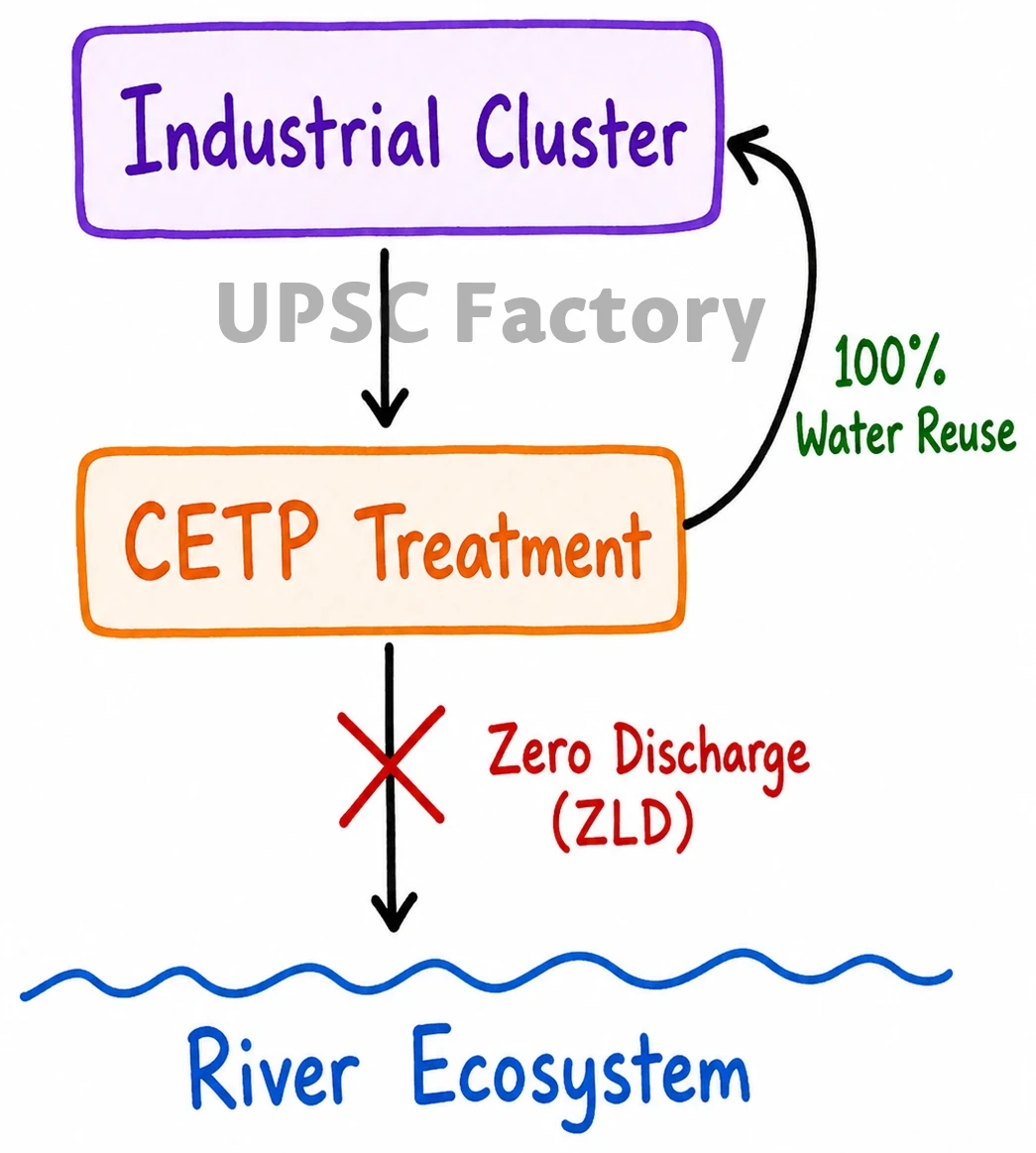
  • Zero Liquid Discharge (ZLD): Mandating complete wastewater recycling in highly polluting industries to entirely eliminate toxic liquid discharge.
  • Common Effluent Treatment Plants (CETPs): Building pooled treatment infrastructure for MSME clusters to ensure economic viability (e.g., Tiruppur textile cluster).
  • Stringent Enforcement: Deploying real-time monitoring with heavy penalties and closure notices for non-compliant Grossly Polluting Industries (GPIs).
  • In-situ Treatment: Employing bioremediation, phytoremediation, and constructed wetlands to naturally degrade pollutants before reaching main river streams.

Key Government Initiatives

  • Statutory Framework: Strict regulation and penalization of unauthorized industrial discharge (Water (Prevention and Control of Pollution) Act, 1974).
  • Namami Gange Programme: Continuous monitoring, upgrading CETPs, and sealing non-compliant GPIs specifically across the Ganga river basin.
  • OCEMS Portal: The Central Pollution Control Board’s (CPCB) Online Continuous Effluent Monitoring System for 24×7 tracking of industrial discharge.
  • National River Conservation Plan (NRCP): Providing federal financial and technical assistance to states for upgrading effluent treatment infrastructure.

Shifting towards a circular water economy by strictly enforcing the “Polluter Pays Principle” and incentivizing green technologies is crucial for revitalizing India’s rivers.

Q. Industrial pollution of river water is a significant environmental issue in India. Discuss the various mitigation measures to deal with this problem and also the government’s initiatives in this regard. Read More »

Q. What is the technology being employed for electronic toll collection on highways? What are its advantages and limitations? What are the proposed changes that will make this process seamless? Would this transition carry any potential hazards?

Q. What is the technology being employed for electronic toll collection on highways? What are its advantages and limitations? What are the proposed changes that will make this process seamless? Would this transition carry any potential hazards?

UPSC Mains 2024 GS3 Paper

Model Answer:

India’s current Electronic Toll Collection (ETC) relies on FASTag, utilizing Radio Frequency Identification (RFID) technology, which has achieved over 98% penetration on national highways.

Current Technology (RFID): Advantages and Limitations

  • Advantages:
    • Efficiency: Reduces waiting time, cuts fuel consumption, and eases highway congestion.
    • Revenue Buoyancy: Enhances transparency and plugs cash leakages (collecting ₹150+ crore/day).
  • Limitations:
    • Physical Bottlenecks: Still requires physical plazas and boom barriers, preventing continuous traffic flow.
    • Technical Glitches: Scanner misalignment, server downtimes, or damaged tags cause localized delays.
    • Rigid Pricing: Flat-rate plaza deductions rather than precise distance-based tolling.

Proposed Seamless Transition (GNSS) & Potential Hazards

The government proposes a Global Navigation Satellite System (GNSS) to enable virtual, barrier-free, exact distance-based tolling.

  • Privacy/Surveillance Risks: Continuous spatial tracking raises data privacy concerns (necessitating strict DPDP Act, 2023 compliance).
  • Toll Evasion: Deliberate tampering or switching off On-Board Units (OBUs) by users.
  • Network Blindspots: Satellite signal drops in tunnels, extreme weather, or remote terrains.
  • Transition Costs: Retrofitting millions of legacy vehicles with GNSS OBUs is capital-intensive.

Transitioning to GNSS (similar to Germany’s Toll Collect) will revolutionize logistics efficiency, provided robust data anonymization laws and a hybrid RFID-GNSS infrastructure are established during the phase-out.

Q. What is the technology being employed for electronic toll collection on highways? What are its advantages and limitations? What are the proposed changes that will make this process seamless? Would this transition carry any potential hazards? Read More »

Q. What is the present world scenario of intellectual property rights with respect to life materials? Although, India is second in the world to file patents, still only a few have been commercialized. Explain the reasons behind this less commercialization.

Q. What is the present world scenario of intellectual property rights with respect to life materials? Although, India is second in the world to file patents, still only a few have been commercialized. Explain the reasons behind this less commercialization.

UPSC Mains 2024 GS3 Paper

Model Answer:

The global patenting of life materials is primarily guided by TRIPS Article 27(3)(b), which allows patenting of microorganisms while excluding naturally occurring plants and animals.

1. Global IPR Scenario on Life Materials

  • Liberal Regimes: The US broadly allows patents for human-made, genetically modified organisms (Diamond v. Chakrabarty).
  • Regulated Markets: The EU permits biotechnological patents but enforces strict moral and ethical exemptions.
  • Restrictive Frameworks: India strictly prohibits patenting naturally occurring life forms and traditional knowledge (Sections 3(c) & 3(j), Indian Patent Act).

2. Reasons for Low Patent Commercialization in India

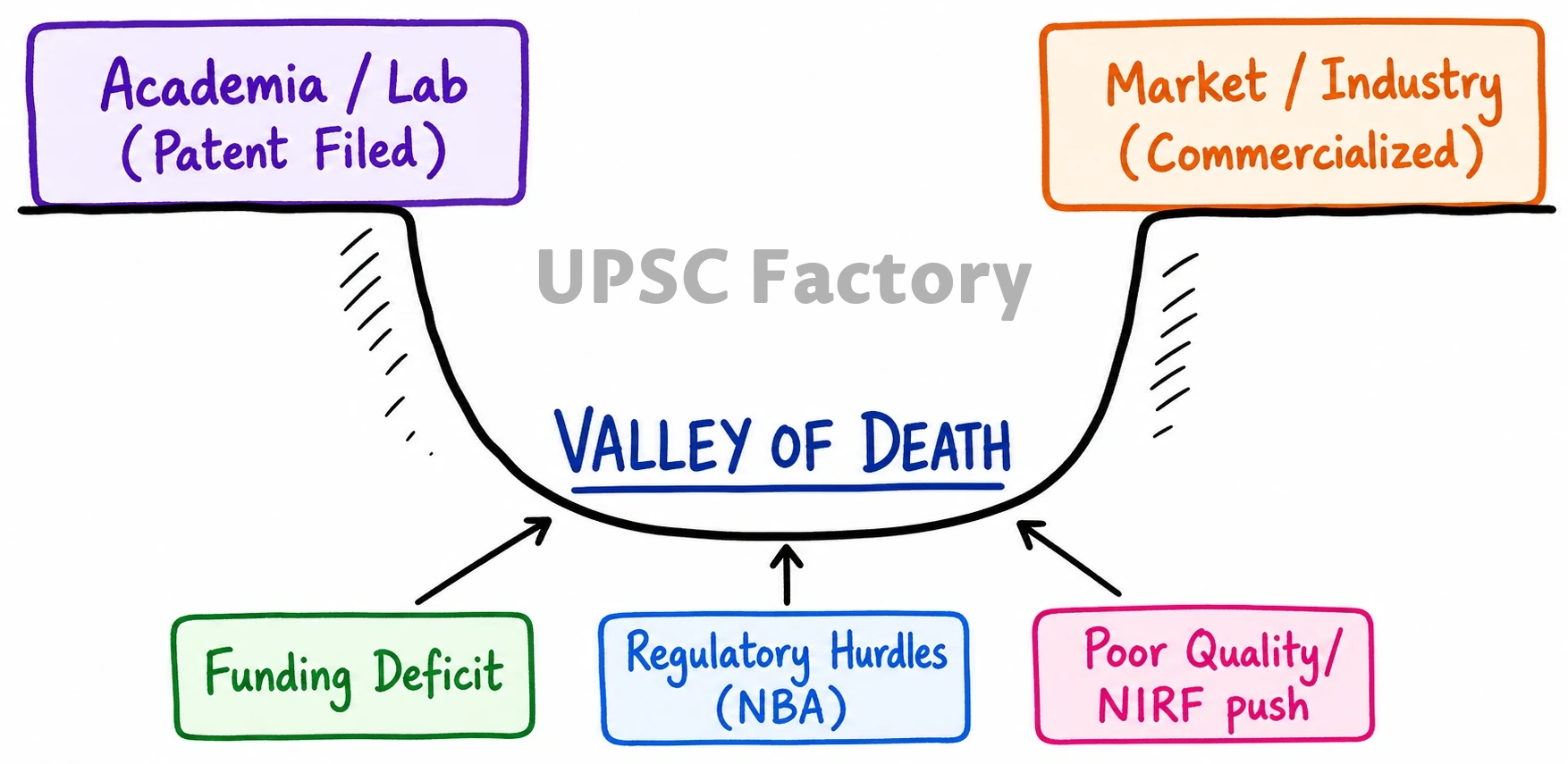
  • Academic-Driven Filing: Patents are often filed merely to boost institutional metrics (NIRF rankings) rather than for market viability.
  • Weak Industry-Academia Linkage: A persistent “valley of death” exists due to poor translational research and tech-transfer ecosystems.
  • Funding Deficit: There is a severe lack of venture capital and risk-funding for scaling deep-tech and biotech innovations.
  • Poor Patent Quality: A recent surge in incremental, low-quality filings often lacks genuine industrial application or scalable utility.
  • Regulatory Bottlenecks: Cumbersome, multi-agency clearances for biological materials deter rapid commercial scaling (NBA, CDSCO approvals).

Bridging this commercialization gap requires transitioning from “patent generation” to “value creation” by strengthening industry-academia synergies and leveraging the Anusandhan National Research Foundation (NRF).

Q. What is the present world scenario of intellectual property rights with respect to life materials? Although, India is second in the world to file patents, still only a few have been commercialized. Explain the reasons behind this less commercialization. Read More »

Q. Explain the role of millets for ensuring health and nutritional security in India.

Q. Explain the role of millets for ensuring health and nutritional security in India.

UPSC Mains 2024 GS3 Paper

Model Answer:

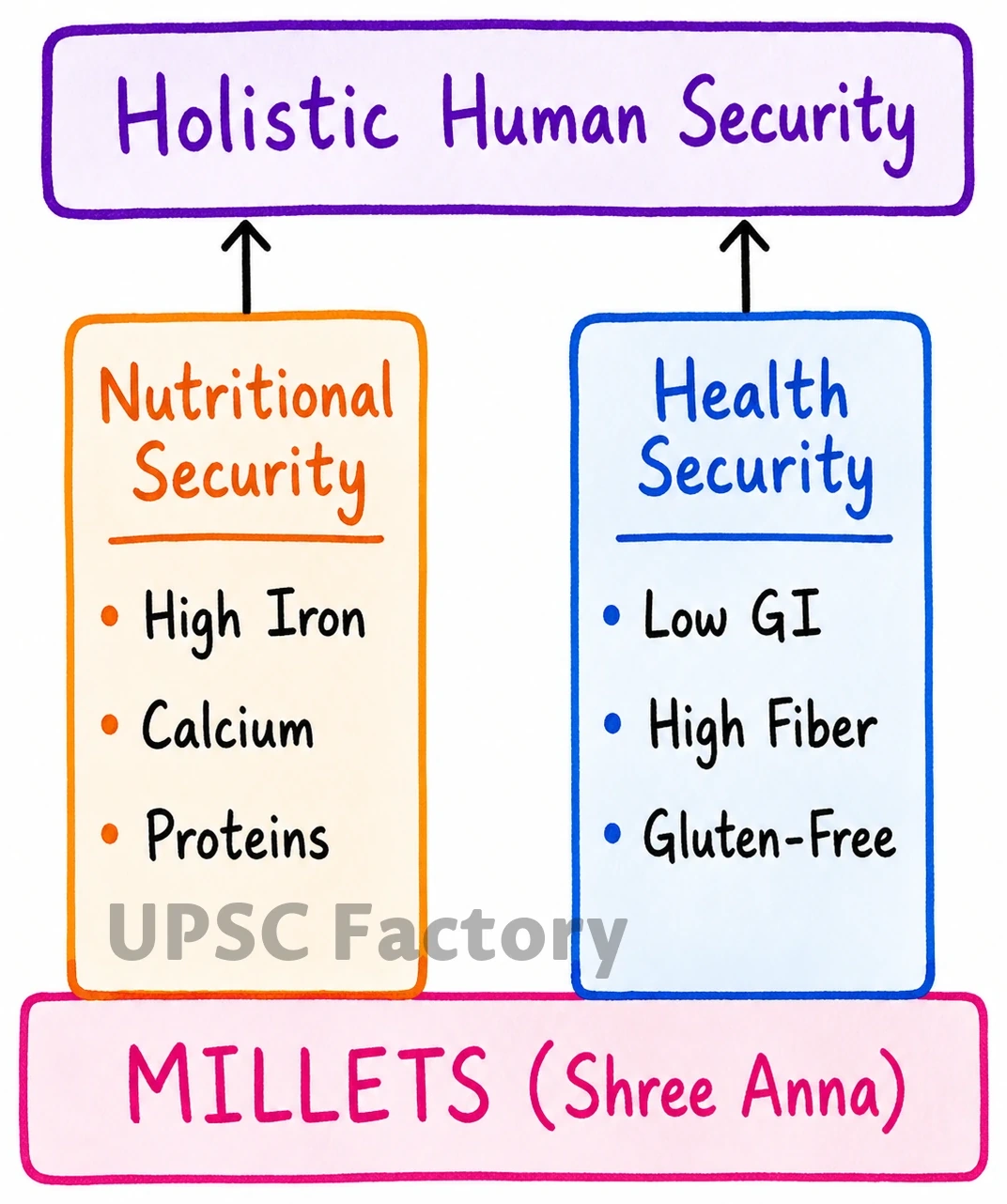
Recognized as “Shree Anna” (IYOM 2023), millets are climate-resilient nutri-cereals critical for addressing India’s dual burden of malnutrition and lifestyle diseases.

1. Role in Nutritional Security (Combating Malnutrition)

  • Combating Anaemia: High iron and folic acid mitigate severe anaemia, which currently affects 57% of Indian women (NFHS-5, Bajra).
  • Bone Health: Exceptional calcium levels support pediatric bone development and prevent osteoporosis (Ragi contains 344mg/100g).
  • Protein Adequacy: Rich in essential amino acids, directly tackling protein-energy malnutrition and hidden hunger (Jowar, Foxtail).
  • Dietary Diversity: Democratizing micronutrient access for vulnerable groups via integration into PM-POSHAN and the PDS.

2. Role in Health Security (Mitigating Lifestyle Diseases)

  • Diabetes Control: A low glycemic index (GI) prevents sudden blood sugar spikes, essential for India’s diabetic population.
  • Heart Health: Abundant dietary fiber reduces bad cholesterol (LDL) and fosters a healthy gut microbiome.
  • Gluten-Free Diet: Inherently gluten-free, providing safe, nutritious staples for those with celiac disease or gluten intolerance.
  • Cellular Immunity: Rich in antioxidants and polyphenols, which reduce oxidative stress and boost systemic immunity.

Mainstreaming millets through decentralized processing and consumer awareness is vital to elevate India from basic food security to holistic, sustainable nutritional security.

Q. Explain the role of millets for ensuring health and nutritional security in India. Read More »

Q. What were the factors responsible for the successful implementation of land reforms in some parts of the country? Elaborate.

Q. What were the factors responsible for the successful implementation of land reforms in some parts of the country? Elaborate.

UPSC Mains 2024 GS3 Paper

Model Answer:

Land reforms in post-independence India yielded uneven results, achieving profound success primarily in states like West Bengal, Kerala, and Jammu & Kashmir.

1. Key Regions and Achievements

  • West Bengal: Secured tenancy rights and sharecropper registration (Operation Barga).
  • Kerala: Comprehensive abolition of landlordism and intermediary tenures (Kerala Land Reforms Act, 1963).
  • Jammu & Kashmir: Radical “land to the tiller” redistribution without compensation.

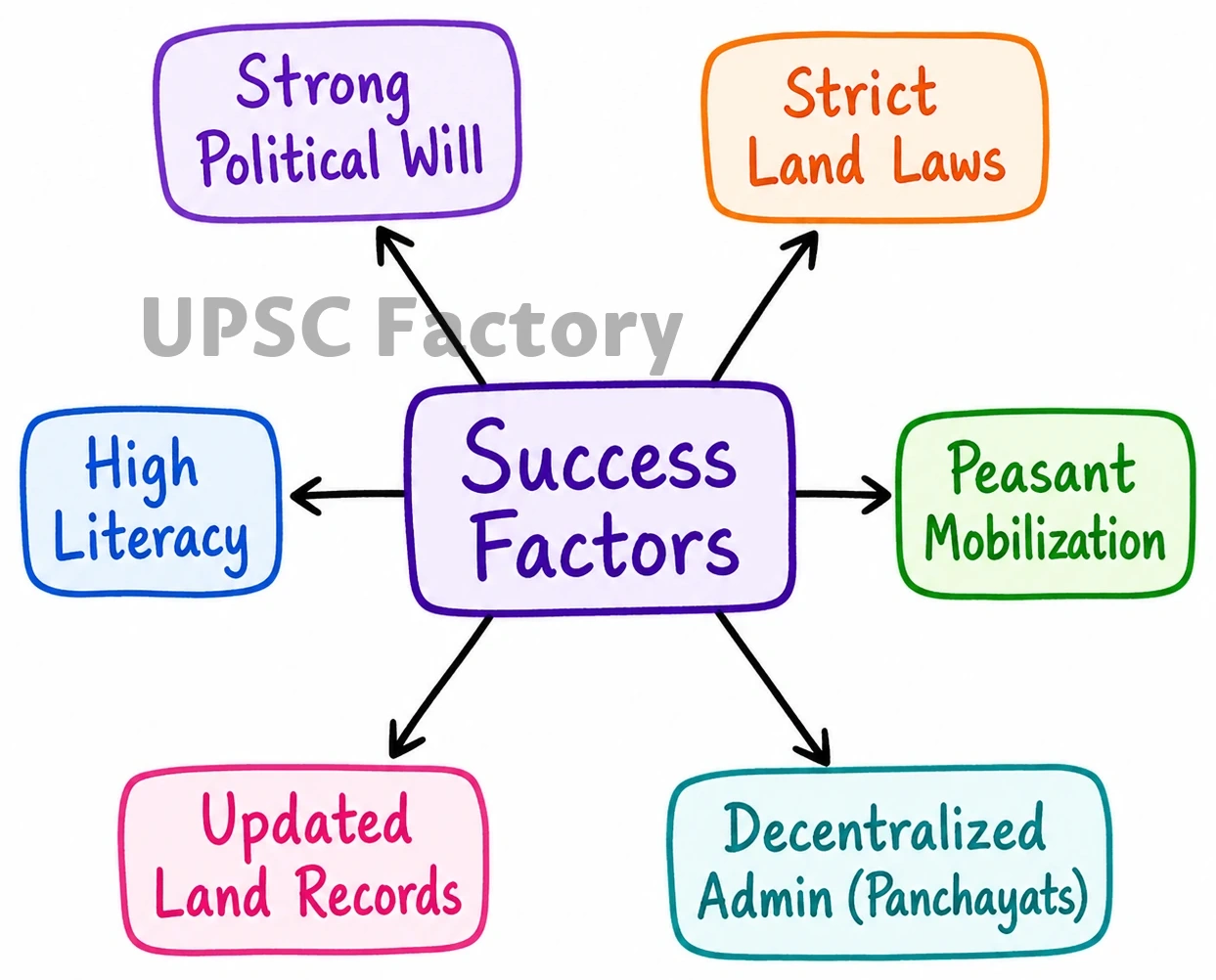
2. Factors Driving Successful Implementation

  1. Strong Political Will: Dedicated ruling regimes prioritized agrarian restructuring over entrenched elite interests.
  2. Mass Peasant Mobilization: Active grassroots organizations empowered vulnerable tenants to claim their legal rights (Kisan Sabhas).
  3. Decentralized Administration: Empowered local Panchayats bypassed traditional bureaucratic red tape to accurately identify actual tillers.
  4. Stringent Legal Frameworks: Loopholes in ceiling limits were minimized, and progressive laws were shielded from prolonged litigation (9th Schedule).
  5. Aggressive Record Modernization: Proactive bureaucratic drives rapidly updated and secured historical land records on the ground.
  6. High Literacy & Awareness: Educated rural populations actively demanded accountability and utilized land tribunals effectively (Kerala).

Replicating this historic synergy of political intent and grassroots mobilization remains crucial today for successfully executing second-generation agrarian reforms, such as formalized land leasing.

Q. What were the factors responsible for the successful implementation of land reforms in some parts of the country? Elaborate. Read More »

Q. What are the causes of persistent high food inflation in India? Comment on the effectiveness of the monetary policy of the RBI to control this type of inflation.

Q. What are the causes of persistent high food inflation in India? Comment on the effectiveness of the monetary policy of the RBI to control this type of inflation.

UPSC Mains 2024 GS3 Paper

Model Answer:

Food inflation, carrying a 39% weightage in the Consumer Price Index (CFPI), has remained stubbornly high, frequently breaching the RBI’s 4±2% flexible inflation targeting band.

1. Causes of Persistent High Food Inflation

  • Climate Shocks: Erratic monsoons, El Niño, and unseasonal heatwaves severely disrupt agricultural yields (e.g., wheat, tomatoes).
  • Cobweb Phenomenon: Cyclical supply gluts and shortages occur as farmers base current planting decisions on previous market prices (e.g., onions).
  • Supply Chain Inefficiencies: High post-harvest losses, inadequate cold storage, and fragmented APMC mandis restrict seamless distribution.
  • Input Cost Inflation: Global supply chain disruptions elevate the domestic costs of fertilizers, diesel, and livestock fodder.
  • Structural Dietary Shifts: Agricultural supply struggles to match rising consumer demand for protein-rich diets (e.g., pulses, milk, meat).

2. Effectiveness of RBI’s Monetary Policy

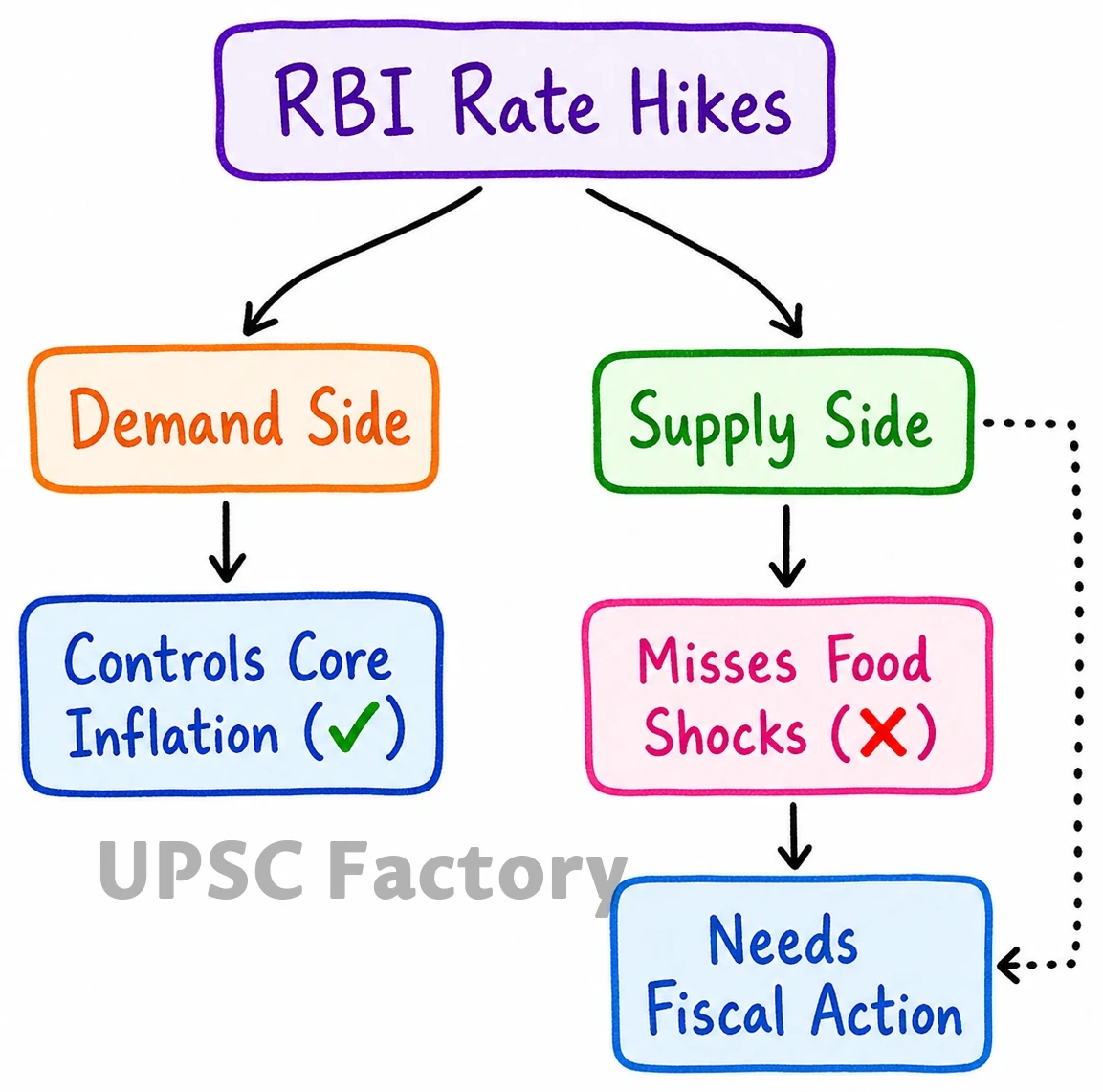
  • Inadequate Supply-Side Reach: Repo rate hikes successfully compress aggregate demand but cannot resolve structural supply shocks or weather-induced crop failures.
  • Core vs. Headline Gap: RBI’s monetary tools effectively cool core inflation, yet headline inflation remains heavily skewed by volatile food prices.
  • Anchoring Expectations: Despite limitations, RBI’s decisive rate tightening is highly effective in preventing food inflation from triggering generalized wage-price spirals (second-round effects).
  • Fiscal Synergy Dependency: Monetary policy efficacy requires simultaneous government supply-side interventions (e.g., export curbs, Open Market Sales, Operation Greens).

While the RBI effectively anchors general inflation expectations, sustainably taming persistent food inflation demands targeted structural reforms, specifically modernizing agri-logistics and adopting climate-resilient agriculture.

Q. What are the causes of persistent high food inflation in India? Comment on the effectiveness of the monetary policy of the RBI to control this type of inflation. Read More »

Q. Examine the pattern and trend of public expenditure on social services in the post-reforms period in India. To what extent this has been in consonance with achieving the objective of inclusive growth?

Q. Examine the pattern and trend of public expenditure on social services in the post-reforms period in India. To what extent this has been in consonance with achieving the objective of inclusive growth?

UPSC Mains 2024 GS3 Paper

Model Answer:

Post-1991 reforms shifted the state’s role from direct production to welfare, fundamentally altering social sector expenditure trajectories.

1. Trends in Social Services Expenditure

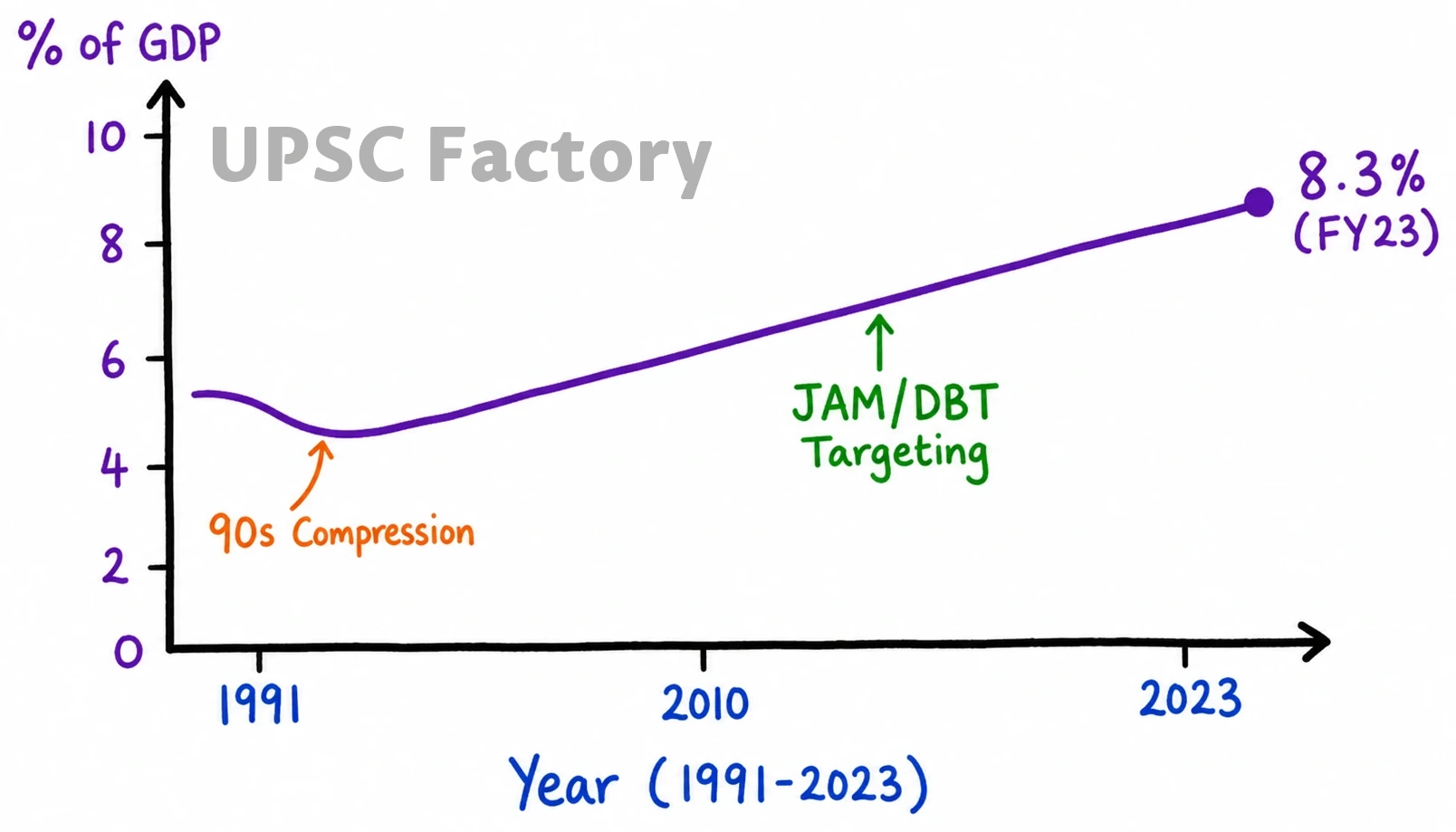
  • Initial Compression: Spending dipped early in the 1990s due to structural adjustments and fiscal consolidation.
  • Gradual Recovery: Steadily rose, accounting for ~8.3% of GDP by FY23 (Economic Survey).
  • Targeted Delivery: Shifted from untargeted, broad-based subsidies to precision welfare delivery (DBT, JAM Trinity).
  • Revenue Dominance: Expenditure remains heavily skewed towards revenue components (salaries/subsidies) over long-term capital asset creation.

2. Alignment with Inclusive Growth: Impact & Deficits

  • Poverty Alleviation: Contributed to a steep decline in multidimensional poverty to 11.28% (NITI Aayog MPI).
  • Safety Nets: Enhanced rural livelihood resilience and equitable healthcare access (MGNREGA, PM-JAY).
  • Sub-optimal Funding: Health (~2.1% GDP) and Education (~2.9% GDP) persistently miss National Policy targets.
  • Regressive Burden: High Out-of-Pocket Expenditure (~47%) continues to push vulnerable populations into debt.
  • Regional Disparities: Poorer states lack the fiscal space to fund matched welfare grants, exacerbating inequalities (FRBM constraints).

Shifting focus from consumption-based subsidies to capability-enhancing social capital investments (health, education, skilling) is essential to actualize truly inclusive and sustainable growth.

Q. Examine the pattern and trend of public expenditure on social services in the post-reforms period in India. To what extent this has been in consonance with achieving the objective of inclusive growth? Read More »

Q. What is the need for expanding the regional air connectivity in India? In this context, discuss the government’s UDAN Scheme and its achievements.

Q. What is the need for expanding the regional air connectivity in India? In this context, discuss the government’s UDAN Scheme and its achievements.

UPSC Mains 2024 GS3 Paper

Model Answer:

The expansion of regional air connectivity in India is crucial for several reasons:

• Economic development: It stimulates growth in tier-2 and tier-3 cities like Ranchi, Raipur, and Bhubaneswar by improving access to markets, investments, and business opportunities.

• Enhanced accessibility: It connects remote areas such as Darbhanga (Bihar), Pakyong (Sikkim), and Tezu (Arunachal Pradesh), reducing isolation and promoting inclusive development.

• Tourism boost: Improved connectivity opens up new destinations like Khajuraho, Hampi, and the Andaman Islands, diversifying tourism options and increasing revenue.

• Time efficiency: Air travel reduces travel time by up to 80% compared to road or rail on routes like Delhi-Dehradun or Mumbai-Shirdi.

The government’s UDAN (Ude Desh ka Aam Nagrik) scheme, launched in 2016, addresses these needs by:

• Aiming to make air travel affordable and widespread, connecting 100 unserved and underserved airports.

• Capping fares at ₹2,500 per hour of flight for 50% of seats on flights under 500 km.

• Providing viability gap funding to airlines, with ₹4,500 crore allocated in the 2022-23 budget.

• Offering concessions like reduced GST on aviation turbine fuel and waiver of landing and parking charges at airports.

Achievements of the UDAN scheme include:

• Operationalization of 68 airports in smaller cities like Jharsuguda (Odisha) and Kannur (Kerala).

• Activation of 425 new air routes, expanding the air network to previously unconnected regions.

• Increase in passenger traffic on regional routes from 2.15 lakh in 2017 to over 1 crore in 2022.

• Creation of over 7,000 direct and 25,000 indirect jobs in aviation and allied sectors by 2022.

• Improved connectivity to northeast India, with 16 airports added in the region since 2016.

However, the scheme has faced challenges such as:

• Limited participation from major airlines on some routes, with only 50% of awarded routes operational.

• Infrastructure constraints at smaller airports, including inadequate night landing facilities and short runways.

• Sustainability concerns for some routes due to low passenger load, leading to route cancellations.

• Delays in operationalization of certain airports due to land acquisition issues and regulatory clearances.

Conclusion: UDAN has expanded regional air connectivity, fostering economic growth and accessibility, despite implementation challenges in infrastructure and route sustainability.

Q. What is the need for expanding the regional air connectivity in India? In this context, discuss the government’s UDAN Scheme and its achievements. Read More »