Q. Is the social stratification theory gender-blind? Elucidate.
UPSC Sociology 2025 Paper 1
Model Answer:
Gender Stratification and Classical Sociology
Early stratification theories suffered from “Malestream Sociology”, treating male experiences as the universal norm and ignoring gender as an independent axis of inequality.
Marxist Approach:Friedrich Engels reduced women’s subordination merely to a byproduct of capitalism and private property.
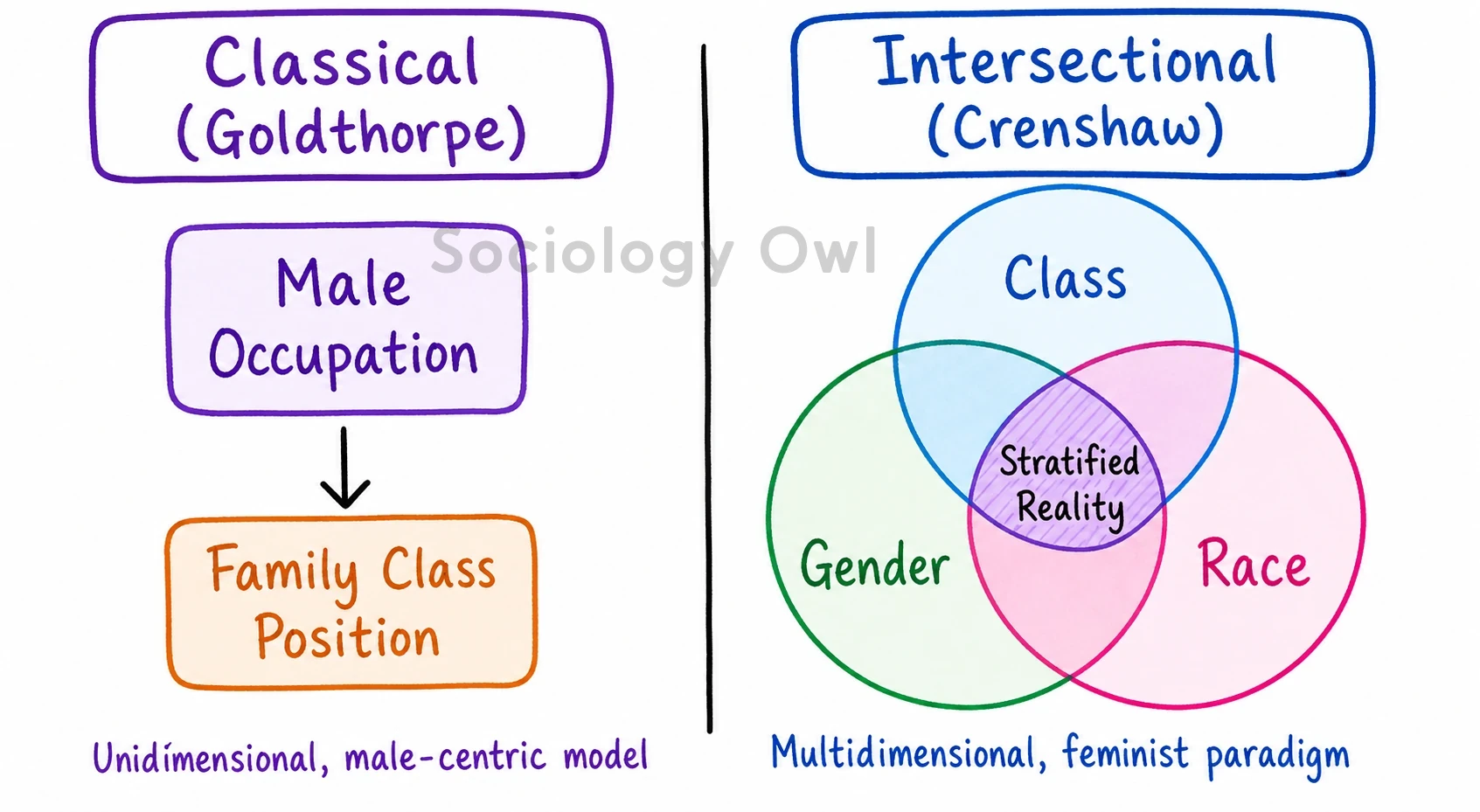
John Goldthorpe: Derived a family’s class solely from the male household head, sparking fierce critiques from feminists like Michelle Stanworth.
Talcott Parsons: Naturalized inequality by functionally justifying the division between male “instrumental” and female “expressive” roles.
Feminist Reconceptualization
Unpaid Labor:Ann Oakley (The Sociology of Housework) exposed domestic exploitation, and Arlie Hochschild highlighted women’s “second shift”.
Intersectionality:Kimberl0e9 Crenshaw proved that gender stratification is not monolithic but intricately overlaps with race and class.
Stratification remains visibly gendered today, evidenced by the global “Motherhood Penalty” and inherently gendered organizational structures (Joan Acker).
Conclusion
While classical sociology was inherently gender-blind, contemporary paradigms are not. Feminist and intersectional frameworks have successfully established gender as a fundamental, cross-cutting dimension of global social stratification.
Q. To what extent can education and skill development be an agent of social change? Critically analyze.
UPSC Sociology 2025 Paper 1
Model Answer:
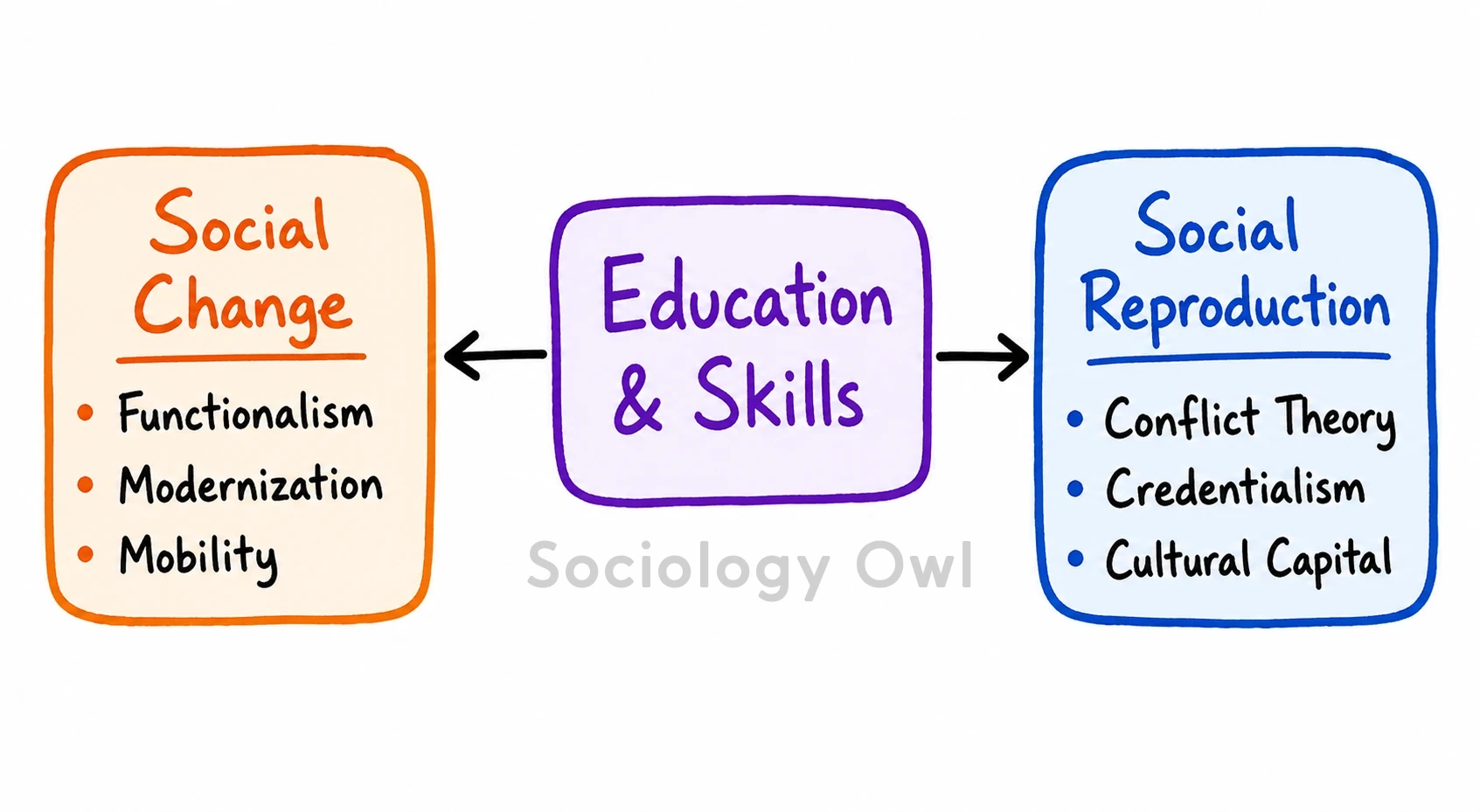
Education has a dual sociological role: a Functionalist catalyst for mobility and a Conflict mechanism reproducing inequality, often driving positional rather than structural change.
Agent of Change (Functionalist View)
Value Transformation:Talcott Parsons notes schools instill universalistic values. Alex Inkeles links education to modernization.
Capacity Building: Aligning with Amartya Sen’s Capability Approach, initiatives like Skill India expand human freedoms.
Reproduction:Bowles and Gintis (Schooling in Capitalist America) identify a Correspondence Principle conditioning students for capitalist hierarchies. Paulo Freire critiques this status-quo-affirming “Banking Concept of Education”.
Global EdTech (MOOCs) democratizes skills but simultaneously creates a “New Digital Divide” between the Global North and South, reinforcing systemic inequities.
Conclusion
As A.R. Desai suggests, unless underlying unequal economic structures are transformed, education remains necessary but insufficient for genuine social change, often perpetuating the very hierarchies it aims to dismantle.
Q. How can you assess the significance of social movements in the digital era? Explain.
UPSC Sociology 2025 Paper 1
Model Answer:
In the digital era, movements have shifted from hierarchical structures to fluid networks, fundamentally transforming Resource Mobilization (McCarthy & Zald) through rapid cyber-activism.
Networked Mobilization and Public Sphere
Networks of Outrage and Hope: Manuel Castells argues decentralized digital nodes drastically lower mobilization costs and bypass traditional organizational hierarchies.
Networked Public Sphere: Updating Jürgen Habermas, digital platforms allow subaltern groups (e.g., Dalit WhatsApp networks) to bypass media gatekeepers via viral framing.
New Social Movements: Following Alberto Melucci, digital activism focuses heavily on post-materialistic identity and symbols rather than traditional class struggles.
Critical Limitations
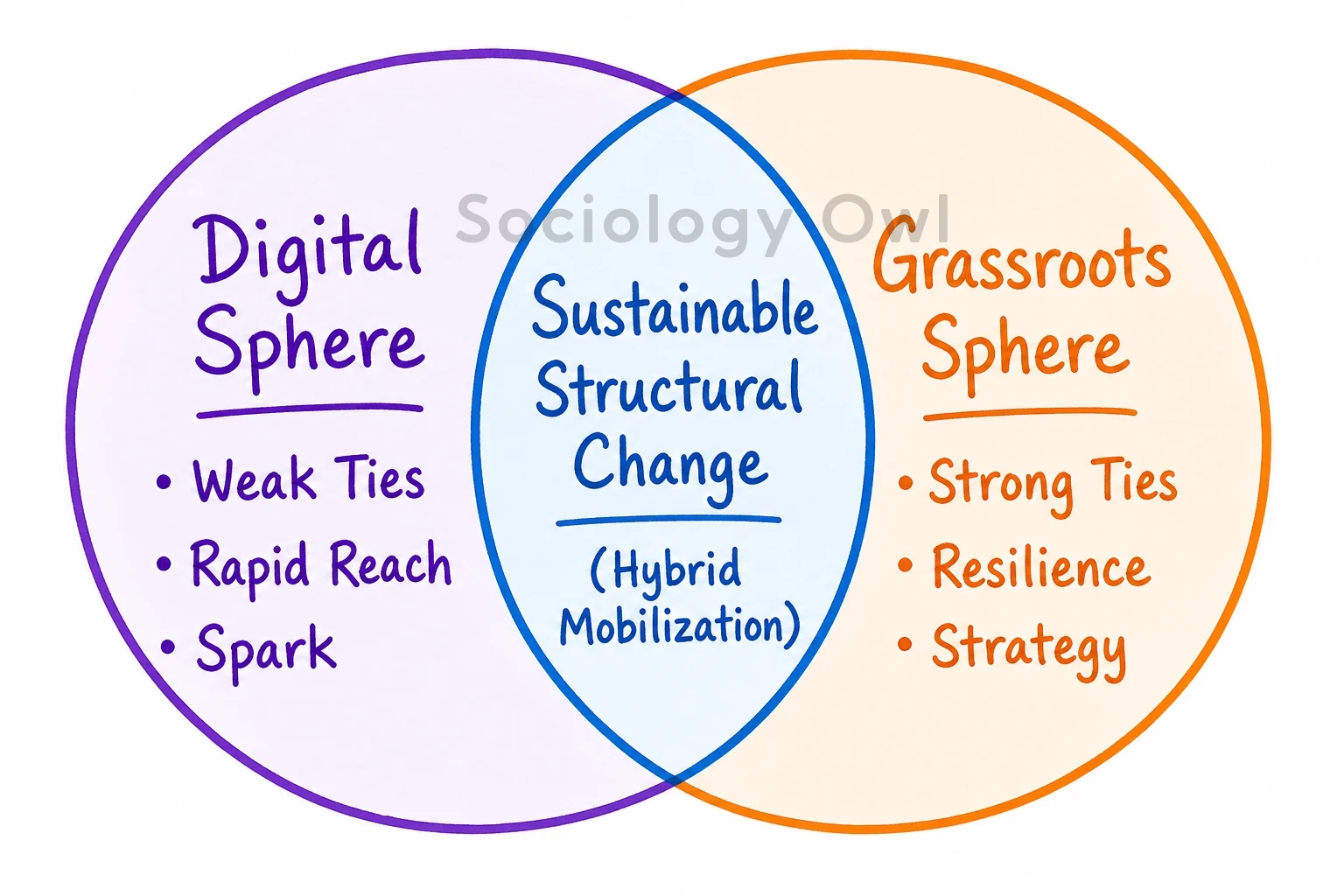
Weak Ties: Malcolm Gladwell critiques digital “slacktivism” for fostering shallow connections that lack the organizational resilience (Zeynep Tufekci) necessary for high-risk activism.
Digital Authoritarianism: In The Net Delusion, Evgeny Morozov highlights how states weaponize algorithms for surveillance and control.
The 2020-21 Indian Farmers’ Protest successfully merged digital “toolkits” with grassroots organizing to build transnational solidarity, mirroring the global identity-based mobilization of #MeToo.
Conclusion
Ultimately, while digital platforms provide a powerful mobilizing spark, sustaining structural social change requires translating online “weak ties” into robust, offline structural action.
Q. Compare capability deprivation approach with that of social capital deprivation in understanding chronic poverty.
UPSC Sociology 2025 Paper 1
Model Answer:
Chronic poverty, extending persistently across generations, transcends classical income-subsistence models like those of Seebohm Rowntree. It is fundamentally a structural trap of powerlessness. Robert Chambers’ “Deprivation Trap” illustrates how isolation, physical vulnerability, and poverty intersect. To understand this multidimensionality, sociology employs capability and social capital deprivation frameworks.
Capability Deprivation Approach
Core Concepts: Advanced by Amartya Sen (Development as Freedom) and Martha Nussbaum, poverty is defined as the lack of substantive freedoms or “Capabilities” to achieve valuable “Functionings” (e.g., nourishment, education).
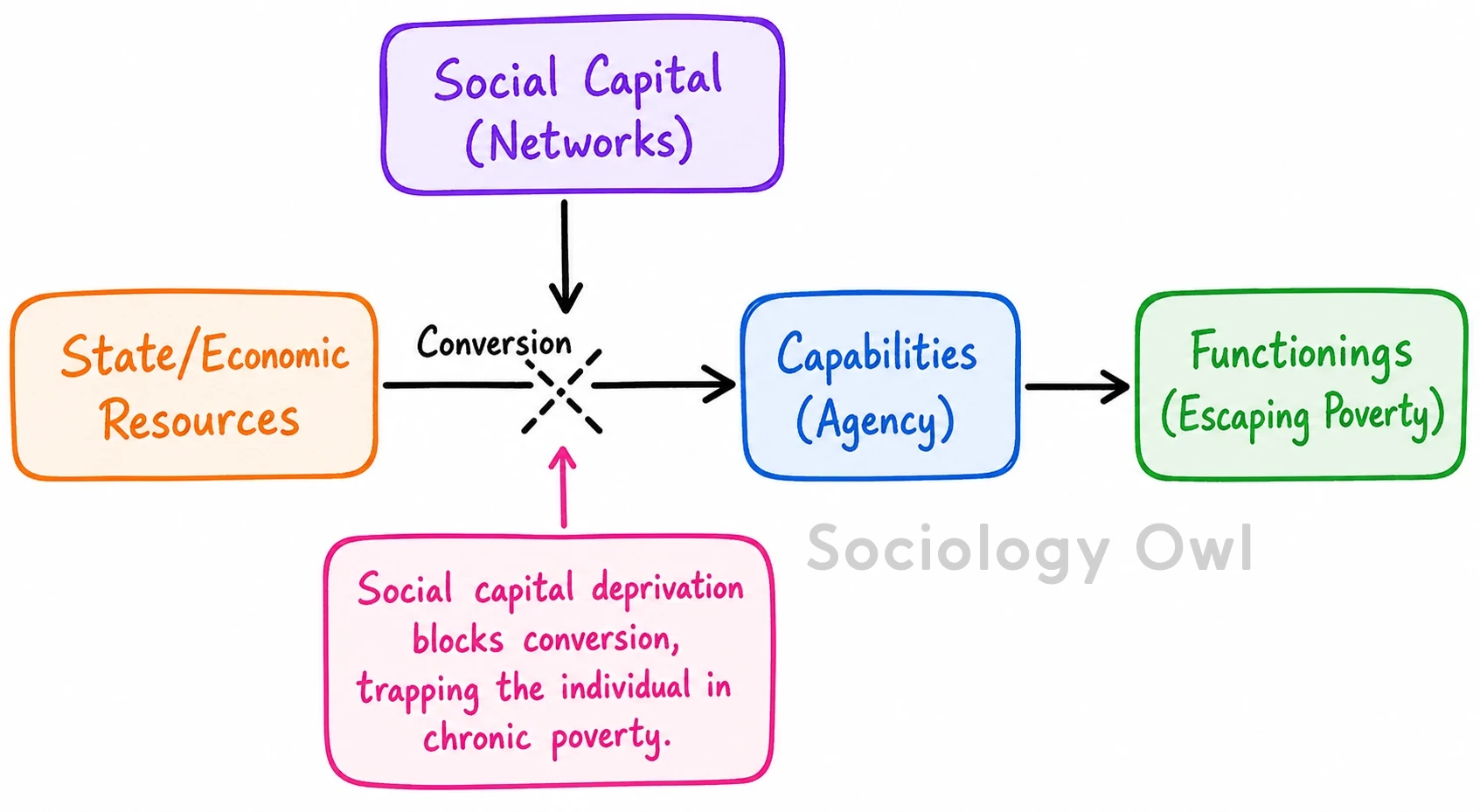
“Conversion Factors”: Sen argues that even if resources are provided, marginalized individuals may lack the personal or social conversion factors necessary to translate resources into actual well-being.
Critique: Marxist scholars criticize this approach as overly individualistic, arguing it focuses excessively on personal agency while underplaying the macro-structural forces of capitalism that intentionally maintain an impoverished reserve army of labor.
Social Capital Deprivation Approach
Conflict Perspective:Pierre Bourdieu argues that elites use social capital to maintain class boundaries. Chronic poverty is thus the reproduction of inequality, as the poor are systematically excluded from resource-rich elite networks.
Functionalist Perspective:Robert Putnam emphasizes the lack of “Bridging” capital (inter-group linkages), which isolates impoverished communities from broader economic opportunities.
Critique:Alejandro Portes highlights the “dark side” of social capital. In chronic poverty (e.g., slums), strong intra-group “Bonding” capital can create isolation and dependency traps, echoing Oscar Lewis’s “Culture of Poverty”.
Unit of Analysis: Sen focuses on individual agency (capabilities as the ends), whereas Bourdieu and Putnam emphasize structural networks (social capital as the means).
Interdependence: Social capital acts as a structural “Conversion Factor”. Without social networks, an individual’s capability to achieve mobility remains fundamentally stunted.
Globally, the UNDP’s Multidimensional Poverty Index (MPI) operationalizes capability deprivations. In India, the intersectionality of caste and class demonstrates this nexus: Dalits historically excluded from Savarna-dominated social networks suffer severe social capital deprivation, directly resulting in capability deprivations like poor health and educational outcomes.
Conclusion
Eradicating chronic poverty requires moving beyond economic alleviation towards structural empowerment. It necessitates a holistic policy approach that synthesizes Sen’s focus on expanding human agency with Bourdieu’s structural critique of dismantling exclusionary social networks.
Q. What is sampling in the context of social research? Discuss different forms of sampling with their relative advantages and disadvantages.
UPSC Sociology 2025 Paper 1
Model Answer:
Sampling in Social Research
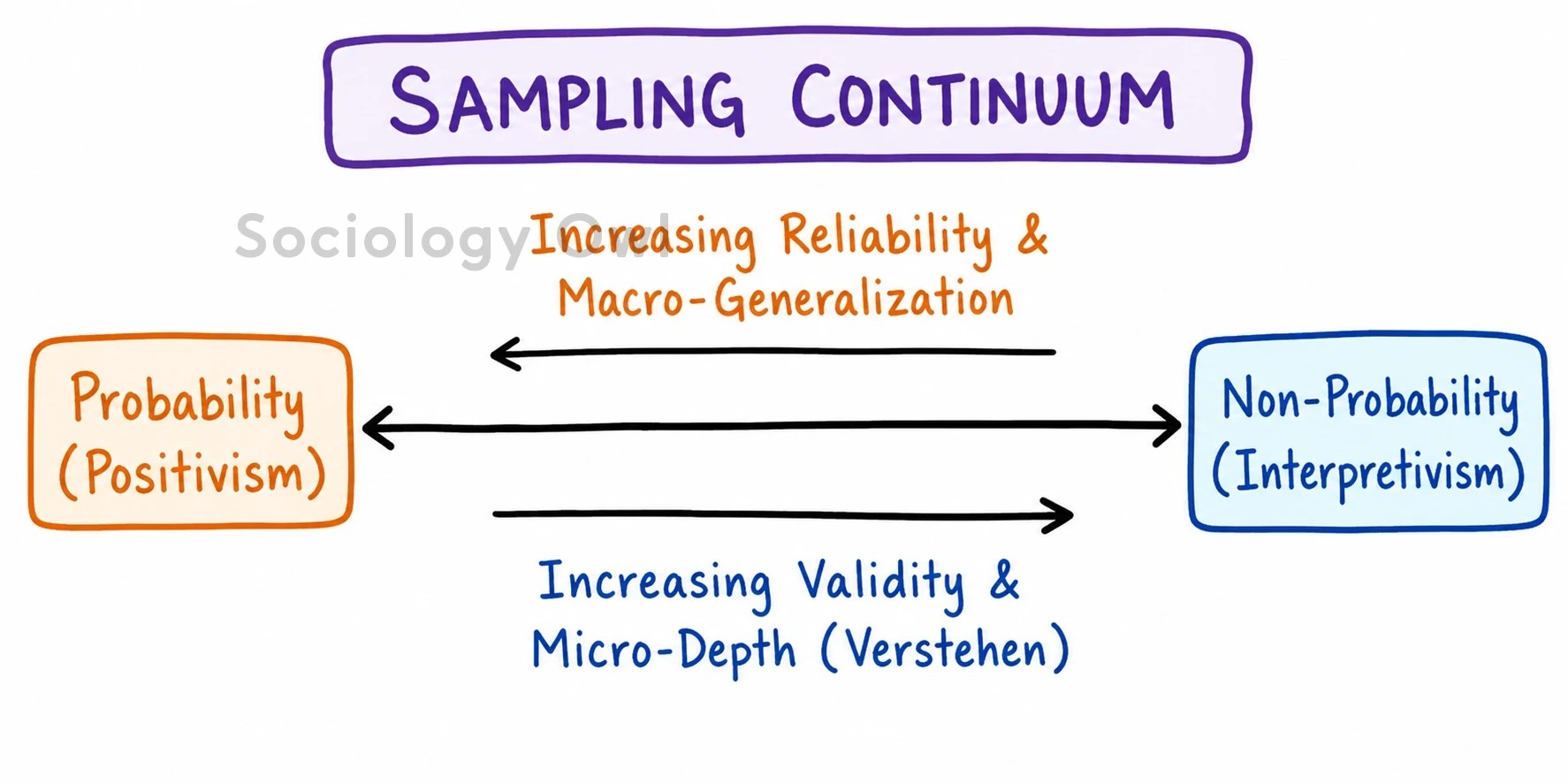
Sampling is the methodological process of selecting a subset from a population to make empirical inferences. Sociologically, the choice of sampling depends on epistemological stances: Positivists seek large, representative samples for macro-generalizations and reliability, while Interpretivists prefer smaller, non-representative samples to achieve subjective depth (Verstehen).
Probability Sampling
Every unit has a known, non-zero chance of selection, ensuring statistical rigor.
Simple Random & Systematic Sampling: Guarantees equal selection chance. Advantage: Highly representative and free from researcher bias. Disadvantage: Requires a flawless Sampling Frame, which is often politically contested or unavailable. Peter Townsend utilized complex random sampling in Poverty in the UK to generalize poverty rates.
Stratified & Cluster Sampling: Divides populations into distinct strata (e.g., class) or geographical clusters. Advantage: Guarantees representation of marginalized subgroups. Disadvantage: High implementation complexity. John Goldthorpe employed stratified sampling in the Oxford Social Mobility Study to ensure all occupational classes were adequately represented.
Non-Probability Sampling
Selection relies on researcher judgment, prioritizing contextual depth (Validity) over statistical representativeness.
Purposive Sampling: Deliberate selection of information-rich cases. Advantage: Yields deep theoretical insights. Disadvantage: High susceptibility to researcher bias. Paul Willis used this in Learning to Labour, purposively selecting working-class boys to study cultural reproduction.
Snowball Sampling: Initial participants refer others. Advantage: Crucial for accessing hidden or stigmatized populations. Disadvantage: Severe network bias. Howard Becker effectively used snowballing in Outsiders to study underground marijuana subcultures.
In Digital Sociology, researchers utilize Big Data to scrape social media platforms as massive convenience sampling (e.g., analyzing #BlackLivesMatter). However, this introduces “Algorithmic Bias”, reinforcing Postmodernist critiques that modern, fragmented societies cannot be captured by one universal, representative sample.
Conclusion
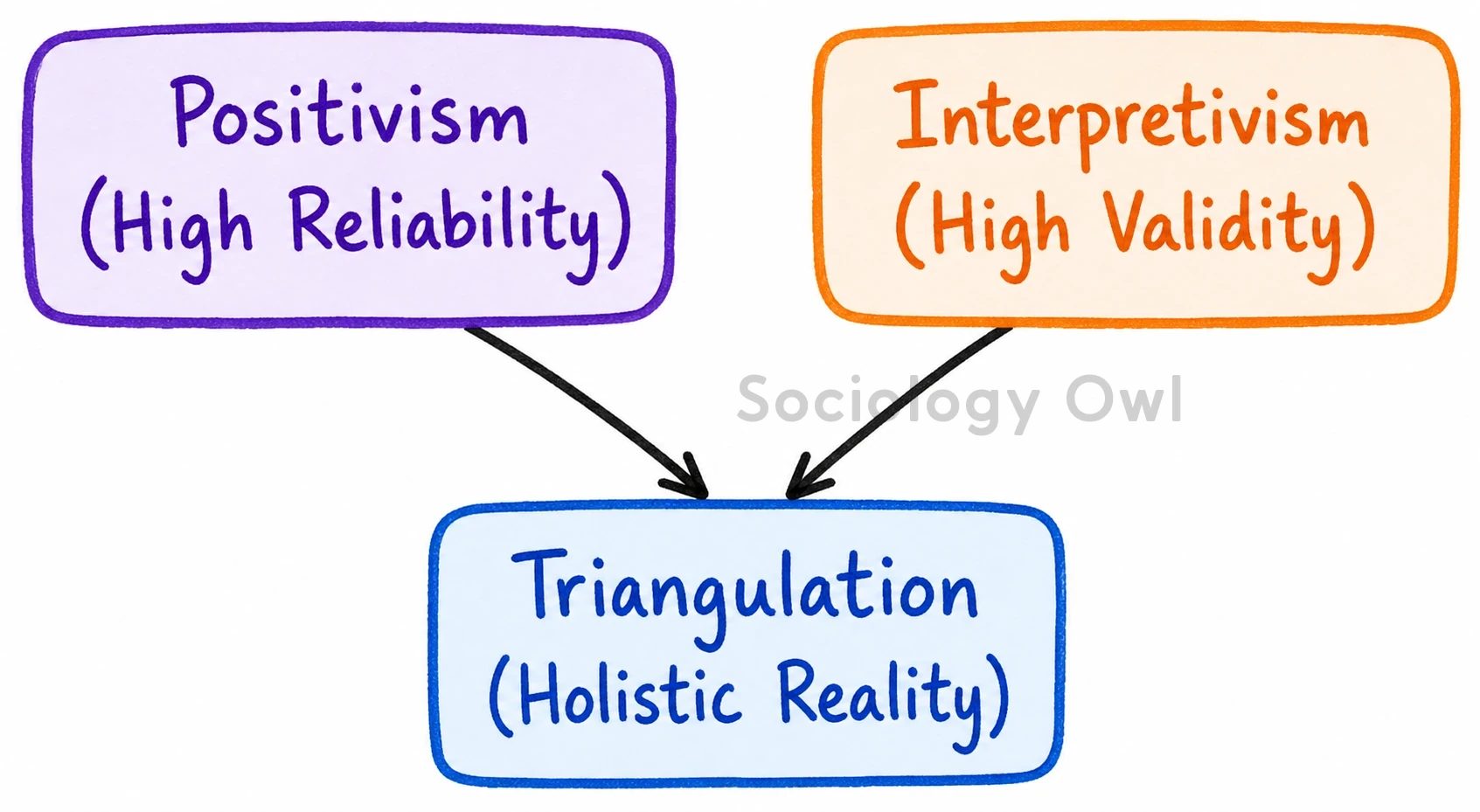
Strict probability sampling faces Feminist critiques; Ann Oakley argues it reduces individuals to mere data points, stripping away power dynamics. To overcome individual sampling flaws, modern sociologists embrace Methodological Pluralism and Triangulation (Alan Bryman), combining probability and non-probability methods to achieve both macro-level reliability and micro-level validity.
Q. In what way does queer kinship challenge the traditional kinship system? Substantiate by giving illustrations.
UPSC Sociology 2025 Paper 1
Model Answer:
Queer Kinship: Redefining Family Beyond Traditional Boundaries
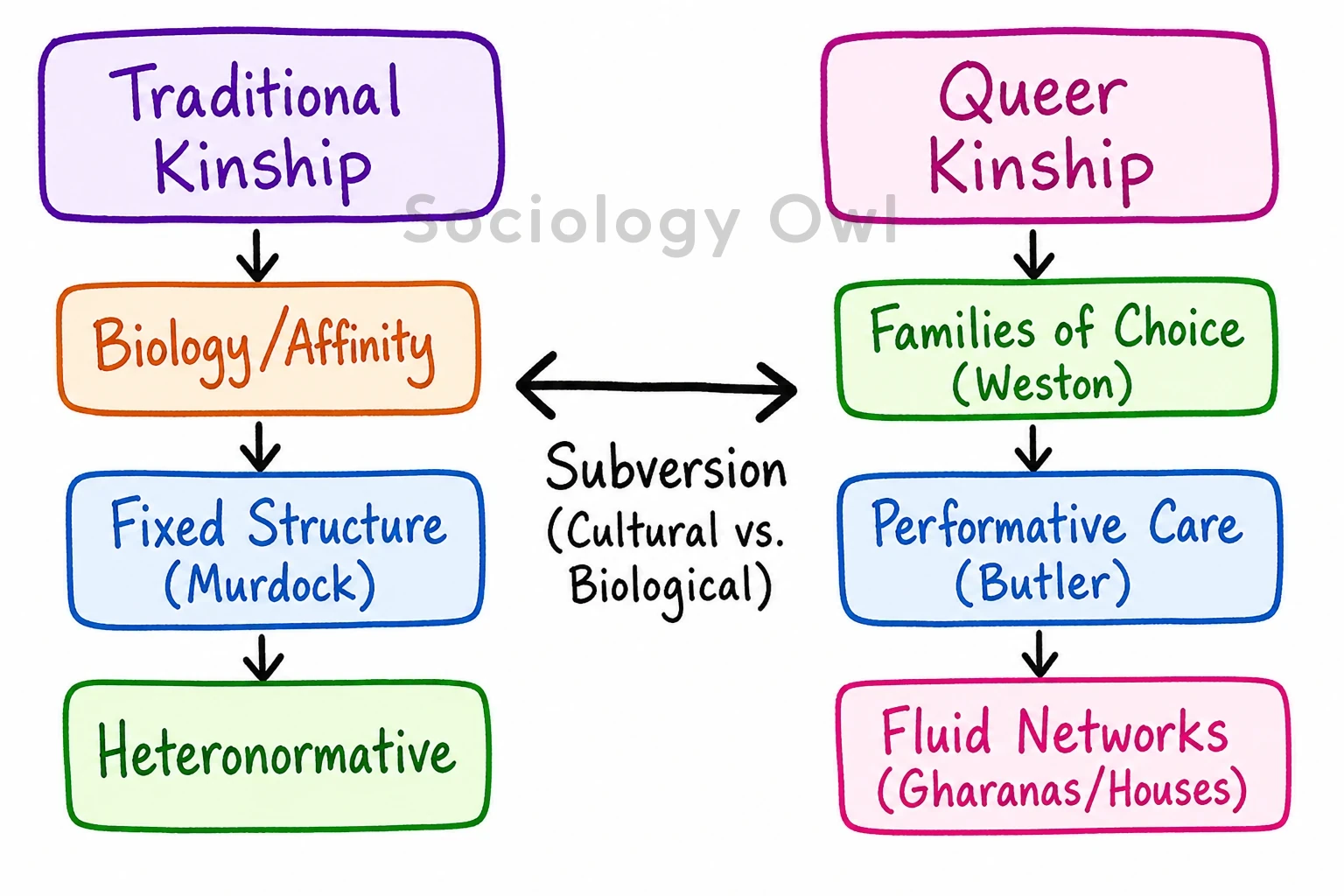
Queer kinship comprises non-normative networks of care. As Kath Weston notes in Families We Choose, these bonds challenge traditional kinship rooted purely in consanguinity and affinity.
Subversion of Traditional Kinship
Decentering Biology: Validating David Schneider’s theory that kinship is cultural rather than biological, queer communities forge chosen families, exemplified by the vital care networks formed during the 1980s AIDS crisis.
Anti-Functionalist: It dismantles G.P. Murdock’s heteronormative reproductive model by normalizing polyamorous households and queer co-parenting frameworks.
Institutionalizing Fictive Kin: It elevates friendship to family. Prominent illustrations include Western Ballroom “Houses” and the Indian Hijra Gharana system (Serena Nanda), which provides social security via Guru-Chela bonds outside biological ties.
Conversely, Homonormativity (Lisa Duggan) reveals how the push for state-sanctioned same-sex marriage often assimilates into traditional structures. The Indian Supreme Court’s Supriyo v. Union of India verdict underscores this ongoing contestation between biological family definitions and queer rights.
Conclusion
Viewed through Judith Butler’s lens, queer kinship redefines family as a performative practice—a continuous act of “doing” care—expanding sociological boundaries far beyond biological determinism.
Q. What do you mean by reliability? Discuss the importance of reliability in social science research.
UPSC Sociology 2025 Paper 1
Model Answer:
According to Alan Bryman, reliability is the degree to which a conceptual measure is stable and consistent. It anchors Positivist epistemology, enabling the replicable measurement of the social world.
Importance and Critique in Research
Scientific Rigour: Facilitates objective measurement of Social Facts. Emile Durkheim’sSuicide utilized reliably recorded official statistics to map social correlations.
Nomothetic Generalization: Crucial for macro-sociology to verify studies, generalize from samples, and formulate universal societal laws.
Precondition for Validity: An unreliable tool fundamentally cannot be valid.
Diverging unemployment data between India’s PLFS and CMIE highlights debates over research tool reliability. Furthermore, large-scale educational surveys like ASER strictly depend on inter-rater reliability across thousands of diverse fieldworkers.
Conclusion
Modern sociology manages the classic reliability-validity trade-off via Triangulation (Norman Denzin)—combining highly reliable quantitative methods with highly valid qualitative techniques to holistically capture complex social realities.
Q. What is science? Do you think that the methods used in natural sciences can be applied to sociology? Give reasons for your answer.
UPSC Sociology 2025 Paper 1
Model Answer:
Science is a systematic enterprise producing empirical, objective knowledge. Sociologically, Robert Merton defined its ethos via CUDOS (Communism, Universalism, Disinterestedness, Organized Skepticism), while Karl Popper argued its hallmark is Falsifiability. The applicability of natural science methods to sociology remains heavily debated.
The Positivist and Anti-Positivist Debates
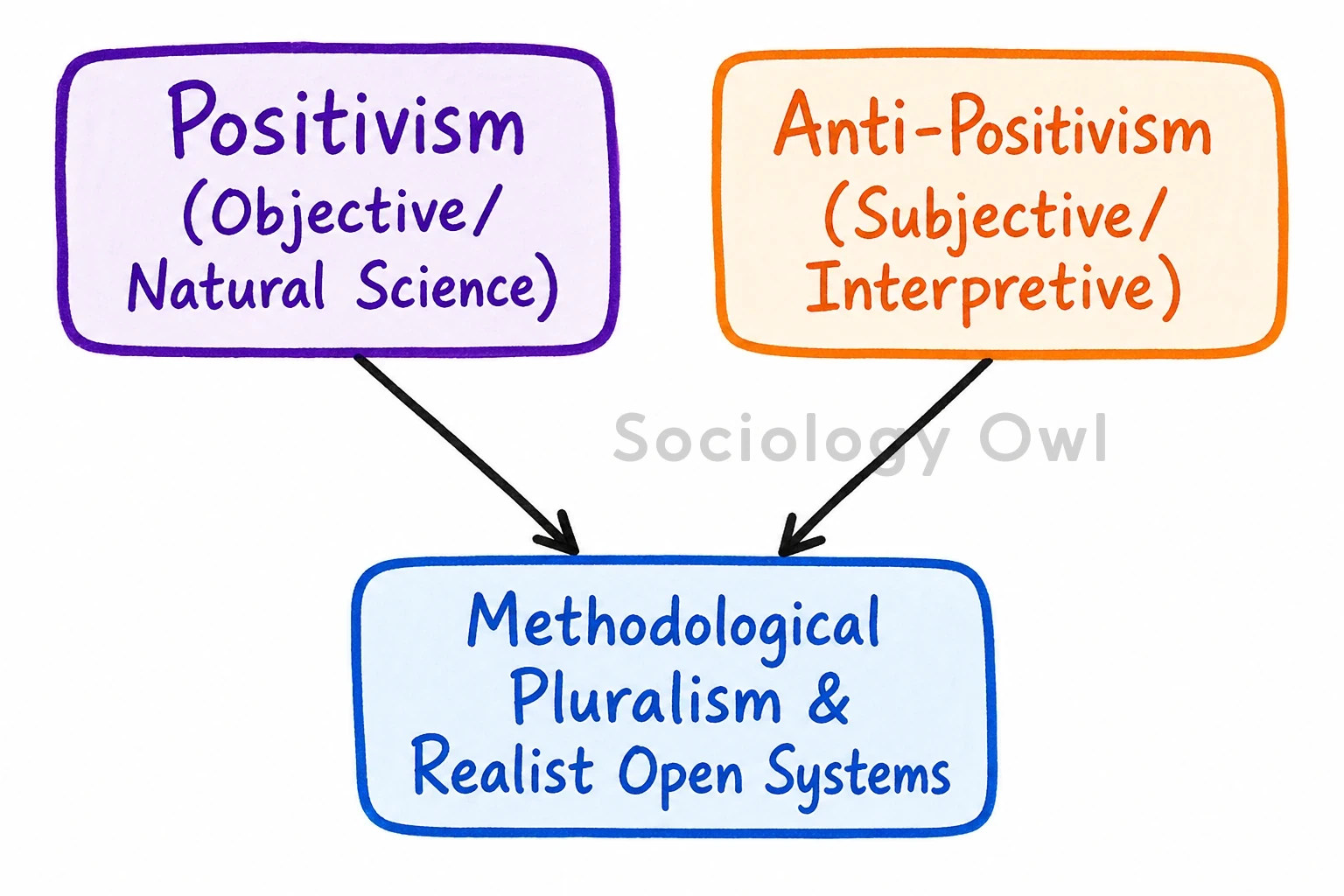
Positivists argue sociology can and must use natural science methods to uncover objective, universal laws.
Auguste Comte: Advocated for a rigorous “social physics” to discover deterministic laws of society.
Emile Durkheim: Argued sociology must study Social Facts as observable “things.” In his seminal work Suicide, he utilized rigorous statistical methods to prove that highly private acts have underlying, objective structural causes.
Interpretivists and critical theorists argue that human consciousness renders natural science methods fundamentally inadequate for sociology.
Max Weber: Posited that humans attach subjective meanings to actions, necessitating Verstehen (empathetic understanding) rather than mere external observation.
Harold Garfinkel: From an ethnomethodological perspective, argued that social reality is continuously constructed through interaction, resisting objective measurement due to reactivity (the Hawthorne Effect).
Jurgen Habermas: Critiqued the blind application of natural science methods as Scientism, arguing it reduces human emancipation to instrumental rationality and numbers.
The Realist Middle-Ground
Keat and Urry: Provide a bridge, arguing sociology is scientific. They distinguish between “Closed Systems” (physics laboratories) and “Open Systems” (meteorology, sociology). Like meteorologists studying atmospheric pressure, sociologists scientifically study complex, unobservable structures (e.g., patriarchy, class) in open environments.
Computational Sociology utilizes Big Data (e.g., social media analytics), reviving neo-positivism to track global human behavior quantitatively. However, qualitative methods remain vital alongside this to contextualize behaviors and expose issues like Algorithmic Bias.
Conclusion
While absolute prediction is impossible due to human consciousness, sociology maintains scientific rigor through Methodological Pluralism (triangulation). By combining quantitative data with qualitative depth, sociology operates not as an exact natural science, but as a robust, empirical social science.
Q. What is a variable in social research? What are their different types? Elaborate.
UPSC Sociology 2025 Paper 1
Model Answer:
As defined by Earl Babbie, a variable is a logical grouping of attributes whose value changes across cases. Central to positivist methodology, variables require operationalization—translating abstract concepts into measurable forms to test hypotheses.
Types of Variables
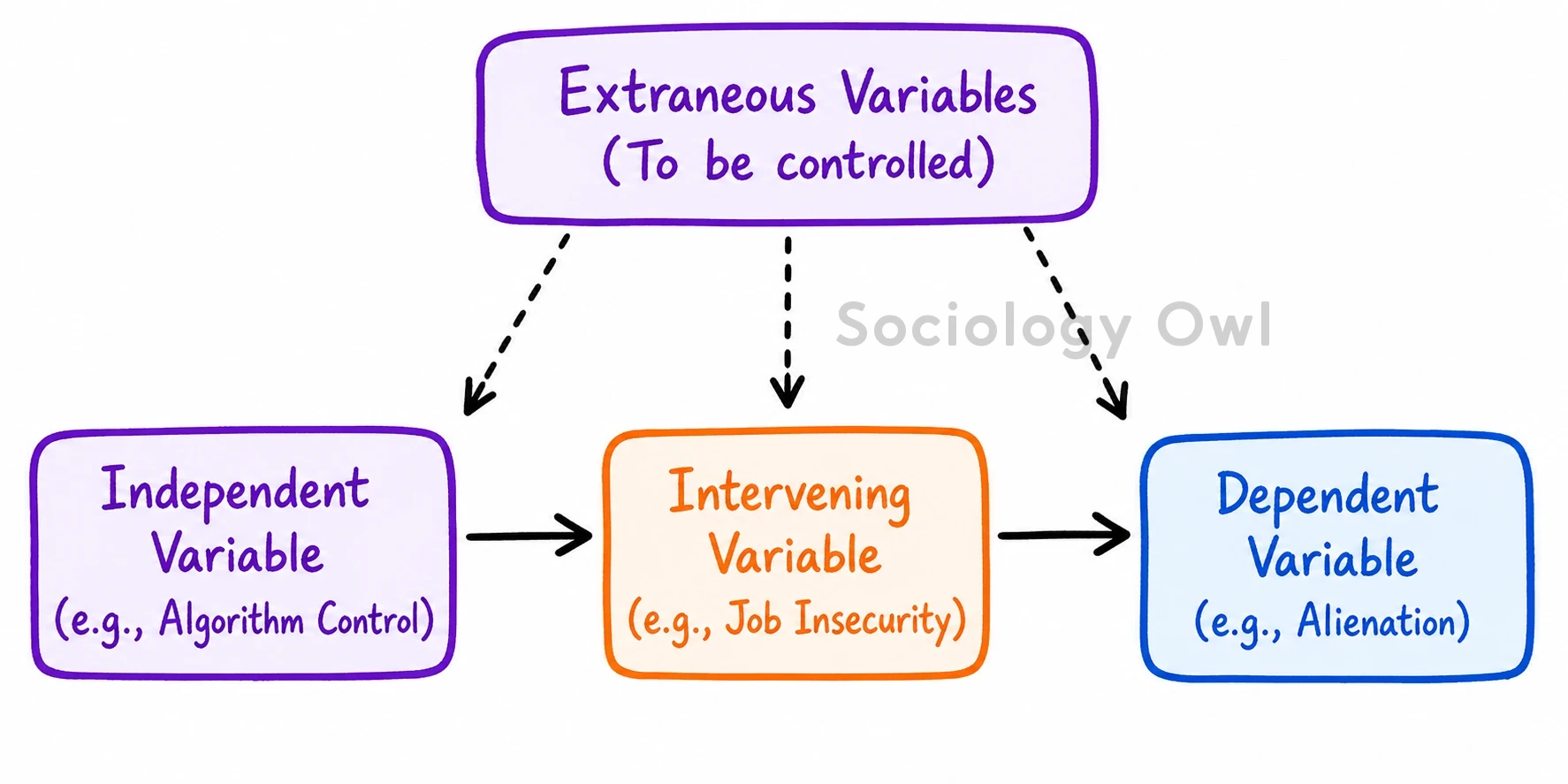
Independent Variable (IV): The presumed cause manipulated or observed.
Dependent Variable (DV): The presumed effect responding to the IV.
Intervening Variable: The mechanism mediating the link between IV and DV.
Extraneous Variable: External factors researchers control to prevent spurious results.
Categorical Variables: Divided into Nominal (no inherent order, e.g., religion) and Ordinal (ranked categories, e.g., social class).
Continuous Variables: Numerical values measured along a continuum (e.g., age, income).
In researching the modern digital economy, sociologists test causal flows such as: Algorithm Control (IV) → Job Insecurity (Intervening) → Worker Alienation (DV).
Conclusion
Emile Durkheim famously established sociology’s scientific credibility in Suicide by correlating Social Integration (IV) with Suicide Rates (DV). However, interpretivists like Herbert Blumer critique strict “Variable Analysis”, arguing it reduces complex, subjective human meaning-making into artificial, static categories.
Q. How does Weber’s Verstehen address the objectivity-subjectivity debate in sociology?
UPSC Sociology 2025 Paper 1
Model Answer:
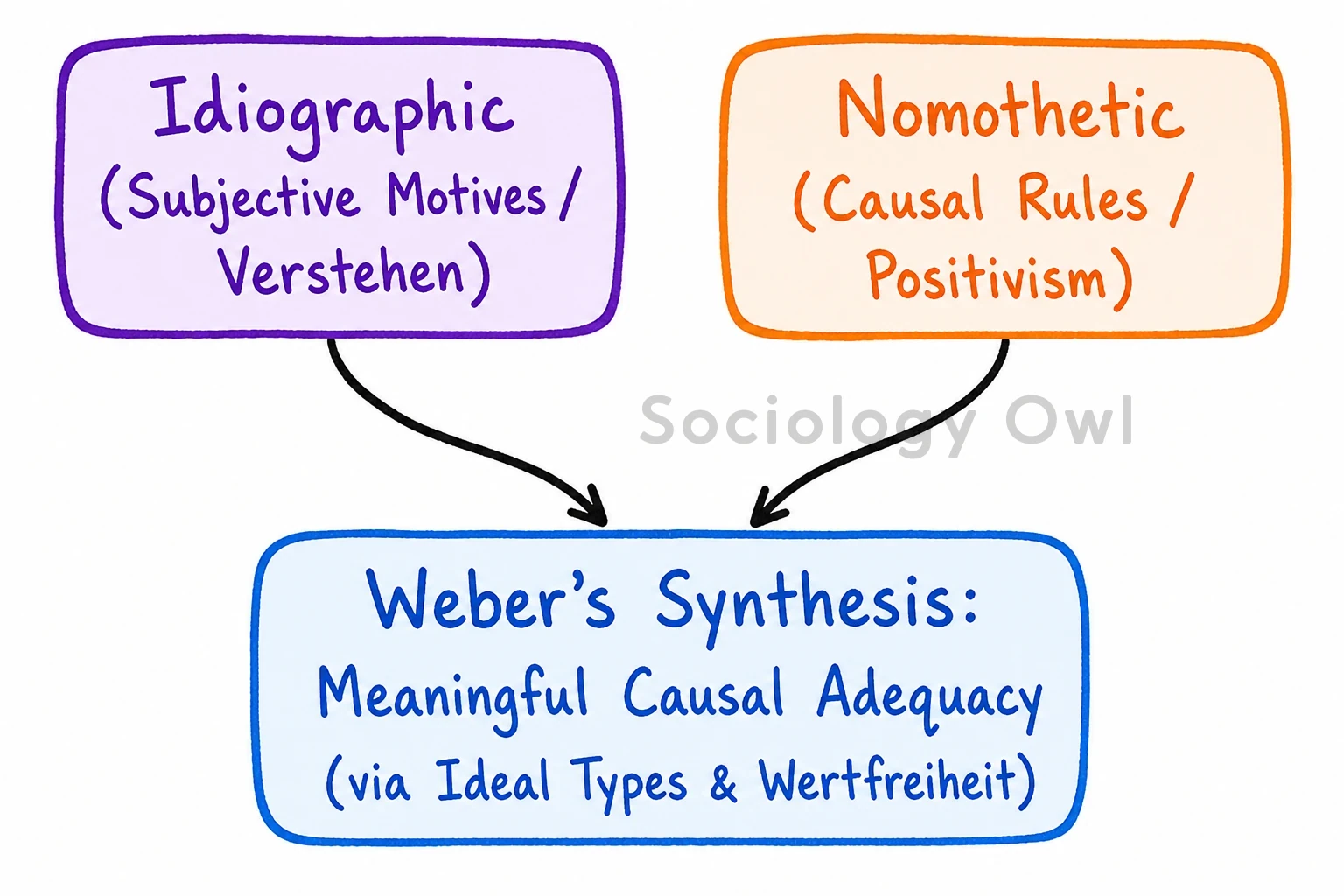
Max Weber’sVerstehen (interpretive understanding) emerged during the German Methodenstreit, bridging the methodological debate by synthesizing positivist (objective/nomothetic) and Wilhelm Dilthey’s interpretivist (subjective/idiographic) traditions.
The Subjectivity-Objectivity Synthesis
Embracing Subjectivity: Weber analyzes Social Action through Erkl¤rendes Verstehen (motivational understanding) to empathetically grasp the subjective internal motives driving human behavior.
Ensuring Objectivity: These subjective insights are systematically structured into Erkl¤ren (causal explanation). Scientific objectivity is rigorously safeguarded using analytical constructs like Ideal Types and by maintaining Wertfreiheit (value-neutrality).
Critical Perspectives
Positivist Critique:Ernest Nagel argued that Verstehen is merely a heuristic device that lacks strict empirical verifiability.
Phenomenological Critique:Alfred Schutz contended that Weber relied too heavily on objective structural typologies, neglecting the continuous construction of everyday intersubjectivity.
Regarding COVID-19 vaccine hesitancy, positivists objectively count the unvaccinated. Verstehen uniquely decodes the subjective institutional mistrust driving this behavior, enabling holistic sociological explanations.
Conclusion
Max Weber masterfully rescued sociology from cold positivism without abandoning scientific rigor, laying the essential methodological groundwork for modern interpretative traditions like symbolic interactionism.