Analyse the perspectives of Isolation, Assimilation and Integration in understanding the trajectories of Indian Tribal Development.
Model Answer:
The trajectory of Indian tribal development historically revolves around the “Elwin-Ghurye Debate.” Sociologist Surajit Sinha emphasizes that tribal identity is not static but shaped by varying degrees of colonial and post-colonial interactions with mainstream society.
Trajectories of Tribal Development
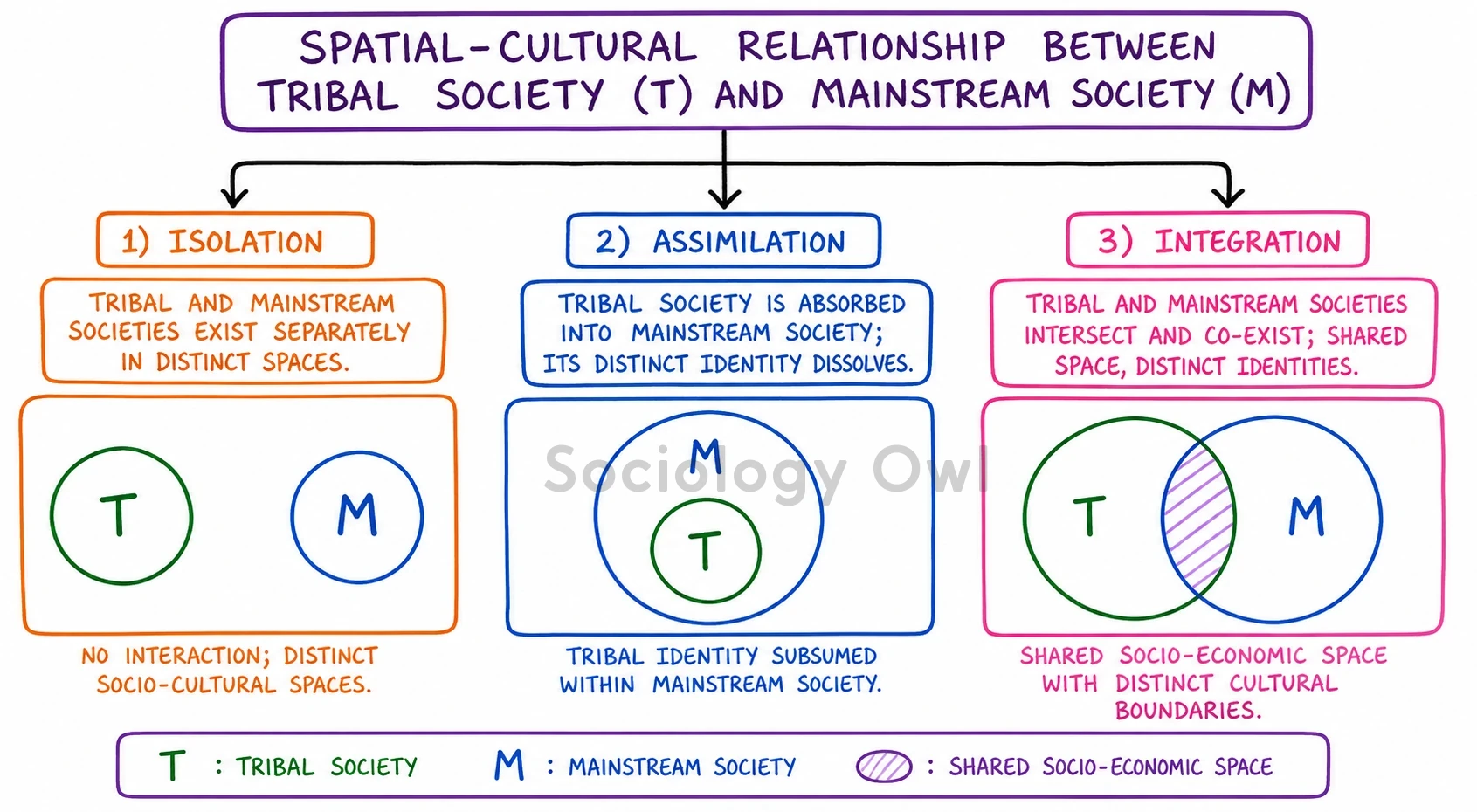
- Isolation: Supported by colonial administrators like J.H. Hutton and initially by Verrier Elwin in his book The Baigas. Elwin proposed a “National Park Policy” to protect tribes from exploitation by Dikus (outsiders/moneylenders), though he later favored integration.
- Assimilation: G.S. Ghurye categorized tribes as “backward Hindus,” advocating their absorption. N.K. Bose conceptualized the “Hindu Method of Tribal Absorption,” arguing that economic security within the caste system drove assimilation, a process often facilitated by what M.N. Srinivas termed Sanskritization.
- Integration: A structural-functional middle path. Jawaharlal Nehru formulated the Tribal Panchsheel to ensure development without cultural erosion, backed by D.N. Majumdar’s sociological vision of “creative integration.”
The Subaltern Critique
Contemporary sociologist Virginius Xaxa critiques these frameworks as paternalistic, noting they were formulated entirely by non-tribals. He argues that structural “integration” often manifested as “asymmetric integration,” leading to forced assimilation, resource alienation, and displacement.
Tribal policy has shifted from state-led integration toward a “Rights-Based Approach.” The PESA Act (1996) and Forest Rights Act (2006) prioritize tribal autonomy. For instance, the Supreme Court upheld the rights of the Dongria Kondh tribe in Niyamgiri against Vedanta mining, illustrating indigenous resistance to coercive integration.
Conclusion
As highlighted by the Xaxa Committee Report (2014), tribal development must move beyond historical binaries. Modern sociological paradigms advocate for “Inclusion with Autonomy,” ensuring tribal communities remain active architects of their socio-economic and cultural destinies rather than mere objects of development.