How do you account for the increasing significance of religion in public and personal spheres in the context of secularization thesis in India? Explain.
Model Answer:
The Secularization Thesis (Peter Berger) posits religion’s marginalization alongside modernization. However, in India, religion has dynamically reconfigured itself. T.N. Madan terms applying this Western model to India’s unique socio-cultural landscape a “Eurocentric conceit.”
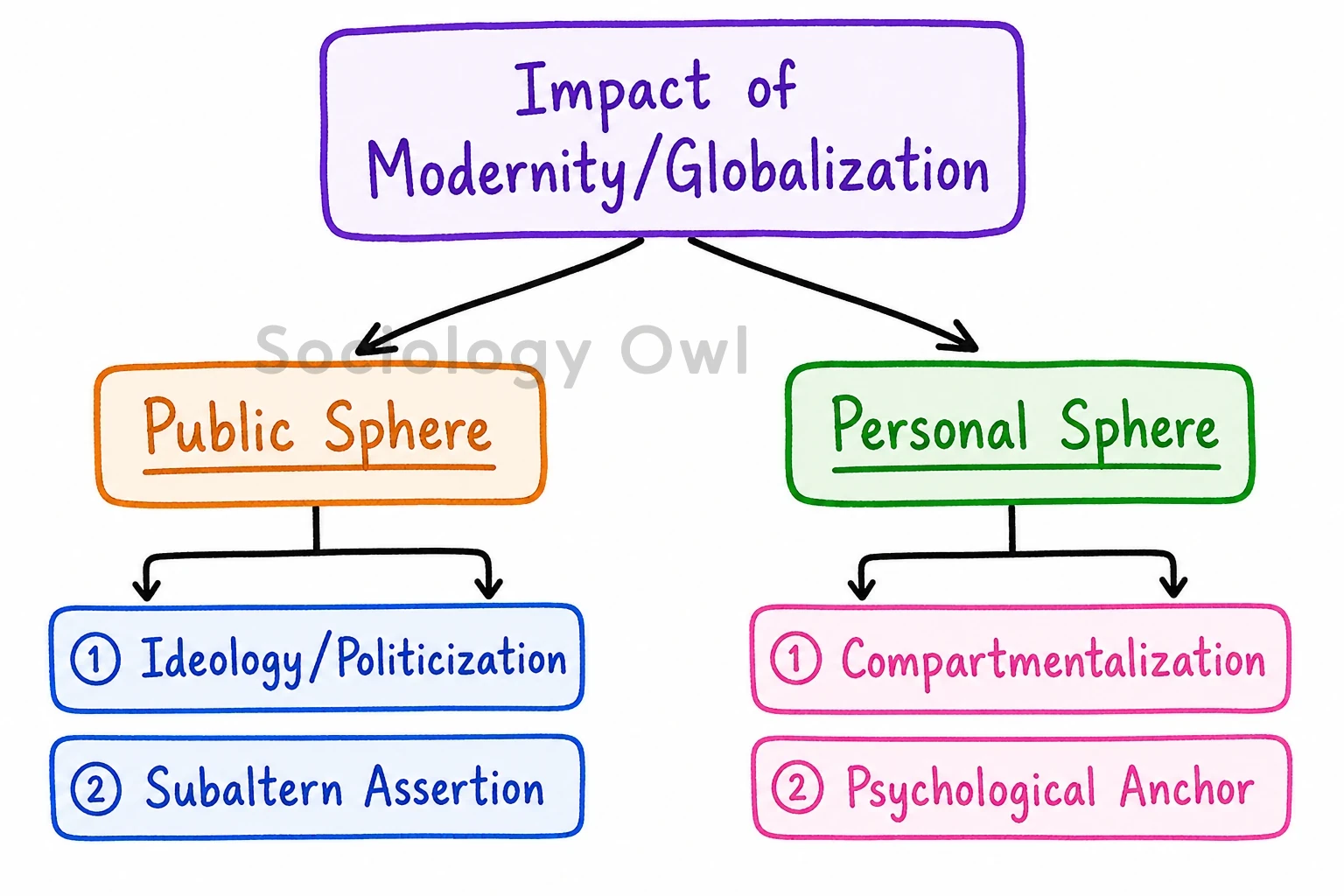
Religion in the Public Sphere
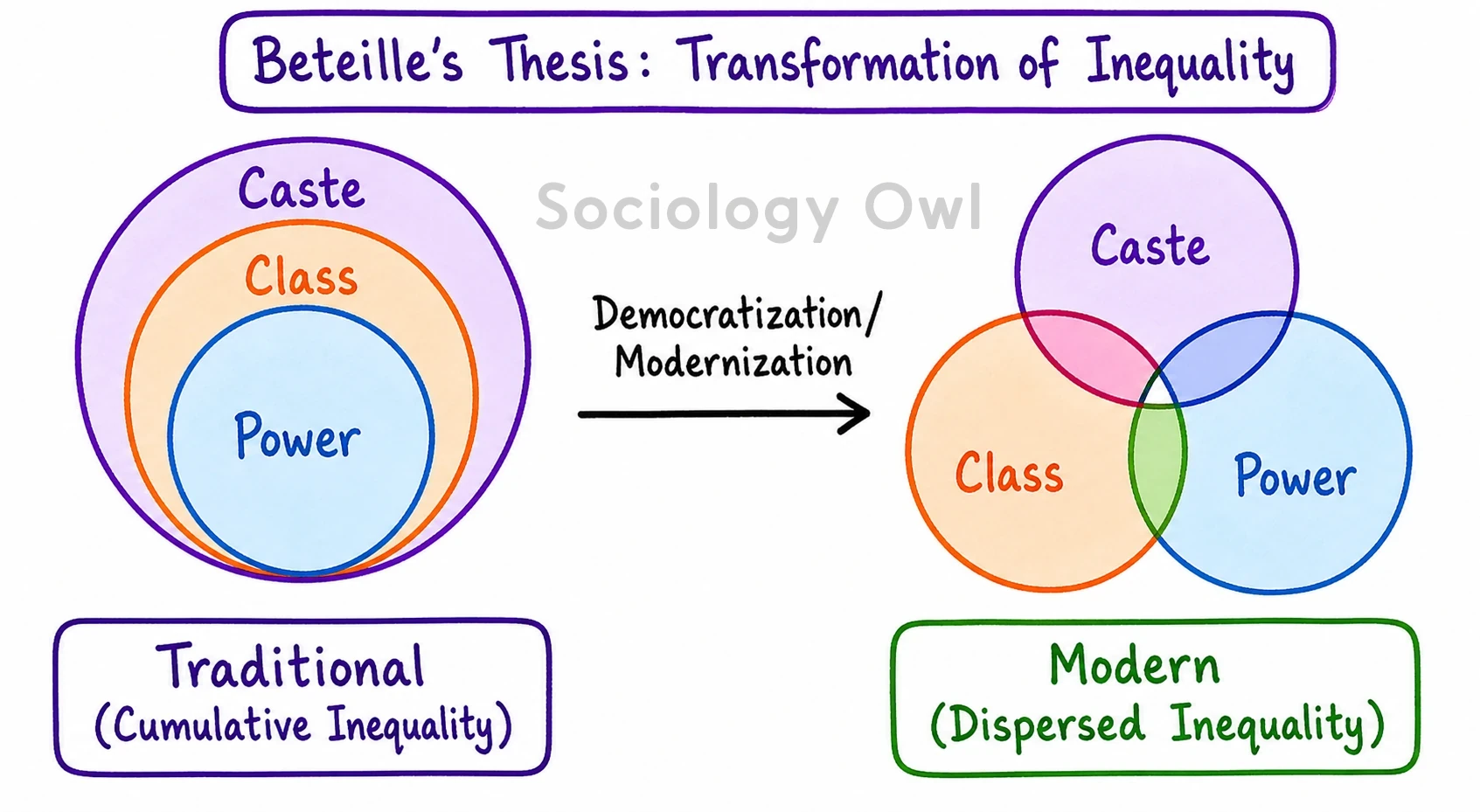
- Religion as Ideology: Ashis Nandy asserts a shift from “Religion as Faith” (personal, tolerant) to “Religion as Ideology” (political identity marker), driving the hyper-visibility of public rituals and majoritarian spatial dominance.
- State Engagement: Rajeev Bhargava’s concept of “Principled Distance” highlights how state involvement in religious affairs (like temple management) sustains religion’s public prominence.
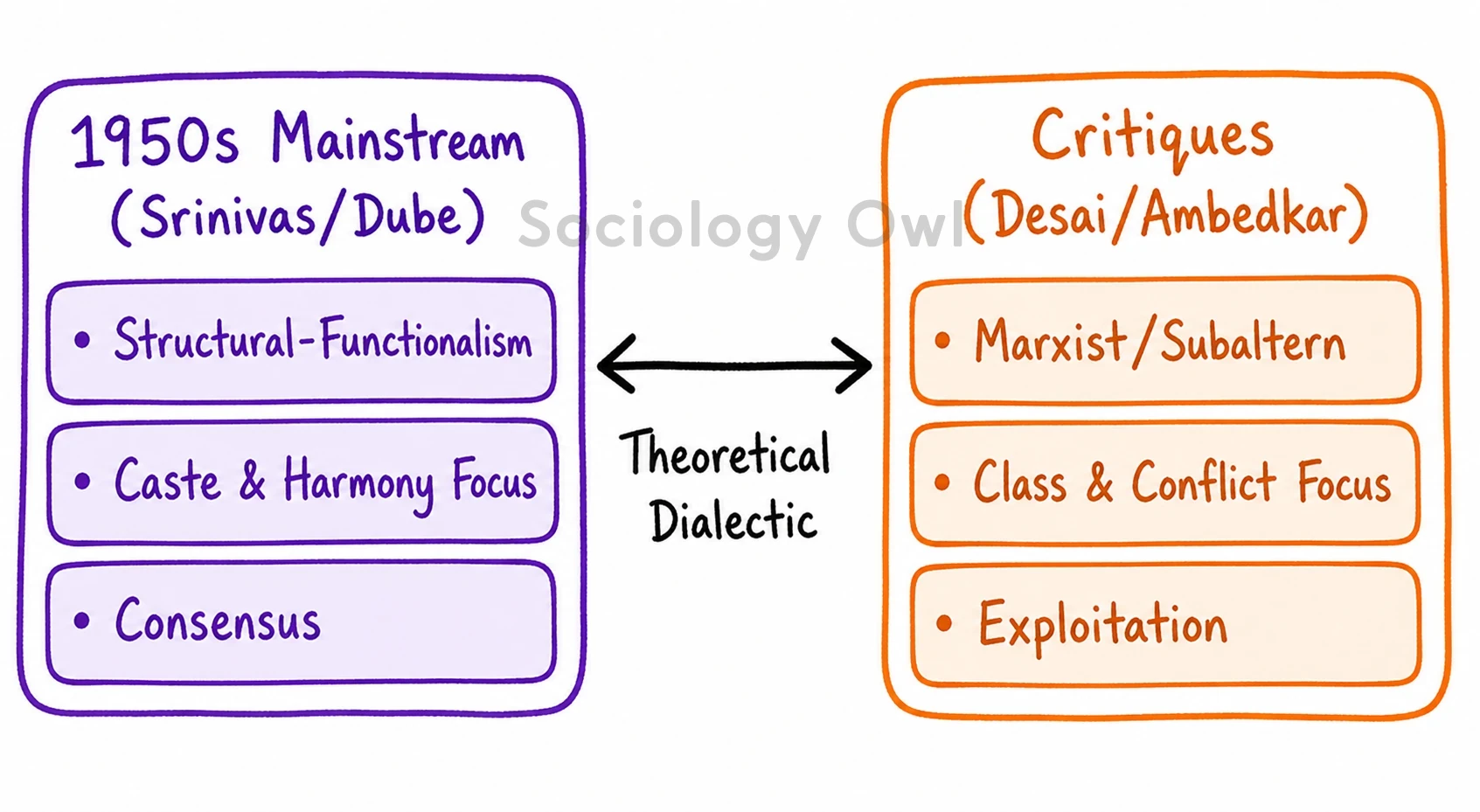
- Marxist & Subaltern Views: A.R. Desai argues ruling classes use religious mobilization to divert attention from material inequalities. Conversely, subalterns use religion for public assertion and challenging hegemony (e.g., Sarnaism, Neo-Buddhism).
Religion in the Personal Sphere
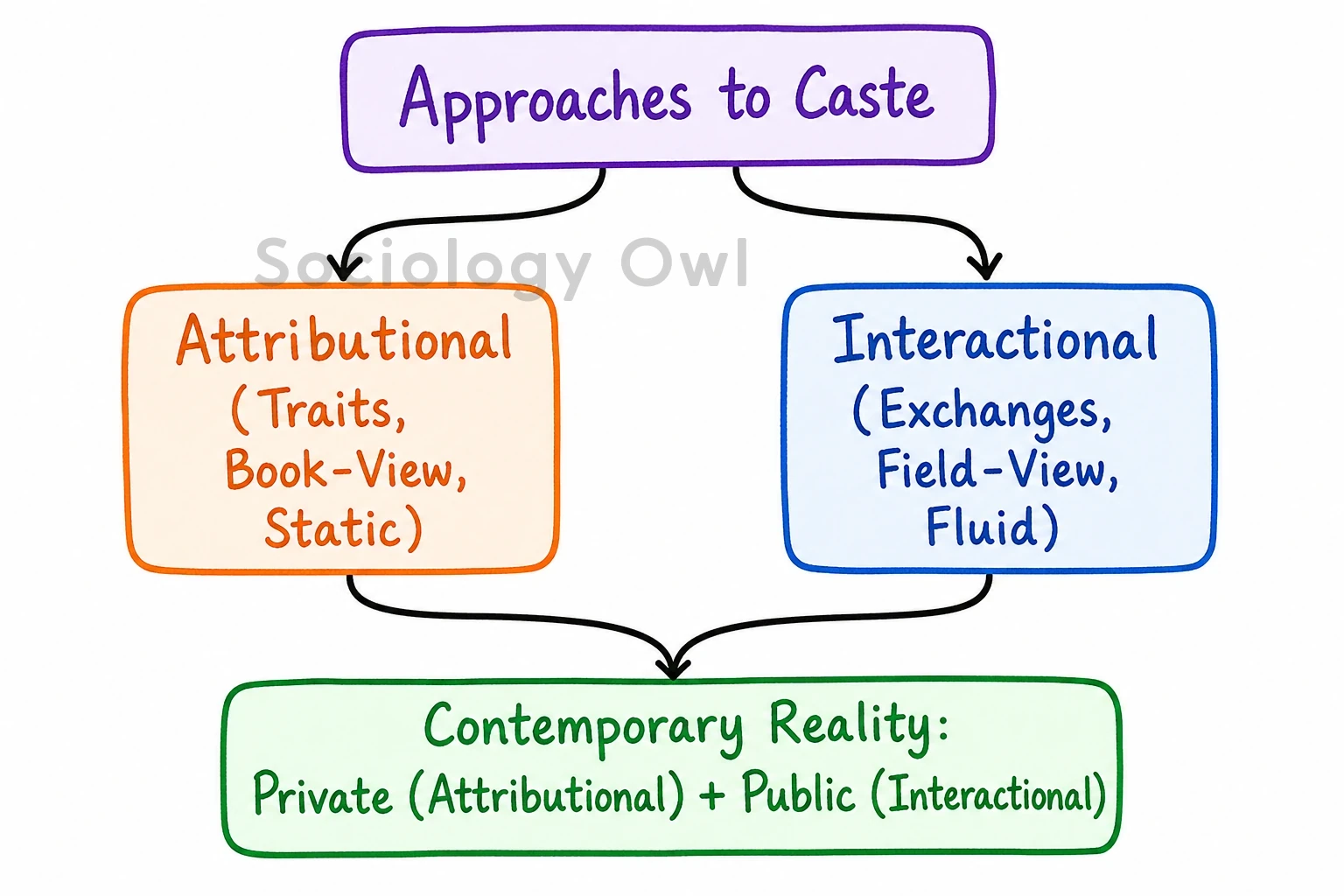
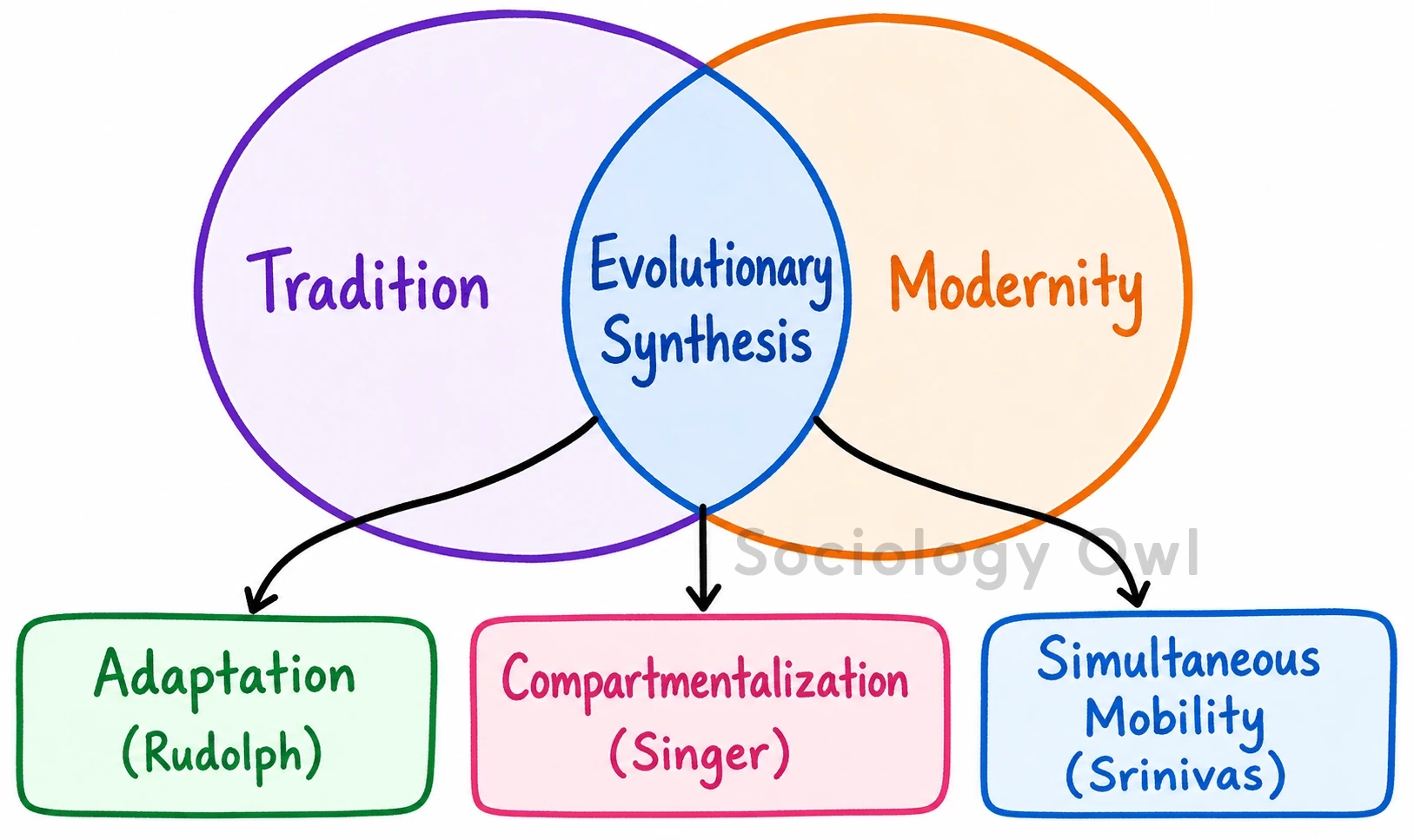
- Compartmentalization: Milton Singer observed that Indians act rationally at work but remain deeply religious at home, allowing tradition and modernity to coexist.
- Secularization OF Religion: Rather than moving away from faith, faith itself is adapting. Modern spiritual gurus emphasize secular corporate values like “wellness” and “stress management” over rigid orthodox rituals.
- Psychological Anchor: Yogendra Singh argues that amidst the rapid socio-economic alienation of globalization, religion provides individuals with ontological security and identity.
The rise of the “Spiritual Economy” perfectly illustrates this paradox. Dipankar Gupta notes that technology amplifies rather than dilutes faith, visible in the commodification of religion via organized religious tourism circuits and digital platforms like Astrotalk.
Conclusion
Modernization has not eclipsed religion in India but triggered its politicized and commodified reconfiguration. This demonstrates that modernity and religiosity can co-exist, necessitating a uniquely Indian sociological framework grounded in Sarva Dharma Sambhava rather than Western secularization.