Model Answer

Q. Describe the main features of Indian new middle class. How is it different from the old middle class?

Q. Describe the main features of Indian new middle class. How is it different from the old middle class?

UPSC Sociology 2025 Paper 2

Model Answer:

While the Old Middle Class (OMC) was a product of colonial education and state administration (B.B. Misra), the New Middle Class (NMC) emerged post-1991, driven by neoliberal globalization and a market-led economy.

Features of the New Middle Class

  • Consumerist Identity: As Pavan Varma explores in The Great Indian Middle Class, the NMC is defined more by its aspirational consumption than production (Leela Fernandes).
  • Caste-Class Nexus: Satish Deshpande argues the NMC masquerades upper-caste privilege as “merit,” having successfully converted traditional caste capital into modern educational capital.
  • Secession of the Successful: Dipankar Gupta notes their tendency to bypass public utilities in favor of privatized global standards (e.g., gated communities).

Distinctions from the Old Middle Class

  • Economic Ethos: The OMC valued frugality and public-sector job security; the NMC embraces risk-taking and MNC employment.
  • Political Ideology: The OMC focused on Nehruvian nation-building and welfarism. The NMC engages in issue-based activism and “Bourgeois Environmentalism” (Amita Baviskar), prioritizing urban beautification over subaltern rights.

Recent massive layoffs in IT and Ed-Tech expose the NMC’s underlying vulnerabilities, revealing a rising, insecure “Precariat” class that completely lacks the systemic job security of the OMC.

Conclusion

While the OMC was state-created, the NMC is market-produced. Despite being a demographic minority, the NMC holds disproportionate hegemony in shaping the cultural and economic aspirations of a globalized India.

Q. Describe the main features of Indian new middle class. How is it different from the old middle class? Read More »

Q. Marriage as an institution has undergone a radical transformation from ‘ritual’ to ‘commercial’ in its outlook. Explain the factors behind this change.

Q. Marriage as an institution has undergone a radical transformation from ‘ritual’ to ‘commercial’ in its outlook. Explain the factors behind this change.

UPSC Sociology 2024 Paper 1

Model Answer:

Marriage from Ritual to Commercial

Sociologically, marriage has transitioned from a duty-bound sacrament rooted in Emile Durkheim’s concept of the “sacred” to a commodified contract. This transformation reflects a shift from traditional kinship structures to late-capitalist hyper-consumerism.

Factors Driving Commercialization

  • Status Assertion: Following Thorstein Veblen’s “Conspicuous Consumption”, weddings have become arenas to display wealth. The neo-rich utilize extravagant celebrations for class assertion.
  • Market Infiltration: The Frankfurt School’s “Commodification of Culture” explains how capitalist markets turn sacred familial rituals into profitable industries.
  • Rationalization: George Ritzer’s “McDonaldization” is evident in the booming wedding industry, where planners offer predictable, calculable, and standardized destination packages.
  • Media Spectacle: Patricia Uberoi notes how diaspora and cinema have mainstreamed the commercially lucrative “Big Fat Indian Wedding.”
  • Structural Shifts: Reflecting Ulrich Beck’s “Individualization”, marriage has shifted from a communal obligation to an individualistic, romantic, and commercialized lifestyle choice.

The Repackaging of Rituals

Commercialization has not erased rituals but amplified them for profit. Expanded pre-wedding ceremonies represent what Eric Hobsbawm calls “Invented Traditions”, fusing the sacred with market logic to generate new consumption avenues.

The “Diamond Engagement Ring,” engineered by the De Beers cartel, exemplifies how a purely commercial marketing campaign was successfully institutionalized as an essential global marriage “ritual.”

Conclusion

While its core function of regulating kinship remains, the outward manifestation of marriage has morphed. It has shifted from generating Durkheimian “collective effervescence” for community solidarity into a pervasive capitalist commodity, mirroring market hegemony in late-modern societies.

Q. Marriage as an institution has undergone a radical transformation from ‘ritual’ to ‘commercial’ in its outlook. Explain the factors behind this change. Read More »

Discuss different forms of deprivation associated with slums.

Model Answers

Q: Discuss different forms of deprivation associated with slums.

Question asked in UPSC Sociology 2022 Paper 2. Download our app for last 20 year question with model answers.

Model Answer:

A.R. Desai views slums as spatial manifestations of structural inequalities generated by capitalist urbanization. In India, Ashish Bose terms this phenomenon the “slumming of urbanization”, driven largely by rural distress and distress migration.

Forms of Deprivation in Indian Slums

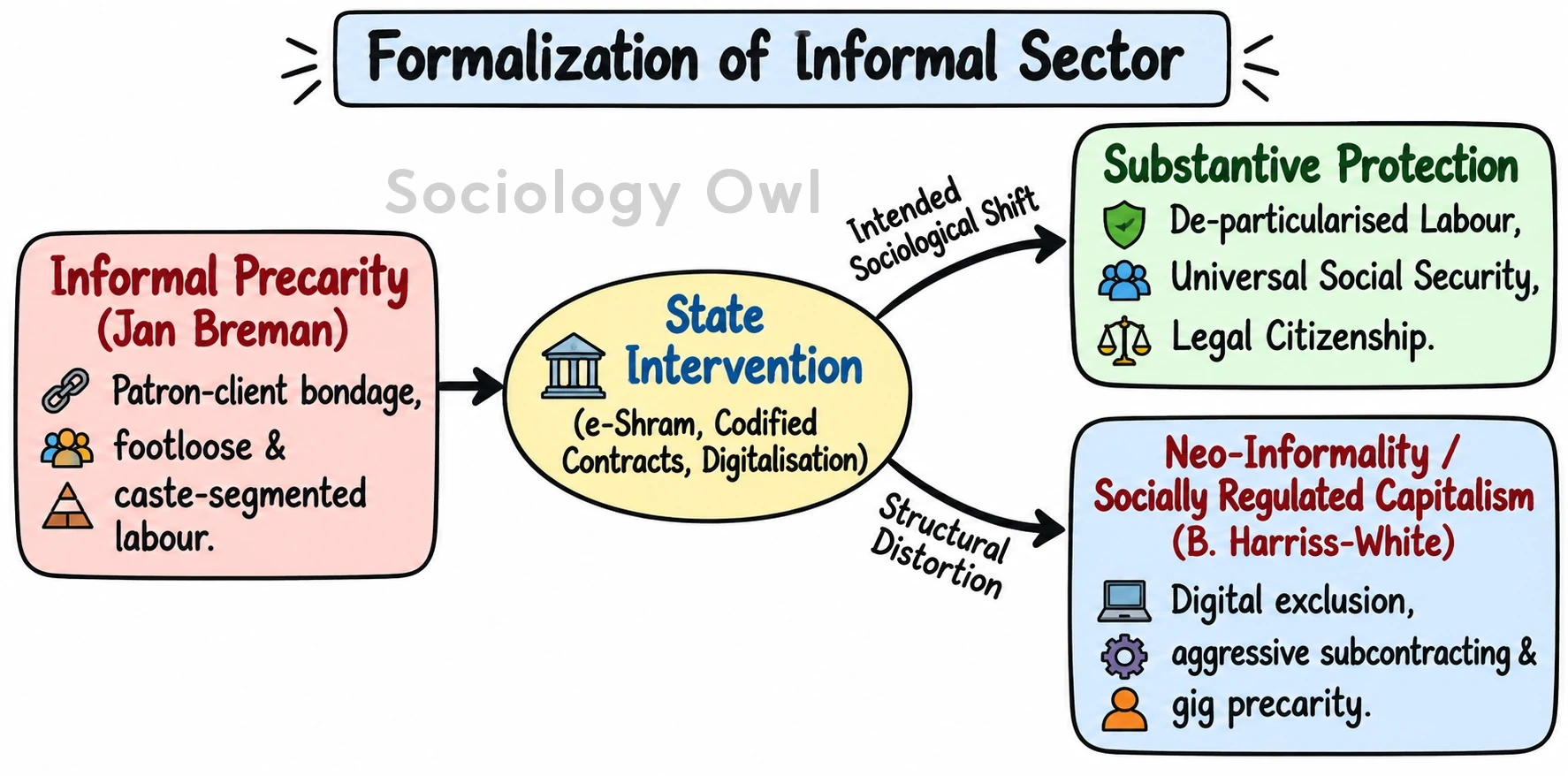
  • Economic Deprivation: Slum dwellers face overlapping capability deficits (Amartya Sen). Jan Breman identifies them as “footloose labour”, trapped in the informal sector with subsistence wages and no social security.
  • Socio-Spatial Deprivation: Urban deprivation reflects the Caste-Class Nexus, disproportionately housing Dalits, Adivasis, and minorities. Denied David Harvey’s “Right to the City”, they suffer severe health, housing, and infrastructural deficits.
  • Political Deprivation: Lacking legal land tenure, slum dwellers are excluded from formal civil society. Partha Chatterjee argues they survive in a “Political Society”, negotiating basic needs (water, electricity) through patronage and vote-bank politics rather than formal citizenship rights.

While deprivation is stark, viewing slums merely through Oscar Lewis’s “culture of poverty” ignores resident agency. Indian slums, like Dharavi, are highly productive hubs of informal enterprise, contributing millions to the economy.

Conclusion

Addressing multidimensional slum deprivation requires abandoning the exclusionary “bulldozer approach”. Policies like the PM Awas Yojana must shift from mere physical resettlement toward holistic social inclusion, formally recognizing the urban poor as legitimate city-builders.

Discuss different forms of deprivation associated with slums. Read More »

Is social democracy a precondition for political democracy ? Comment.

Model Answers

Q: Is social democracy a precondition for political democracy ? Comment.

Question asked in UPSC Sociology 2021 Paper 2. Download our app for last 20 year question with model answers.

Model Answer:

B.R. Ambedkar famously warned of a “life of contradictions”: political equality (“one man, one vote”) coexisting with profound social inequality. Social democracy is therefore essential for genuine democratic participation.

Social Democracy as a Precondition

Without social egalitarianism, democratic institutions face elite capture:

  • A.R. Desai highlights the caste-class nexus, arguing that groups controlling economic resources inevitably dictate political power.
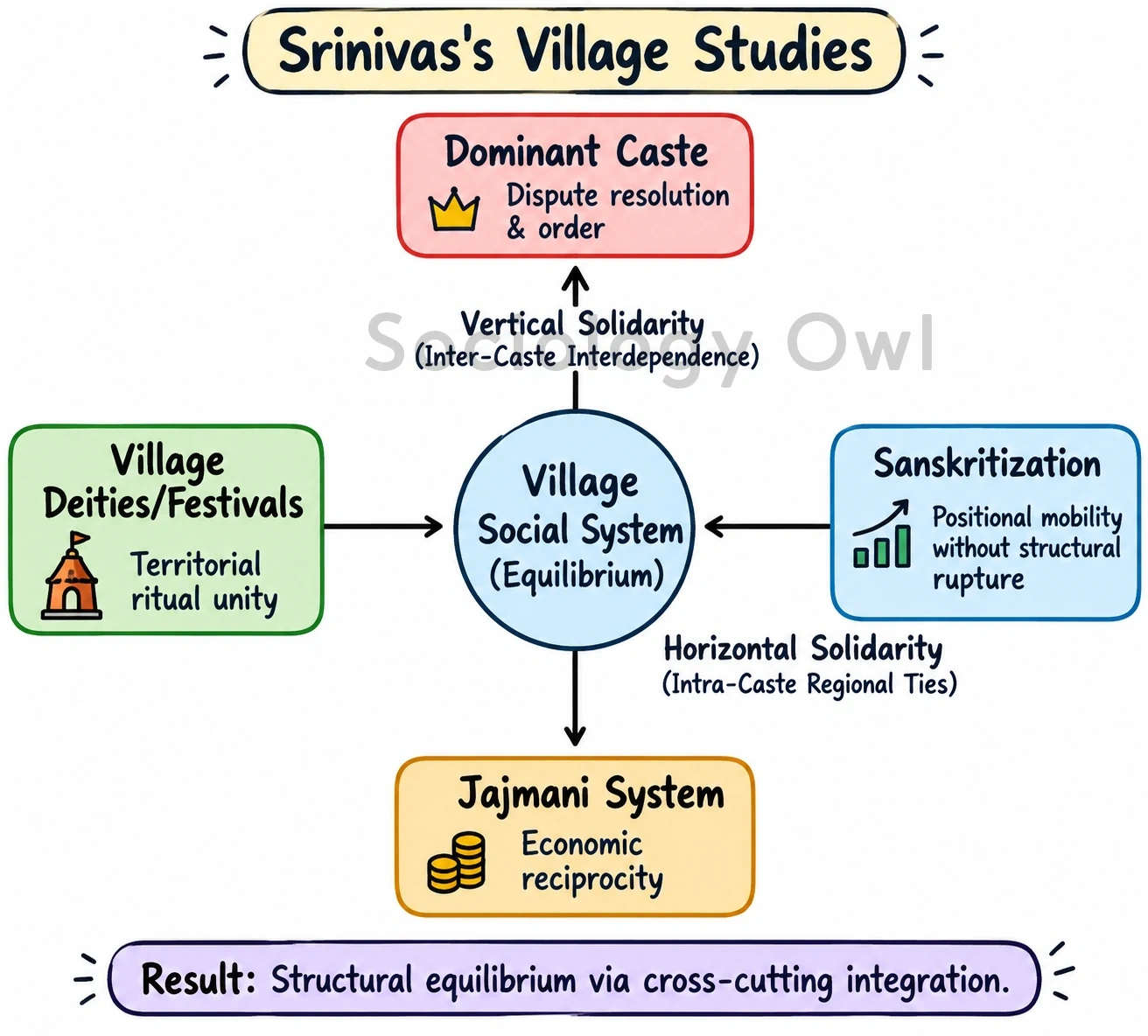
  • M.N. Srinivas demonstrated how the Dominant Caste captures local Panchayats, proving that traditional hierarchies restrict true political access for the marginalized.

The Indian Paradox

Conversely, India adopted political democracy first, using it as a tool to drive social democratization:

  • Rajni Kothari’s concept of the “Politicization of Caste” shows marginalized groups utilizing vote-banks to demand social dignity.
  • Christophe Jaffrelot’s The Silent Revolution describes how universal franchise empowered lower-castes to challenge traditional hegemony.

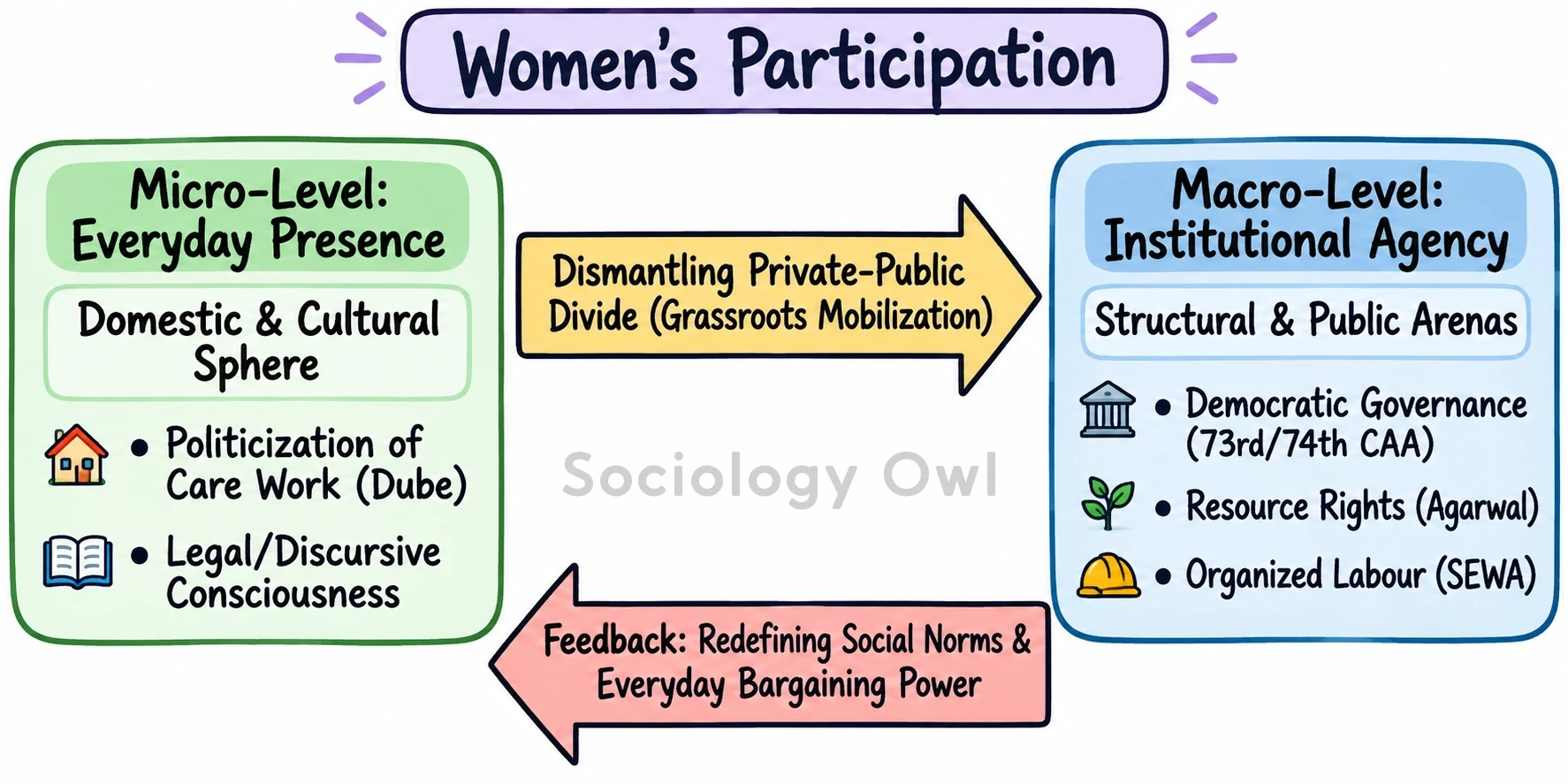
Despite political reservations via the 73rd Amendment, the absence of social democracy (deep-rooted patriarchy) breeds “Sarpanch Patis” (proxy husbands), subverting true political empowerment for women.

Conclusion

While social democracy is the ideal foundation, political democracy in India operates as its catalyst. Both are dialectically linked, requiring mutual reinforcement to ensure substantive democratic deepening.

Is social democracy a precondition for political democracy ? Comment. Read More »

Is ‘ageing an emerging issue in Indian society ? Discuss the major problems of the old age people in India.

Model Answers

Q: Is 'ageing an emerging issue in Indian society ? Discuss the major problems of the old age people in India.

Question asked in UPSC Sociology 2021 Paper 2. Download our app for last 20 year question with model answers.

Model Answer:

India’s changing population dynamics can be understood through the Demographic Transition Theory. A shift from high fertility and mortality to low fertility and increased life expectancy has led to the “greying of the population.” With the elderly population projected at roughly 138 million in 2021, sociologist S. Irudaya Rajan notes that this demographic shift makes ageing a critical structural issue.

Sociological Dimensions of Ageing in India

Shifting Authority: S.C. Dube observes a transition from a traditional gerontocracy—where elders held ultimate economic and moral authority—to a modern structure where economic power favors the urban-migrating youth.

Kinship Transformation: A.M. Shah challenges the simplistic “breakdown of the joint family” thesis. He notes the rise of “modified extended families” where emotional ties exist despite physical distance, though this still leaves elders vulnerable to isolation.

Major Problems of the Elderly

Structural Rolelessness: Applying Talcott Parsons’ Disengagement Theory, modern society structurally strips elders of traditional decision-making roles, leading to a loss of status. From a Marxist perspective, capitalist markets marginalize them as “unproductive labor.”

The Feminization of Ageing: Leela Gulati highlights that elderly women face double marginalization due to patriarchal deprivation of property rights, longer life expectancy, and the social stigma of widowhood.

Intersectional Inequalities: Ageing is not a uniform experience. While urban upper-class elders primarily suffer from social isolation, rural Dalit elders often face acute material deprivation, forced into physical labor until death.

Crisis of Care: The modern Sandwich Generation is caught between hyper-competitive capitalist demands and eldercare, straining Intergenerational Solidarity and increasing instances of elder neglect.

The recent LASI (Longitudinal Ageing Study in India) report empirically validates these challenges, revealing high chronic morbidities and a severe lack of social security among the elderly. Furthermore, India’s rapid digitization (e.g., cashless economies, digital healthcare) has created a sharp Digital Divide, structurally alienating older generations.

Conclusion

Addressing population ageing requires moving away from viewing the elderly as a “dependent burden” to recognizing them as a resource in the “Silver Economy.” India must synthesize traditional values of filial piety with robust state-backed institutional support to ensure dignified ageing.

Is ‘ageing an emerging issue in Indian society ? Discuss the major problems of the old age people in India. Read More »

Q. Discuss the major challenges related to women’s reproductive health in India. What measures would you suggest to overcome these challenges?

Q. Discuss the major challenges related to women’s reproductive health in India. What measures would you suggest to overcome these challenges?

UPSC Sociology 2024 Paper 2

Model Answer:

In India, women’s reproductive health transcends medical boundaries, operating as an arena of biopolitics. A woman’s reproductive capacity is frequently controlled by patriarchal kinship networks and state demographic targets, severely curtailing her bodily autonomy.

Sociological Challenges in Reproductive Health

  • Patriarchal Kinship: Leela Dube’s “Seed and Earth” metaphor illustrates how Indian kinship views men as active providers (seed) and women as passive receptacles (earth), stripping women of reproductive agency.
  • Intra-Household Dynamics: Tulsi Patel’s research on fertility in Rajasthan reveals that decisions regarding contraception and pregnancy are dictated by husbands and mothers-in-law, negating female choice.
  • Cultural Preferences: Amartya Sen’s concept of “Missing Women” highlights how son meta-preference leads to repeated, health-endangering pregnancies and sex-selective abortions.
  • Intersectionality & State Biopolitics: Scholars like Sharmila Rege note that marginalized (Dalit/Adivasi) women face a dual burden: inadequate healthcare and systemic targeting by state sterilization drives. The disproportionate state focus on female tubectomies over male vasectomies reflects deep-seated gender biases.

Measures for Reproductive Justice

  • Rights-Based Paradigm: Shift from demographic targeting to affirming bodily autonomy. The Medical Termination of Pregnancy (MTP) Amendment Act, 2021 must evolve beyond requiring medical board approvals for abortions.
  • Engaging Men: Sociological interventions must dismantle the patriarchal stigma surrounding male contraception and vasectomies.
  • Formalizing Care Labor: A Marxist-Feminist critique demands recognizing ASHA workers—the backbone of rural maternal health—as formalized employees rather than exploited, underpaid “volunteers.”

According to NFHS-5, female sterilization accounts for over 70% of modern contraceptive use in India. This contemporary data underscores how the structural burden of population control continues to fall almost entirely on women.

Conclusion

Improving reproductive health is a structural challenge, not just a clinical one. True progress demands dismantling rigid intersections of gender, caste, and kinship to establish reproductive justice, transforming women from subjects of state policy to autonomous agents of their bodies.

Q. Discuss the major challenges related to women’s reproductive health in India. What measures would you suggest to overcome these challenges? Read More »

Q. Do you think that forced displacement of labourers has caused their deprivation and resultant inequalities during the recent past years? Elaborate.

Q. Do you think that forced displacement of labourers has caused their deprivation and resultant inequalities during the recent past years? Elaborate.

UPSC Sociology 2025 Paper 2

Model Answer:

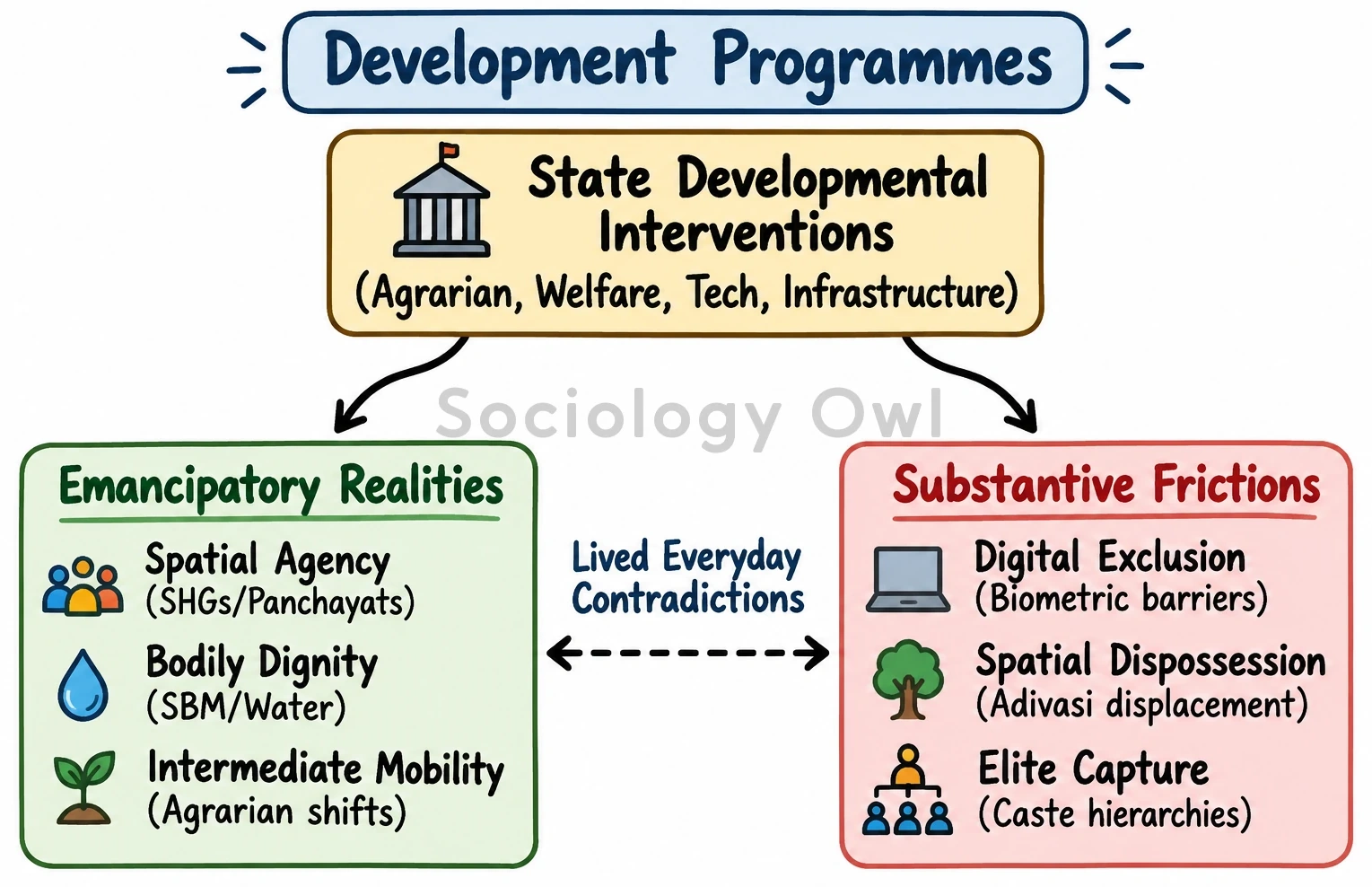
Forced displacement of labourers in India encompasses both crisis-induced shocks (like COVID-19 reverse migration) and Development-Induced Displacement (DID). This dual phenomenon severely deepens deprivation and exacerbates structural socio-economic inequalities.

Mechanisms of Deprivation and Inequalities

  • Capitalist Development and Dispossession: A.R. Desai argues that India’s capitalist path of development structurally marginalizes the rural poor. Walter Fernandes highlights that Adivasis constitute over 40% of all displaced persons despite being just 8.6% of the population, showcasing acute structural inequality.
  • Socio-Cultural Alienation: Virginius Xaxa emphasizes that DID severs Adivasis from their land (Jal, Jungle, Zameen), destroying their traditional economies and cultural identities.
  • Capability Deprivation: Crisis-induced displacement transforms workers into “footloose labour” (Jan Breman), trapped in a vulnerable precariat class (Guy Standing). Through Amartya Sen’s Capability Approach, this represents profound capability deprivation—the loss of health, education, and basic social security, not just wages.

Nuances and Internal Debates

Escape vs. Distress: While Utsa Patnaik frames forced rural out-migration as a squeeze on the peasantry caused by agrarian distress, Dipankar Gupta offers a counter-narrative. For Dalits, forced displacement from villages is sometimes an attempt to escape traditional caste hierarchies, although they often encounter new class-based exploitation in urban slums.

Citizenship Deficit and State Response: The pandemic exodus exposed the failure of the Inter-State Migrant Workmen Act, 1979. Millions survive in what Partha Chatterjee terms “political society”—lacking substantive citizenship rights. Recent policies like the e-Shram Portal and One Nation One Ration Card (ONORC) attempt to rectify this by formalizing the informal workforce and ensuring welfare portability.

Conclusion

Forced displacement is not merely a temporary economic shock but an institutionalized process of social exclusion. Addressing resultant inequalities requires a rights-based development framework, ensuring marginalized labourers transition from precarious subjects into empowered, rights-bearing citizens.

Q. Do you think that forced displacement of labourers has caused their deprivation and resultant inequalities during the recent past years? Elaborate. Read More »

Bring out the various issues involved in Dalit movements in India.

Model Answers

Q: Bring out the various issues involved in Dalit movements in India.

Question asked in UPSC Sociology 2022 Paper 2. Download our app for last 20 year question with model answers.

Model Answer:

Introduction

Dalit movements represent a shift from attempting Sanskritization (M.N. Srinivas) to asserting a counter-hegemonic Subaltern perspective. Sociologist Ghanshyam Shah classifies these movements into reformative (seeking inclusion within the system) and transformative (seeking the total annihilation of the caste system, such as Ambedkarite movements).

Sociological Dimensions of Dalit Movements

  • Economic Exploitation: Gail Omvedt and Anand Teltumbde highlight the “caste-class nexus”, noting that Dalits remain disproportionately marginalized as landless laborers. Teltumbde further critiques neoliberalism and privatization for exacerbating this economic exclusion.
  • Political Empowerment: Movements have shifted from passive vote-bank politics to actively capturing state power. Christophe Jaffrelot terms this the “silent revolution,” analyzing it through Rajni Kothari’s framework of the “politicization of caste.”
  • Intersectionality and Gender: Sharmila Rege advocates for Dalit Standpoint Feminism, arguing that Dalit women face the triple burden of caste, class, and “Brahmanical Patriarchy.” Similarly, Gopal Guru emphasizes that “Dalit women talk differently.”
  • Cultural Assertion: Movements seek dignity by rejecting Brahminical epics and embracing Navayana Buddhism or Dalit Sahitya (literature), as documented by Eleanor Zelliot in her study of the Mahar movement.
  • Internal Differentiation: Internal critiques, such as the Madiga Dandora movement in Andhra Pradesh, highlight how dominant Dalit castes often corner reservation benefits, revealing intra-Dalit inequalities and the “creamy layer” debate.

Modern Dalit movements increasingly blend identity struggles with material demands. The Una protests in Gujarat successfully linked dignity with land and livelihood rights. Similarly, the tragic death of Rohith Vemula galvanized national youth movements against institutional discrimination, while groups like the Bhim Army actively challenge violence perpetrated by the Dominant Caste.

Conclusion

Dalit movements have evolved from seeking formal Constitutional rights to demanding substantive socio-economic equality. As Sukhadeo Thorat notes, their ultimate goal transcends mere community upliftment; it aims at the complete democratization of Indian society by annihilating deep-rooted caste hierarchies.

Bring out the various issues involved in Dalit movements in India. Read More »

Highlight the differences and similarities between totemism and animism.

Model Answers

Q: Highlight the differences and similarities between totemism and animism.

Question asked in UPSC Sociology 2023 Paper 1. Download our app for last 20 year question with model answers. 

Model Answer:

E.B. Tylor defined Animism (belief in spiritual beings) in Primitive Culture. Conversely, Emile Durkheim analyzed Totemism (worship of clan emblems) in The Elementary Forms of Religious Life.

Similarities between Totemism and Animism

  • Sacred-Profane Dichotomy: Both are elementary religions separating the sacred realm from the profane.
  • Social Solidarity: Both serve the latent function of social cohesion within indigenous communities.
  • Cosmological Worldview: Both integrate nature directly into human spiritual life.

Differences between Totemism and Animism

  • Theoretical Origin: Animism is an Evolutionary concept explaining early human experiences of dreams/death (Tylor). Totemism is a Functionalist concept where society effectively worships itself to generate Collective Effervescence (Durkheim).
  • Object of Worship: Animism reveres the anima (soul) in all things (e.g., Singbonga worship among Indian Mundas). Totemism reveres a specific emblem representing clan identity (e.g., Arunta tribe, Bhil clans).

Japan’s Shintoism exemplifies enduring global animism. Furthermore, Claude Lévi-Strauss argued totems remain relevant cognitive tools to classify the world (“good to think with”).

Conclusion

Far from being merely “primitive” belief systems, both are complex indigenous epistemologies that actively continue to maintain socio-ecological harmony today.

Highlight the differences and similarities between totemism and animism. Read More »

Define ethnicity . Discuss the factors responsible for the growth of ethnic movements in India.

Model Answers

Q: Define ethnicity . Discuss the factors responsible for the growth of ethnic movements in India.

Question asked in UPSC Sociology 2022 Paper 2. Download our app for last 20 year question with model answers.

Model Answer:

What is Ethnicity ? & its Significance

Sociologically, Ethnicity transcends mere cultural categorization. Clifford Geertz offers a Primordialist Approach, viewing ethnicity as rooted in deeply embedded biological and cultural “givens” like language and kinship. Conversely, Paul Brass’s Instrumentalist Approach argues ethnicity is constructed by elites to mobilize masses for political and economic resources. In India, Dipankar Gupta notes that ethnic movements are inherently territorial (tied to language or tribe), distinguishing them from non-territorial religious communalism.

Factors Driving Ethnic Movements

  • Relative Deprivation & Internal Colonialism: Using Ted Gurr’s concept of Relative Deprivation, ethnic groups mobilize when they feel economically marginalized compared to others. Movements like Bodoland highlight perceived internal colonialism, where the core exploits the periphery.
  • Nativism and “Sons of the Soil”: Myron Weiner highlights how migration induces demographic anxiety and competition over scarce jobs, sparking nativist mobilization, as seen in the Assam Movement against ‘outsiders’.
  • Tribal Alienation: Analyzing tribal belts, Virginius Xaxa emphasizes that ethnic assertions (e.g., the Jharkhand movement) are reactions against the influx of outsiders (Dikus) and systemic alienation from traditional land and culture.
  • Elite Manipulation: As Paul Brass posits, ethnic conflicts often stem from elite competition for state resources, institutionalizing ethnic identities for vote-bank politics.

The ongoing demand for Gorkhaland exemplifies the fusion of Primordial linguistic identity and Instrumentalist grievances over economic neglect. While early nation-builders viewed such movements as threats, Rajni Kothari interprets them as a Democratic Awakening. Marginalized groups are actively utilizing democratic platforms to negotiate their rightful share of resources.

Conclusion

Managing ethnic assertions requires shifting from an assimilationist “melting pot” to a pluralistic “salad bowl” model, as advocated by T.K. Oommen. The Indian state’s constitutional mechanism of Asymmetrical Federalism (e.g., 5th/6th Schedules, Article 371) remains the most viable sociological tool to accommodate diverse ethnic identities while ensuring sustainable national integration.

Define ethnicity . Discuss the factors responsible for the growth of ethnic movements in India. Read More »