2023 Sociology Paper 1

Assess critically A. G. Frank’s theory of development of underdevelopment’.

Model Answers

Q: Assess critically A. G. Frank’s theory of development of underdevelopment’.

Question asked in UPSC Sociology 2023 Paper 1. Download our app for last 20 year question with model answers. 

Model Answer:

Andre Gunder Frank introduced the Development of Underdevelopment in Capitalism and Underdevelopment in Latin America, arguing underdevelopment is not a natural, backward stage, but a condition actively produced by global capitalism.

Metropolis-Satellite Model

Core Thesis: Frank posited that the affluent Metropolis (Global North) expropriates economic surplus from the Satellite (Global South), structurally trapping peripheral nations in poverty to fuel Western growth.

  • F.H. Cardoso: Criticized Frank’s economic determinism, proposing “associated-dependent development” to prove satellites can industrialize and grow despite dependency.
  • Immanuel Wallerstein: Advanced this via World Systems Theory, introducing the semi-periphery (e.g., Asian Tigers) to demonstrate structural mobility, which Frank’s rigid binary ignored.
  • Internal Dynamics: Critics argue Frank overemphasized external exploitation while neglecting internal institutional failures, class conflicts, and corruption.

Frank’s thesis explains modern neo-colonialism. Unequal ecological exchange, exploitative MNC supply chains, and sovereign “debt-traps” in African nations vividly reflect ongoing metropolis-satellite extraction.

Conclusion

Though overly deterministic, Frank provided a crucial Marxist counter-narrative to Modernization theory. His framework remains foundational in sociology for analyzing the structural roots of global inequality.

Assess critically A. G. Frank’s theory of development of underdevelopment’. Read More »
Do you think that common sense is the starting point of social research? What are its advantages and limitations? Explain.

Model Answers

Q: Do you think that common sense is the starting point of social research? What are its advantages and limitations? Explain.

Question asked in UPSC Sociology 2023 Paper 1. Download our app for last 20 year question with model answers. 

Model Answer:

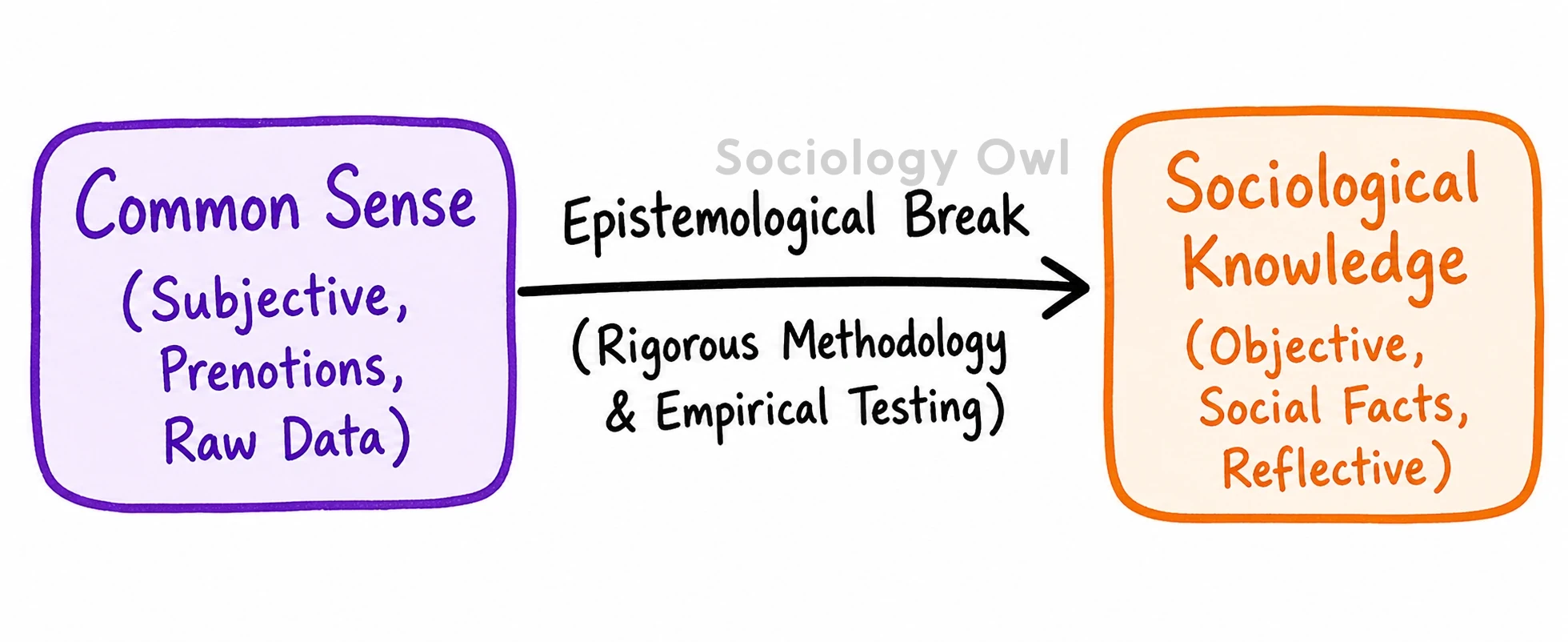
Common sense is the routine, “taken-for-granted” knowledge of everyday life. While it provides the raw material and starting point for social inquiry, sociology differentiates itself through rigorous methodology, empirical evidence, and critical questioning.

Common Sense as the Bedrock of Social Inquiry

Certain sociological traditions value common sense as the fundamental starting point of research:

  • Alfred Schutz: In Phenomenology, sociology begins with the “Life-world” (Lebenswelt). Common sense provides the “Typifications” and recipes humans use to navigate reality, forming the raw data for sociologists.
  • Harold Garfinkel: Ethnomethodology studies how ordinary people construct common-sense reality. He utilized “Breaching experiments” to expose the fragile, taken-for-granted assumptions guiding social order.
  • Clifford Geertz: In anthropology, he famously analyzed “Common sense as a cultural system”, which is essential for researchers to gain deep ethnographic insights.
  • Antonio Gramsci: Argued that common sense contains fragments of “Good sense” (practical wisdom), serving as a starting point for understanding the lived realities of subaltern classes.

Limitations and the Need for Scientific Rigor

Despite its utility, common sense is highly subjective and culturally relative, necessitating a scientific departure:

  • Emile Durkheim: Warned against common sense, terming it “Prenotions”. In Suicide, he deliberately debunked common-sense explanations (like climate or individual psychology) to establish objective Social Facts.
  • Gaston Bachelard & Pierre Bourdieu: Argued that sociology must make an “Epistemological break” from everyday assumptions to become a true, objective science.
  • Marxist Perspective: Common sense often internalized ruling-class ideology, manifesting as “False consciousness”. For example, it dictates that poverty is caused by laziness, obscuring structural exploitation.

During the COVID-19 pandemic, “common sense” often blamed the rapid spread of the virus on the individual carelessness of specific communities. However, sociological research broke past this to reveal structural inequalities: overcrowded housing, gig-economy vulnerabilities, and unequal healthcare access.

Conclusion

Common sense provides the ‘what’ of human behavior, while sociology uncovers the ‘why’ and ‘how’. As Andre Beteille observed, sociological research requires common sense, but it must be an informed, rigorous, and “Reflective common sense” to accurately capture complex social realities.

Do you think that common sense is the starting point of social research? What are its advantages and limitations? Explain. Read More »

Sociology Optional 2023 Paper 1 Solution

2023 Paper 1

Sociology Optional 2023 Paper 1

Our UPSC Sociology Optional 2023 Paper 1 webpage provides a comprehensive collection of model answers to questions from this examination. This resource is designed to help aspirants understand the depth and breadth of responses expected in the UPSC Sociology Optional Paper 1. Download Question Paper PDF.

Download Sociology Optional 2023 Paper 1 PDF

Click on Question to see Model Answer
खण्ड – A / SECTION – A

Q1. Answer the following questions in about 150 words each : 10×5-50 

(a) What is the distinctiveness of the feminist method of social research? Comment. 10 Marks
(b) Discuss the relationship between sociology and political science. 10 Marks
(c) How does the dramaturgical perspective enable our understanding of everyday life? 10 Marks
(d) Is reference group theory a universally applicable model? Elucidate. 10 Marks
(e) Do you think that the boundary line between ethnicity and race is blurred? Justify your answer. 10 Marks

Q2. (a) What, according to Robert Michels, is the iron law of oligarchy? Do lions and foxes in Vilfredo Pareto’s theory, essentially differ from each other? Substantiate. 20 Marks
(b) What is historical materialism? Examine its relevance in understanding contemporary societies. 20 Marks
(c) What are variables? How do they facilitate research? 10 Marks

Q3. (a) What are the characteristics of scientific method? Do you think that scientific method in conducting sociological research is foolproof? Elaborate. 10 Marks
(b) How do you assess the changing patterns in kinship relations in societies today? 20 Marks
(c) Is Weber’s idea of bureaucracy a product of the historical experiences of Europe? Comment. 10 Marks

Q4. (a) Do you think that common sense is the starting point of social research? What are its advantages and limitations? Explain. 20 Marks
(b) How is poverty a form of social exclusion? Illustrate in this connection the different dimensions of poverty and social exclusion. 20 Marks
(c) Highlight the differences and similarities between totemism and animism. 10 Marks

खण्ड – B / SECTION — B 

Q5. Answer the following questions in about 150 words each 10×5= 50 

(a) Examine the relevance of corporate social responsibility in a world marked by increasing environmental crises. 10 Marks
(b) How is civil society useful in deepening the roots of democracy? 10 Marks
(c) What functions does religion perform in a pluralistic society? 10 Marks
(d) Analyze critically David Morgan’s views on family practices. 10 Marks
(e) Does women’s education help to eradicate patriarchal discriminations? Reflect with illustrations. 10 Marks

Q6. (a) What are the different dimensions of qualitative method? Do you think that qualitative method helps to gain a deeper sociological insight? Give reasons for your answer. 20 Marks

(b) Explain Max Weber’s theory of social stratification. How does Weber’s idea of class differ from that of Marx? 20 Marks
(c) What are the ethical issues that a researcher faces in making use of participant observation as a method of collecting data? Explain. 10 Marks

Q7. (a) Explain how economic globalization has brought changes in the patterns of employment in the 21st century. 20 Marks
(b) Do you think that the social media has brought significant changes in the forms of protest? Argue your case. 20 Marks
(c) Assess critically A. G. Frank’s theory of development of underdevelopment’. 10 Marks

Q8. (a) What is Taylorism? Analyze its merits and demerits. 20 Marks
(b) What are new religious movements? Elaborate emphasizing their forms and orientations. 20 Marks
(c) Examine the role of science and technology in addressing age-old taboos and superstitions. 10 Marks

Sociology Optional 2023 Paper 1 Solution Read More »

How does the dramaturgical perspective enable our understanding of everyday life?

Model Answers

Q: How does the dramaturgical perspective enable our understanding of everyday life?

Question asked in UPSC Sociology 2023 Paper 1. Download our app for last 20 year question with model answers. 

Model Answer:

Dramaturgical Perspective

Introduced by Erving Goffman in The Presentation of Self in Everyday Life, the dramaturgical perspective is a micro-sociological approach rooted in Symbolic Interactionism. It decodes everyday social life as a theatrical performance.

Decoding Everyday Interactions

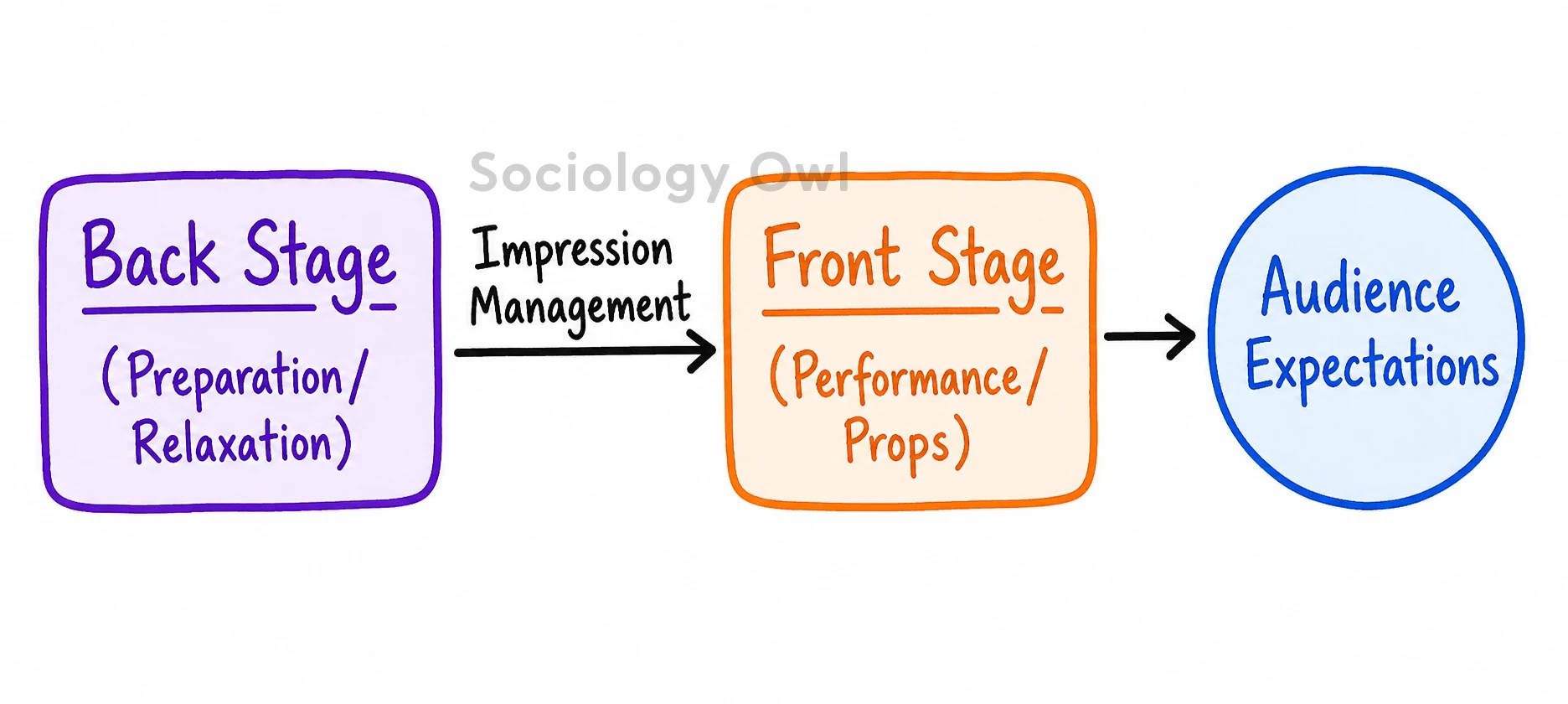
Impression Management

Individuals act to control how others perceive them utilizing sign vehicles (language, clothing) and props (e.g., a doctor’s stethoscope).

Front Stage vs. Back Stage

The Front Stage is for performing expected societal roles, while the Back Stage allows individuals to drop their roles outside the audience’s gaze.

Workplace Performances

Arlie Hochschild applied dramaturgy to modern workplaces, revealing how service workers perform Emotional Labor on the front stage.

Critique

Alvin Gouldner criticized Goffman for portraying humans as amoral manipulators. Structuralists argue dramaturgy ignores macro-forces (class, power) dictating who writes these social “scripts”.

Today, social media functions as a global “virtual front stage” where users engage in curated identity construction to manage public impressions.

Conclusion

Despite ignoring macro-structural inequalities, the dramaturgical approach remains a highly relevant theoretical lens for analyzing micro-level identity negotiations in our hyper-visible digital society.

How does the dramaturgical perspective enable our understanding of everyday life? Read More »

What are the characteristics of scientific method? Do you think that scientific method in conducting sociological research is foolproof? Elaborate.

Model Answers

Q: What are the characteristics of scientific method? Do you think that scientific method in conducting sociological research is foolproof? Elaborate.

Question asked in UPSC Sociology 2023 Paper 1. Download our app for last 20 year question with model answers. 

Model Answer:

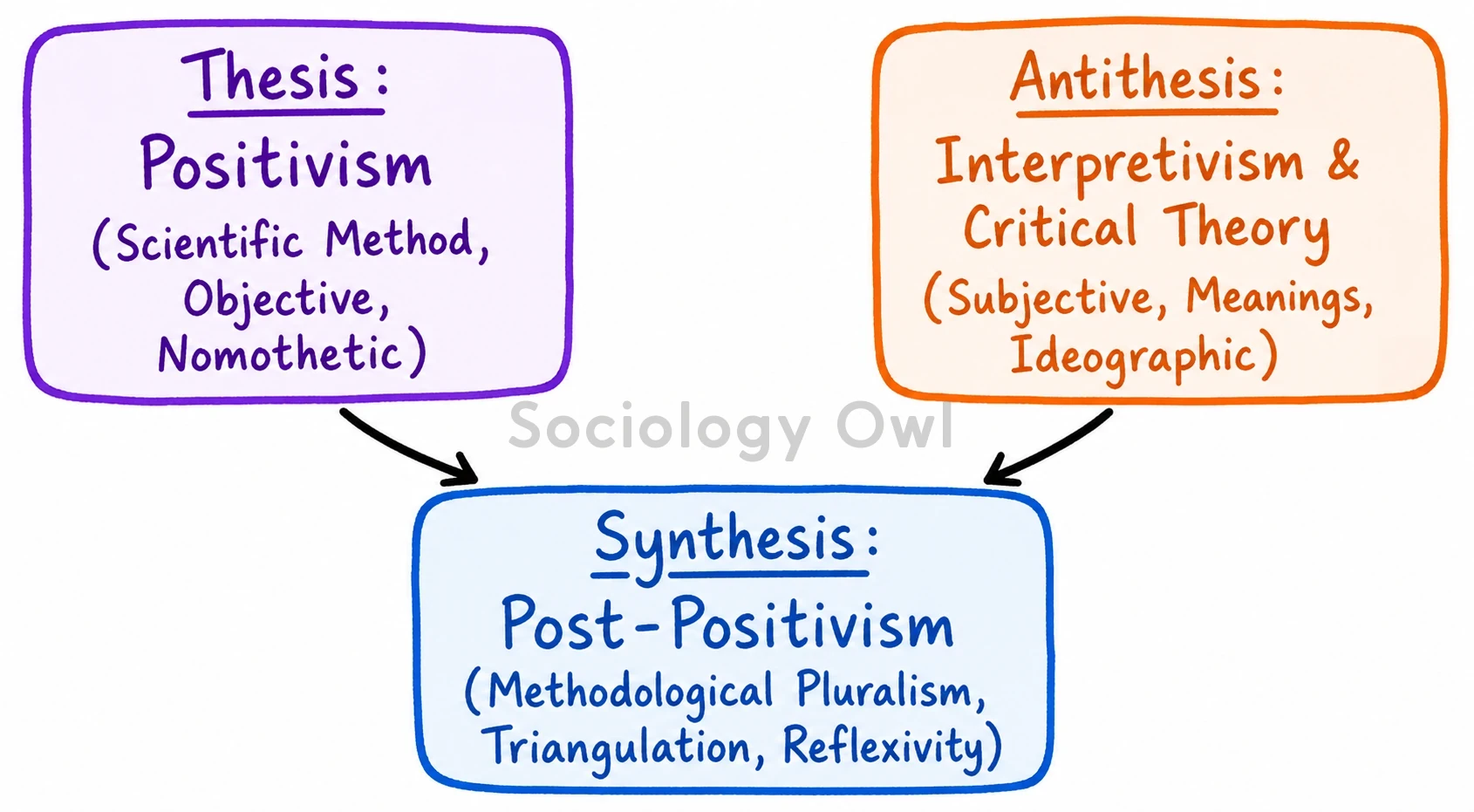
The Scientific Method uses systematic observation and empiricism to generate causal, nomothetic (generalizing) knowledge. Championed in sociology by Positivism (Auguste Comte, Emile Durkheim), it aimed to uncover objective “social laws” mirroring the natural sciences.

Characteristics of the Scientific Method

  • Empiricism: Relying on observable evidence. Emile Durkheim advocated treating “social facts as things” to study society objectively, as seen in his statistical work Suicide.
  • Value Neutrality: Max Weber emphasized Wertfreiheit, requiring researchers to strictly separate their personal values from empirical facts.
  • Falsifiability: Karl Popper asserted that for any theory to be truly scientific, it must be empirically testable and disprovable.
  • Systematic Logic: It relies on structured inductive or deductive reasoning and requires high replicability.

Critique: Is the Scientific Method Foolproof?

The method is heavily debated and not considered foolproof in sociology:

  • Philosophy of Science Critique: Thomas Kuhn argued that science is not purely objective but governed by socially constructed Paradigm Shifts. Paul Feyerabend rejected a singular method entirely, proposing “epistemological anarchism.”
  • Interpretivist Critique: Symbolic Interactionists like G.H. Mead argue humans possess consciousness and attach “meaning” to actions, which strict natural science methods fail to capture. Ethnomethodology (Harold Garfinkel) argues that “objective” social facts are merely continuous social accomplishments.
  • Feminist & Critical Views: The Frankfurt School argued positivism reduces humans to mere numbers, serving capitalist domination. Feminists like Ann Oakley critique the “objective” method as historically androcentric (male-biased).

The illusion of foolproof objectivity is evident in modern Big Data and AI algorithms. While appearing purely scientific, tools like predictive policing software often replicate historic racial biases, proving that scientific parameters are always constrained by subjective human researchers.

scientific method

Conclusion

Acknowledging these limitations, Post-Positivism rejects absolute objectivity. Thinkers like Alvin Gouldner advocate for Reflexivity, while modern sociology relies on Methodological Pluralism and Triangulation (Norman Denzin)—combining both quantitative and qualitative methods to rigorously approximate complex social realities.

What are the characteristics of scientific method? Do you think that scientific method in conducting sociological research is foolproof? Elaborate. Read More »

Discuss the relationship between sociology and political science.

Model Answers

Q: Discuss the relationship between sociology and political science.

Question asked in UPSC Sociology 2023 Paper 1. Download our app for last 20 year question with model answers. 

Model Answer:

Relationship between Sociology and Political Science

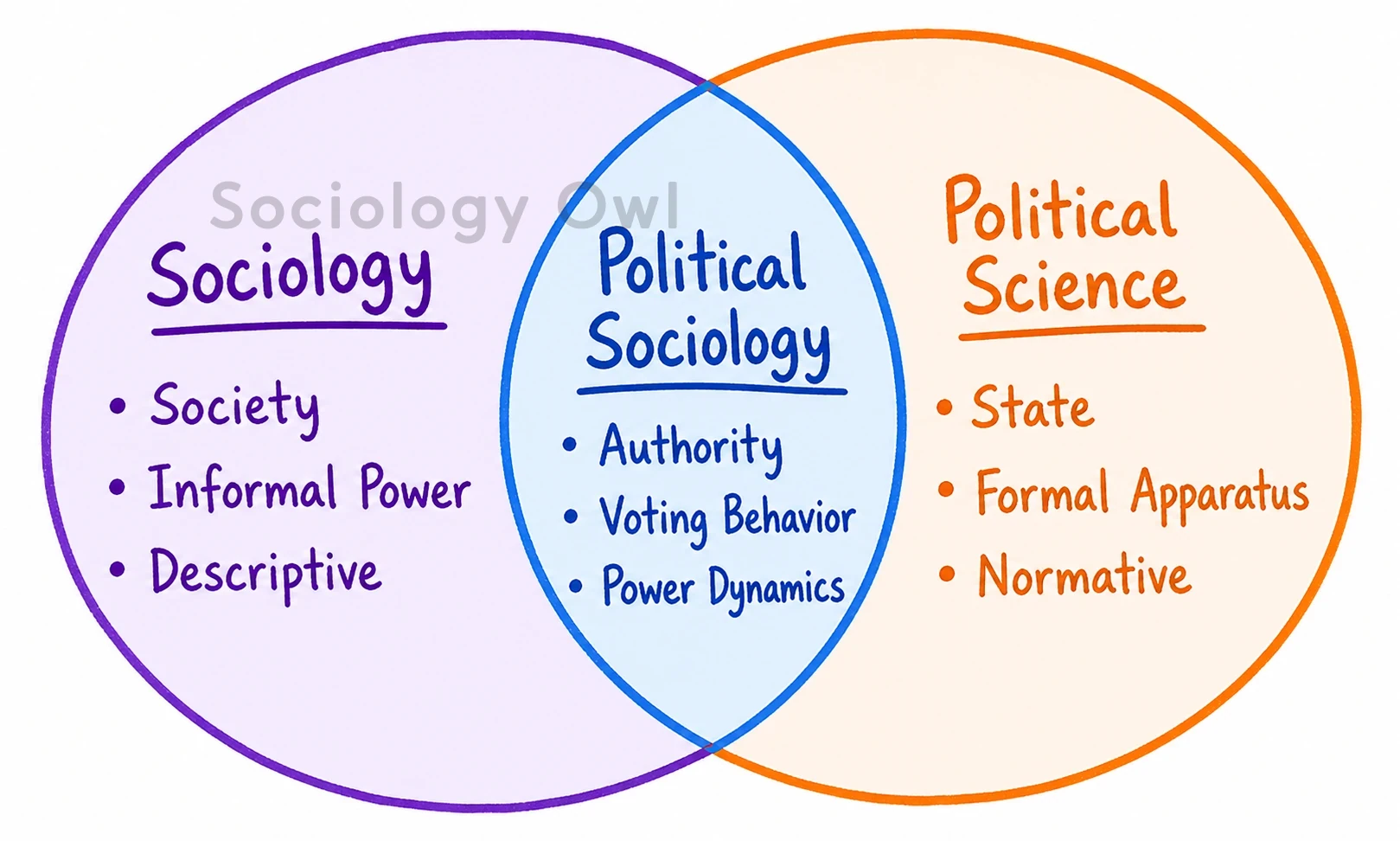
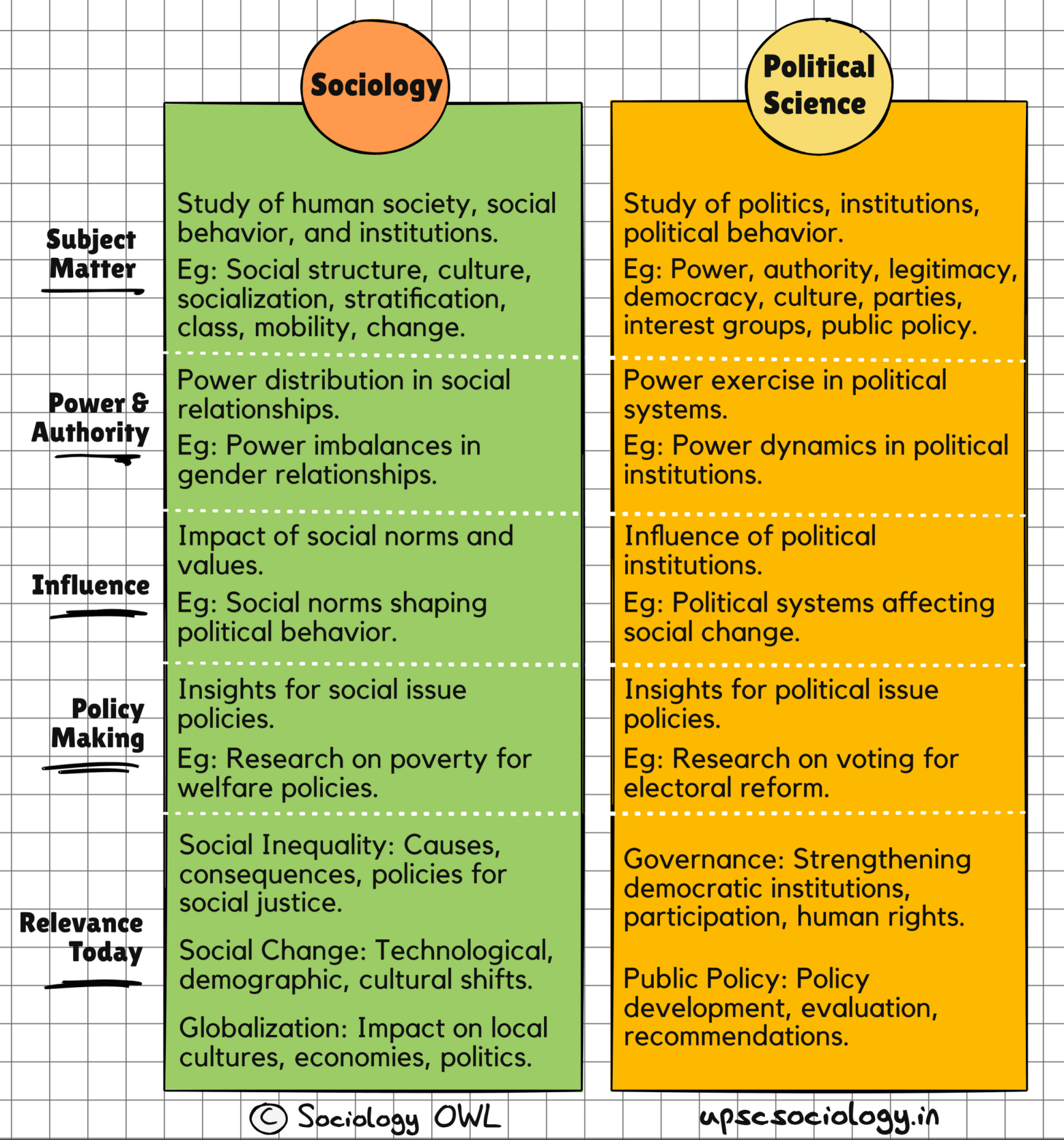
Sociology studies society holistically, while Political Science focuses on formal power apparatuses like the State. Highlighting their deep interdependence, George E.G. Catlin stated, “Political Science and Sociology are two faces or aspects of the same figure.”

Analyzing Differences and Convergence

  • Scope of Study: Political Science is largely normative and state-centric. Sociology is descriptive, examining the informal social basis of power, such as caste, religion, and kinship.
  • Political Sociology: The boundaries have blurred, creating this sub-discipline to study how social variables dictate political outcomes, popularized by Seymour Martin Lipset in Political Man.

Sociology Political Science

Sociological Perspectives and Contemporary Relevance

  • Max Weber: Bridged both disciplines through his seminal concepts of Power, Authority, and Bureaucracy.
  • Karl Marx: Argued that political institutions (superstructure) are entirely shaped by underlying socio-economic relations (base).
  • Elite Theory: C. Wright Mills (The Power Elite) sociologically analyzed how informal networks monopolize formal political power.

Sociological frameworks are essential to decode modern political phenomena like Global Populism and Rajni Kothari’s analysis of Vote Bank Politics, which demonstrates how caste identities drive Indian electoral behavior.

A comprehensive understanding of the State remains impossible without analyzing the society that creates it. Today, sociological inquiry is an indispensable foundation for political science.

Discuss the relationship between sociology and political science. Read More »

What is historical materialism? Examine its relevance in understanding contemporary societies.

Model Answers

Q: What is historical materialism? Examine its relevance in understanding contemporary societies.

Question asked in UPSC Sociology 2023 Paper 1. Download our app for last 20 year question with model answers. 

Model Answer:

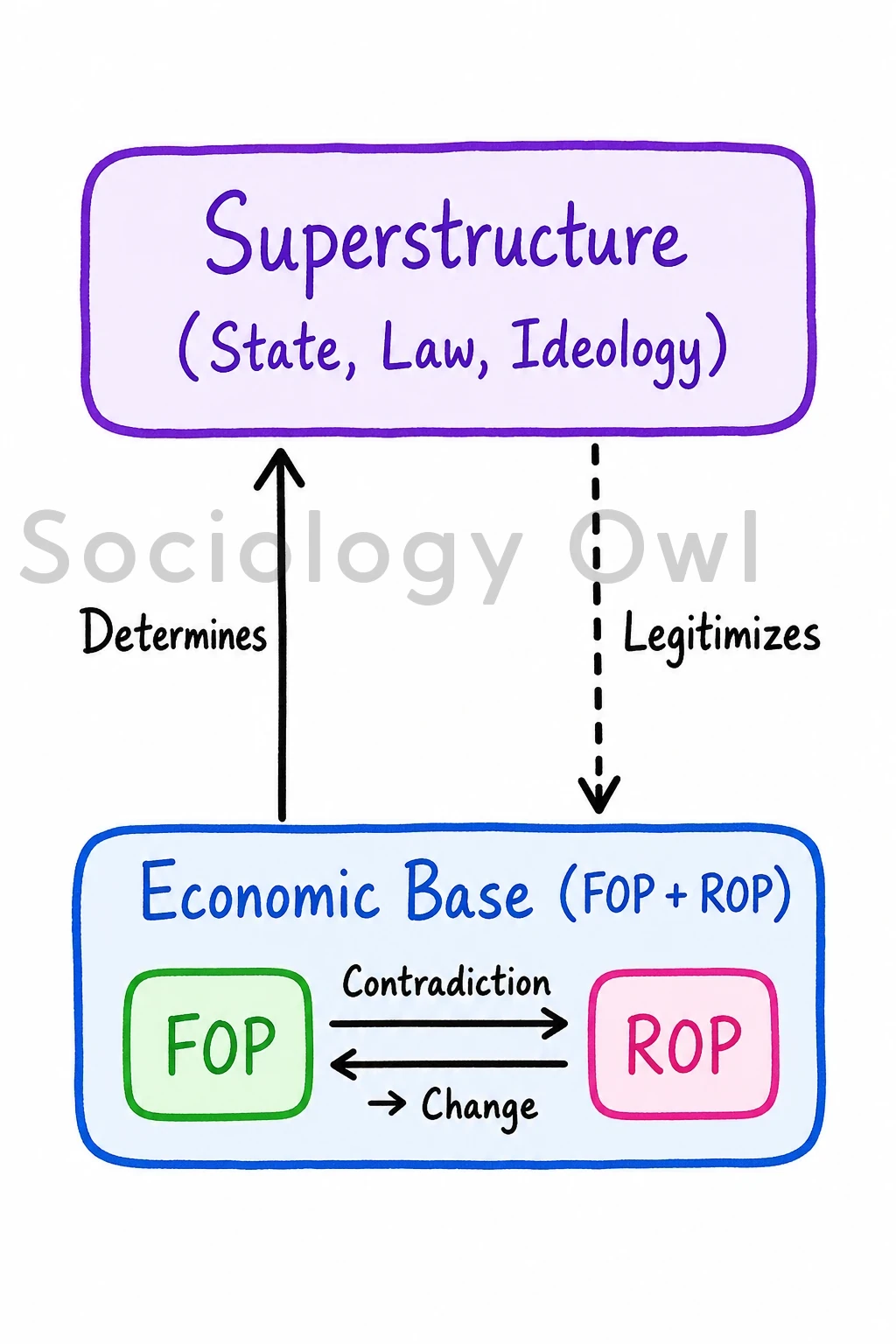
Karl Marx’s Historical Materialism constitutes an epistemological break from Hegel’s “Historical Idealism.” Marx asserted he “turned Hegel on his head” by arguing that material reality, not ideas, drives history. It posits that a society’s economic base determines its ideological superstructure (law, religion, state).

Core Tenets of Historical Materialism

  • Mode of Production: The engine of social change, combining Forces of Production (FOP) (technology, labor) and Relations of Production (ROP) (property relations, bourgeoisie vs. proletariat).
  • Historical Evolution: Contradictions between FOP and ROP trigger class struggle, driving history through stages: Primitive Communism → Ancient Slavery → Feudalism → Capitalism → Socialism.

Historical Materialism

Contemporary Relevance

  • New Class Structures: Thomas Piketty (Capital in the Twenty-First Century) highlights extreme modern wealth concentration. Guy Standing’s “Precariat” explains the hyper-exploited gig economy, where algorithms act as the new means of production (e.g., Uber, Amazon).
  • Global Inequality: Immanuel Wallerstein’s “World Systems Theory” explains neo-imperialism, where the capitalist ‘Core’ exploits the ‘Periphery’ (e.g., African lithium mining for Western EVs).
  • Eco-Marxism: John Bellamy Foster’s “Metabolic Rift” frames climate change as capitalism’s ultimate contradiction—demanding infinite growth on a finite planet.
  • Ideological Control: Antonio Gramsci’s “Cultural Hegemony” and Louis Althusser’s “Ideological State Apparatus” explain how modern media manufactures consent.

Critique and Limitations

  • Max Weber: Rejected strict economic determinism, proposing a multi-dimensional stratification model: Class, Status, and Party.
  • Ralf Dahrendorf: Argued the “decomposition of capital and labor” (rise of middle classes and joint-stock companies) prevented the polarization Marx predicted.
  • Intersectionality: Feminists like Sylvia Walby argue classical Marxism ignores how patriarchy and race intersect with class.

Conclusion

While classical economic determinism is outdated, historical materialism remains an indispensable analytical tool. As long as capitalism generates systemic inequalities and ecological crises, the Marxist lens—when integrated with post-modern and intersectional realities—remains highly potent for understanding social change.

What is historical materialism? Examine its relevance in understanding contemporary societies. Read More »

Do you think that the social media has brought significant changes in the forms of protest? Argue your case.

Model Answers

Q: Do you think that the social media has brought significant changes in the forms of protest? Argue your case.

Question asked in UPSC Sociology 2023 Paper 1. Download our app for last 20 year question with model answers. 

Model Answer:

Social Media’s Impact on Forms of Protest

Social media has indeed brought significant changes to the forms of protest in contemporary society. This digital revolution has transformed how individuals and groups organize, communicate, and express dissent, leading to new dynamics in social movements and activism.

Key changes in protest forms due to social media include:

1. Rapid mobilization: Platforms like Twitter and Facebook enable swift organization of large-scale protests. The Arab Spring demonstrations and the #BlackLivesMatter movement are prime examples of how social media facilitated quick assembly of protesters.

2. Increased visibility: Social media provides a global stage for protesters, allowing their messages to reach a wider audience instantly. This amplification effect can put pressure on authorities and garner international support.

3. Decentralized leadership: Social media enables leaderless or horizontally-structured movements, as seen in the Occupy Wall Street protests. This decentralization can make movements more resilient to suppression.

4. Digital activism: New forms of protest have emerged, such as hashtag campaigns, online petitions, and virtual sit-ins. These “clicktivism” methods allow for participation from those unable to attend physical protests.

5. Real-time documentation: Protesters can now livestream events and share unfiltered content, bypassing traditional media gatekeepers. This immediate documentation can expose injustices and police brutality, as seen during the 2020 George Floyd protests.

However, social media-driven protests also face challenges:

1. “Slacktivism” critique: Some argue that online activism leads to superficial engagement without meaningful action.

2. Echo chambers: Social media algorithms can create ideological bubbles, potentially limiting the reach of protest messages to those already sympathetic to the cause.

3. Surveillance and repression: Authorities can monitor social media to track and suppress protest activities, as observed in China’s response to Hong Kong protests.

In conclusion, while social media has undoubtedly revolutionized protest forms, offering new tools for organization and expression, it also presents unique challenges. As Manuel Castells argues, these “networks of outrage and hope” have become a defining feature of contemporary social movements, fundamentally altering the landscape of collective action and dissent.

Do you think that the social media has brought significant changes in the forms of protest? Argue your case. Read More »

How is civil society useful in deepening the roots of democracy?

Model Answers

Q: How is civil society useful in deepening the roots of democracy?

Question asked in UPSC Sociology 2023 Paper 1. Download our app for last 20 year question with model answers. 

Model Answer:

Civil Society’s Role in Deepening Democracy

Civil society plays a crucial role in strengthening and deepening democracy by providing a space for citizen engagement, advocacy, and social change outside of governmental institutions. This intermediary realm between the state and individuals serves as a vital component in fostering democratic values and practices.

Key ways civil society deepens democracy:

1. Citizen participation: Civil society organizations (CSOs) provide avenues for citizens to actively engage in public affairs, beyond just voting. This increased participation, as highlighted by Dipankar Gupta, builds social capital and strengthens democratic norms. Eg: Gram sabha meetings

2. Checks and balances: CSOs act as watchdogs, monitoring government actions and holding officials accountable. This oversight function, helps prevent abuses of power and ensures transparency. Eg: RTI activism in India

3. Advocacy and representation: Civil society amplifies marginalized voices and advocates for underrepresented groups.
Example: Dalit rights movement

4. Civic education: CSOs play a vital role in educating citizens about their rights, responsibilities, and democratic processes. This fosters an informed and engaged citizenry, which political scientist Robert Dahl deemed essential for a functioning democracy.
Example: Voter awareness campaigns

5. Social cohesion: By bringing diverse groups together around common causes, civil society helps build trust and social bonds across different segments of society. This contributes to what Émile Durkheim termed “organic solidarity” in complex modern societies.
Example: Interfaith dialogue initiatives

6. Policy influence: Civil society organizations often conduct research, propose policy alternatives, and lobby for reform, enriching public discourse and decision-making processes.
Example: Think tanks shaping legislation

In conclusion, a vibrant civil society serves as the bedrock of a healthy democracy by fostering active citizenship, ensuring government accountability, and promoting inclusive policy-making. Civil society in India has been crucial in deepening democracy by articulating diverse interests and keeping the state in check.

How is civil society useful in deepening the roots of democracy? Read More »