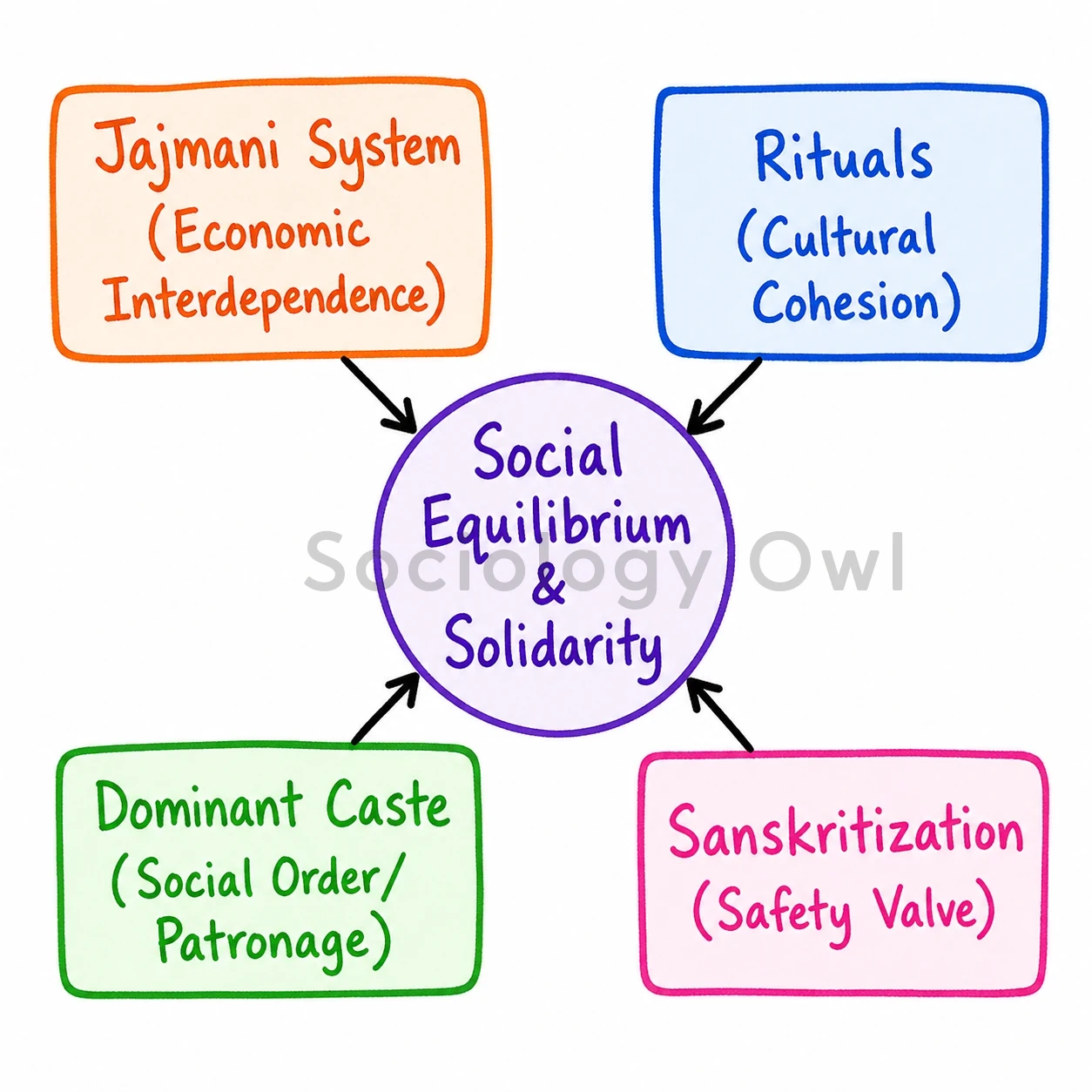
Discuss the changing nature of structure of political elites.
Model Answer:
Structure of Political Elites in India
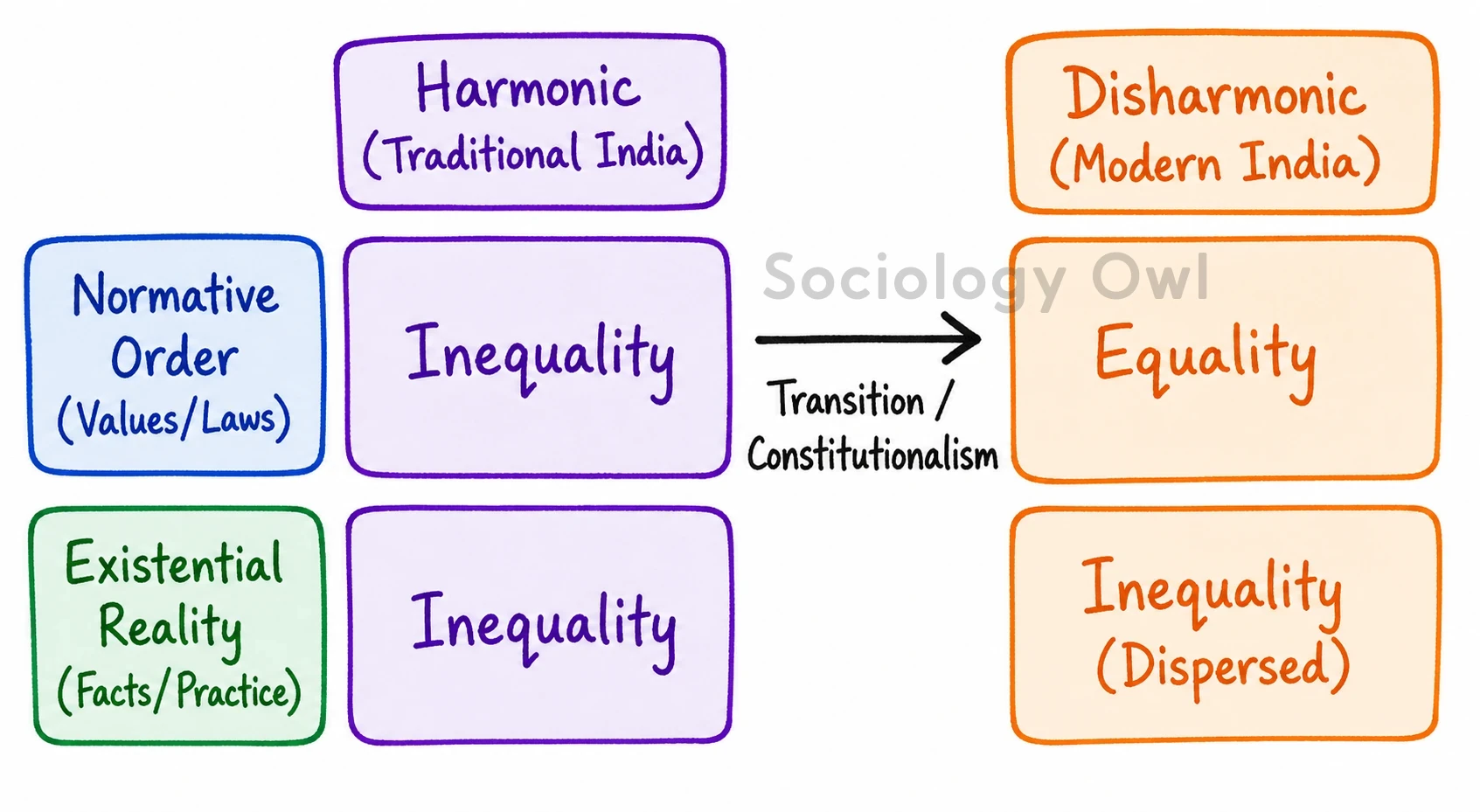
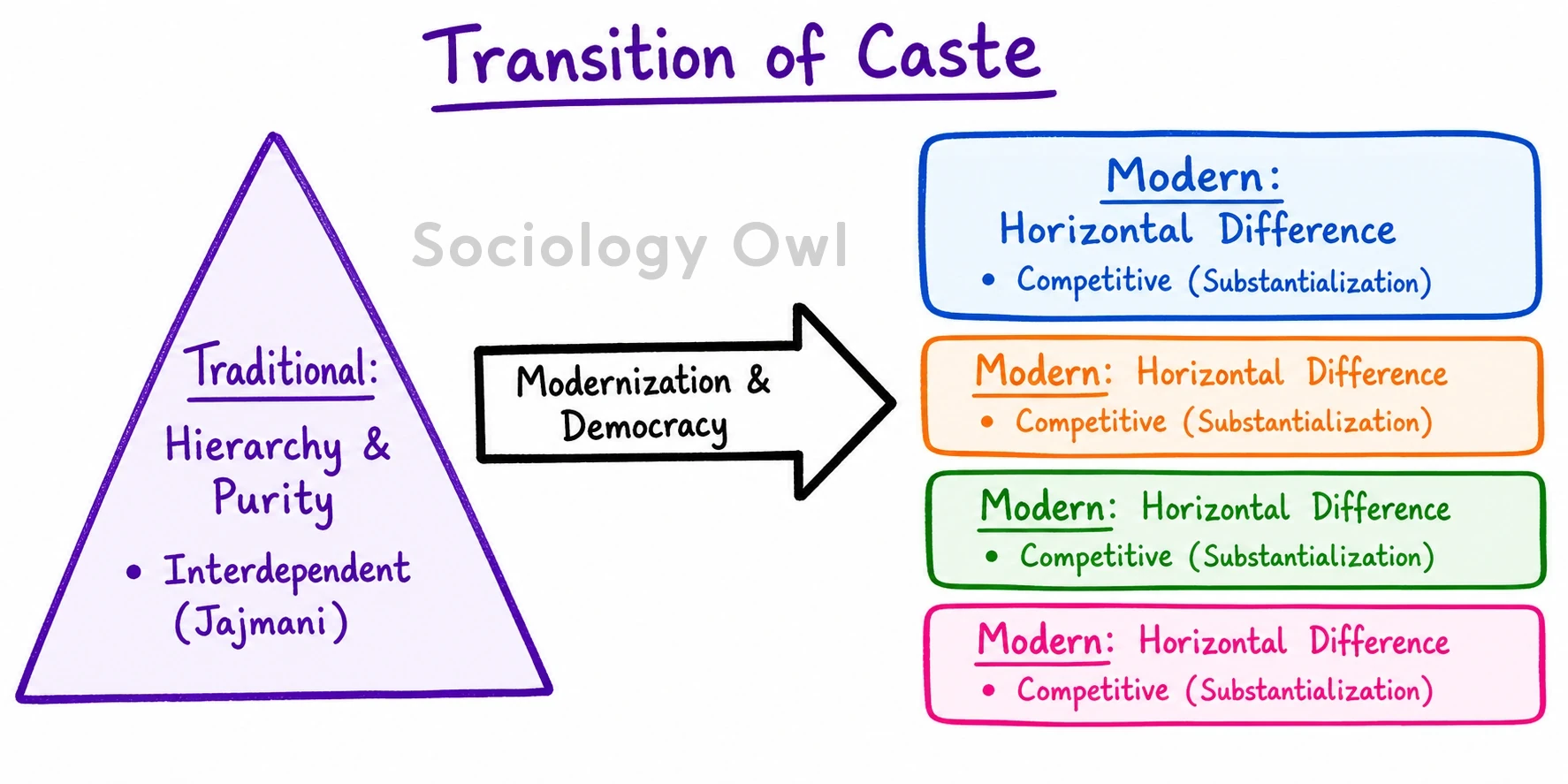
In India, the structure of political elites reflects Vilfredo Pareto’s “Circulation of Elites”. Andre Béteille notes in Caste, Class, and Power that traditional hegemony has fragmented, successfully diverging political power from traditional caste and class hierarchies.
Evolution of Political Elites
- Post-Independence: Under Rajni Kothari’s “Congress System”, elites were largely “Westernized”, urban, upper-caste professionals (M.N. Srinivas).
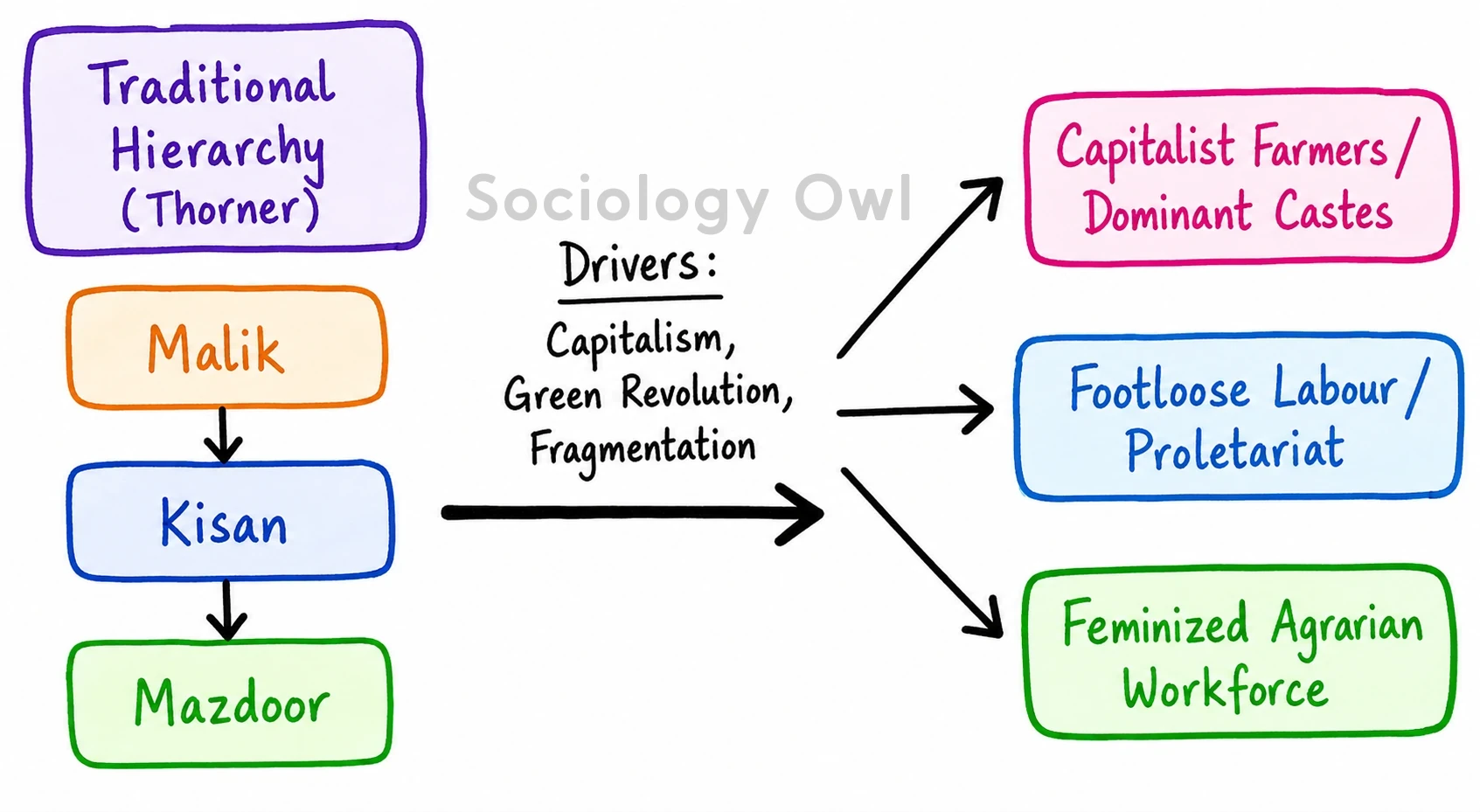
- Post-Mandal Era: A “Silent Revolution” (Christophe Jaffrelot) empowered marginalized sections. “Dominant Castes” (Srinivas) and agrarian “Bullock Capitalists” (Rudolph and Rudolph) emerged as the new rural political elites.
- Neoliberal Shift: A.R. Desai highlights a Marxist reality where contemporary political elites increasingly form a “power elite” nexus with corporate capitalists.
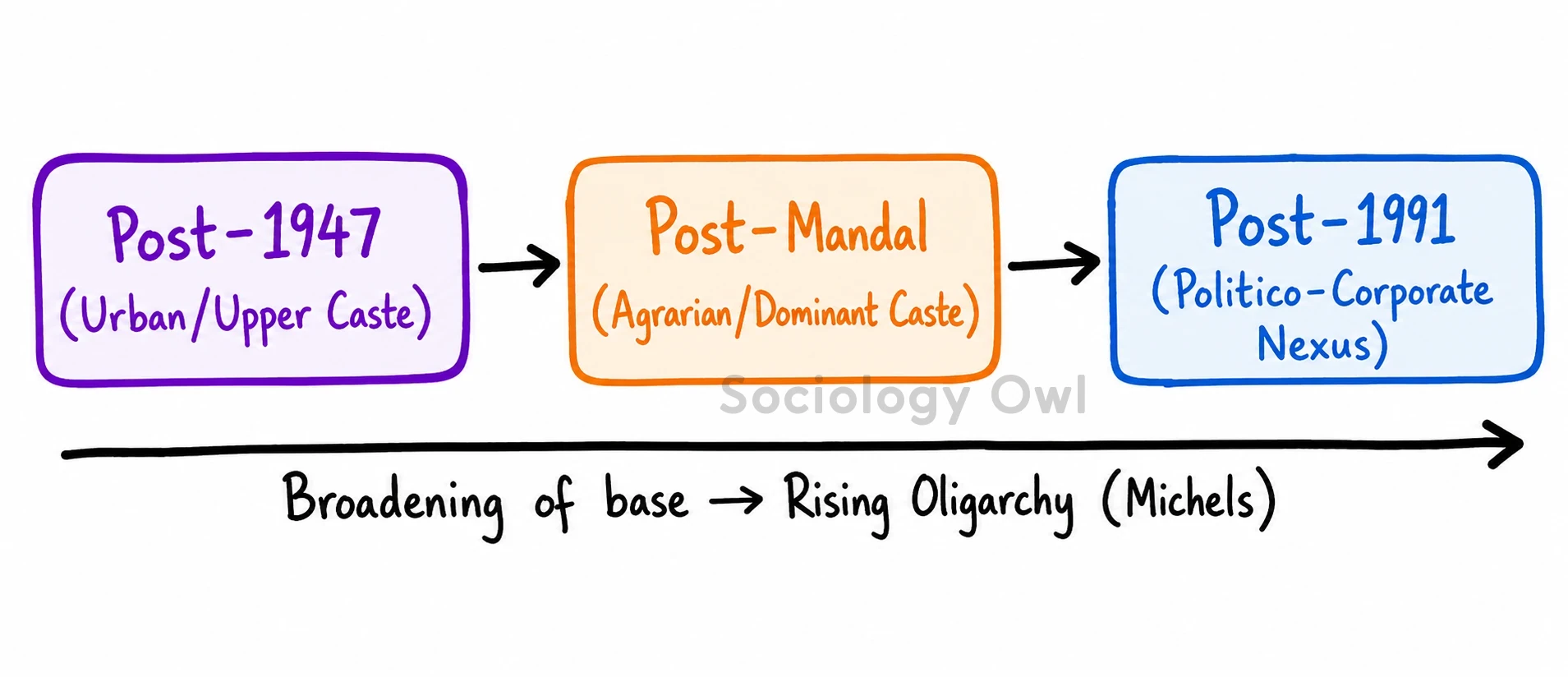
Despite democratization, Robert Michels’ “Iron Law of Oligarchy” remains visible in pervasive dynastic politics and the rise of vernacular elites relying on muscle and money. Furthermore, the persistent marginalization of women highlights limitations in this elite circulation.
Conclusion
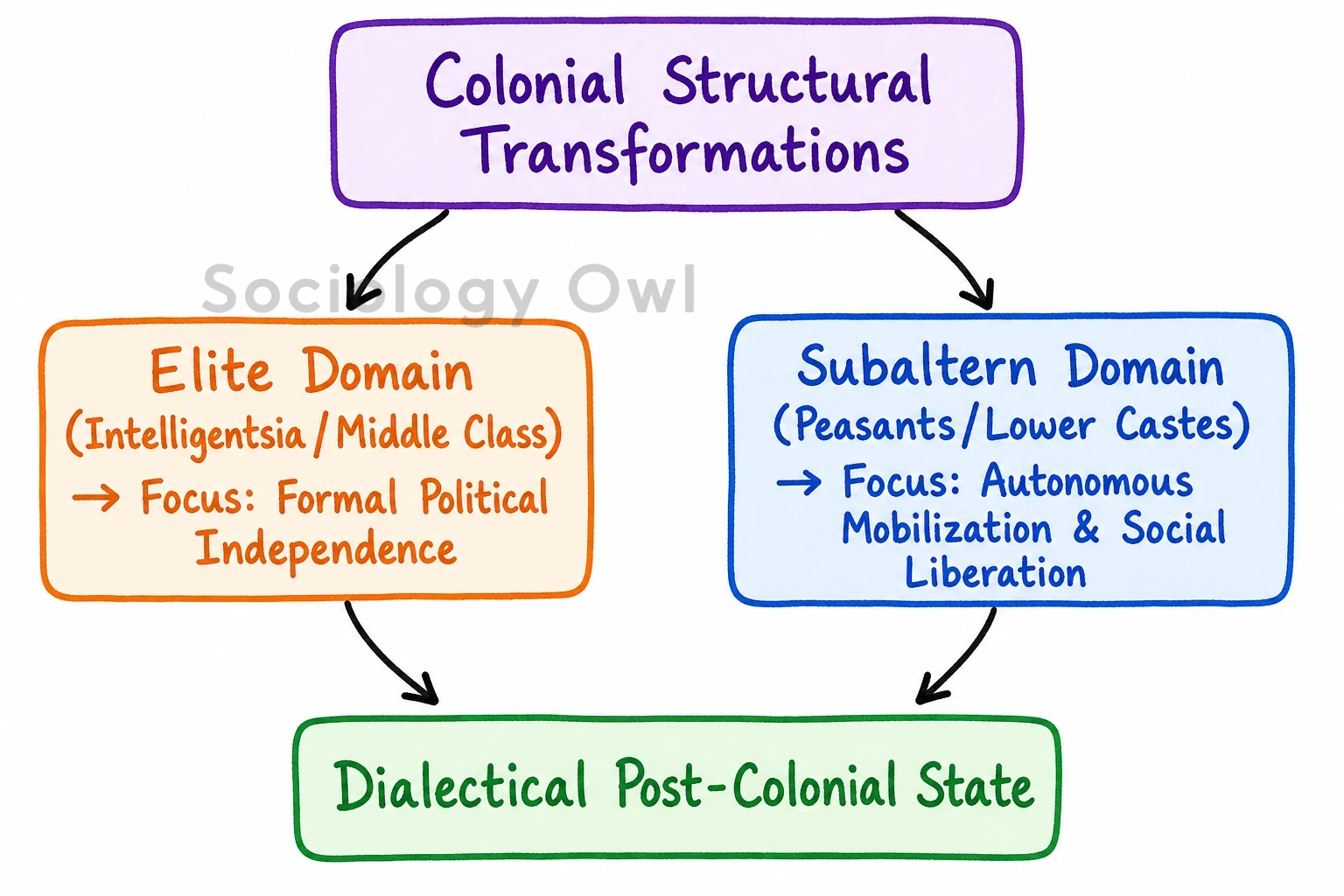
While India’s democratic mobilization has vastly broadened the elite base from its traditional roots, entrenched capitalist nexuses and dynastic reproduction continue to restrict genuine subaltern political representation.
Discuss the changing nature of structure of political elites. Read More »