Model Answer

Do you think that the social media has brought significant changes in the forms of protest? Argue your case.

Model Answers

Q: Do you think that the social media has brought significant changes in the forms of protest? Argue your case.

Question asked in UPSC Sociology 2023 Paper 1. Download our app for last 20 year question with model answers. 

Model Answer:

Social Media’s Impact on Forms of Protest

Social media has indeed brought significant changes to the forms of protest in contemporary society. This digital revolution has transformed how individuals and groups organize, communicate, and express dissent, leading to new dynamics in social movements and activism.

Key changes in protest forms due to social media include:

1. Rapid mobilization: Platforms like Twitter and Facebook enable swift organization of large-scale protests. The Arab Spring demonstrations and the #BlackLivesMatter movement are prime examples of how social media facilitated quick assembly of protesters.

2. Increased visibility: Social media provides a global stage for protesters, allowing their messages to reach a wider audience instantly. This amplification effect can put pressure on authorities and garner international support.

3. Decentralized leadership: Social media enables leaderless or horizontally-structured movements, as seen in the Occupy Wall Street protests. This decentralization can make movements more resilient to suppression.

4. Digital activism: New forms of protest have emerged, such as hashtag campaigns, online petitions, and virtual sit-ins. These “clicktivism” methods allow for participation from those unable to attend physical protests.

5. Real-time documentation: Protesters can now livestream events and share unfiltered content, bypassing traditional media gatekeepers. This immediate documentation can expose injustices and police brutality, as seen during the 2020 George Floyd protests.

However, social media-driven protests also face challenges:

1. “Slacktivism” critique: Some argue that online activism leads to superficial engagement without meaningful action.

2. Echo chambers: Social media algorithms can create ideological bubbles, potentially limiting the reach of protest messages to those already sympathetic to the cause.

3. Surveillance and repression: Authorities can monitor social media to track and suppress protest activities, as observed in China’s response to Hong Kong protests.

In conclusion, while social media has undoubtedly revolutionized protest forms, offering new tools for organization and expression, it also presents unique challenges. As Manuel Castells argues, these “networks of outrage and hope” have become a defining feature of contemporary social movements, fundamentally altering the landscape of collective action and dissent.

Do you think that the social media has brought significant changes in the forms of protest? Argue your case. Read More »

How is civil society useful in deepening the roots of democracy?

Model Answers

Q: How is civil society useful in deepening the roots of democracy?

Question asked in UPSC Sociology 2023 Paper 1. Download our app for last 20 year question with model answers. 

Model Answer:

Civil Society’s Role in Deepening Democracy

Civil society plays a crucial role in strengthening and deepening democracy by providing a space for citizen engagement, advocacy, and social change outside of governmental institutions. This intermediary realm between the state and individuals serves as a vital component in fostering democratic values and practices.

Key ways civil society deepens democracy:

1. Citizen participation: Civil society organizations (CSOs) provide avenues for citizens to actively engage in public affairs, beyond just voting. This increased participation, as highlighted by Dipankar Gupta, builds social capital and strengthens democratic norms. Eg: Gram sabha meetings

2. Checks and balances: CSOs act as watchdogs, monitoring government actions and holding officials accountable. This oversight function, helps prevent abuses of power and ensures transparency. Eg: RTI activism in India

3. Advocacy and representation: Civil society amplifies marginalized voices and advocates for underrepresented groups.
Example: Dalit rights movement

4. Civic education: CSOs play a vital role in educating citizens about their rights, responsibilities, and democratic processes. This fosters an informed and engaged citizenry, which political scientist Robert Dahl deemed essential for a functioning democracy.
Example: Voter awareness campaigns

5. Social cohesion: By bringing diverse groups together around common causes, civil society helps build trust and social bonds across different segments of society. This contributes to what Émile Durkheim termed “organic solidarity” in complex modern societies.
Example: Interfaith dialogue initiatives

6. Policy influence: Civil society organizations often conduct research, propose policy alternatives, and lobby for reform, enriching public discourse and decision-making processes.
Example: Think tanks shaping legislation

In conclusion, a vibrant civil society serves as the bedrock of a healthy democracy by fostering active citizenship, ensuring government accountability, and promoting inclusive policy-making. Civil society in India has been crucial in deepening democracy by articulating diverse interests and keeping the state in check.

How is civil society useful in deepening the roots of democracy? Read More »

Q. To what extent have the legal provisions been effective in curbing violence against women in India? Give your argument.

Q. To what extent have the legal provisions been effective in curbing violence against women in India? Give your argument.

UPSC Sociology 2024 Paper 2

Model Answer:

Violence against women

Violence against women in India remains a pervasive issue despite numerous legal provisions aimed at its eradication. The effectiveness of these laws in curbing such violence is a matter of considerable debate.

Several legal measures have been enacted, such as the Protection of Women from Domestic Violence Act (PWDVA) 2005, the Dowry Prohibition Act 1961, and the Criminal Law Amendment Act 2013, which strengthened anti-rape laws. These provisions aim to protect women from various forms of violence, reflecting the state’s commitment to gender equality as per constitutional mandates.

• However, the effectiveness of these laws is often undermined by patriarchal social structures. Sociological theories on patriarchy, highlight how institutionalized gender norms perpetuate male dominance.

• There’s often a gap between legislation and enforcement. The lack of sensitization among law enforcement agencies leads to underreporting of cases. For instance, incidents of domestic violence are frequently dismissed as ‘family matters’ by authorities.

• Cultural factors also play a role. The stigma attached to victims of sexual violence discourages reporting. The Nirbhaya case of 2012 led to nationwide protests and legal reforms, yet crimes against women persist.

• Economic dependence is another factor affecting the effectiveness of legal provisions. Women often lack the resources to pursue legal action. Marxist feminists argue that without economic empowerment, legal measures cannot fully address gender-based violence.

In conclusion, while legal provisions are essential, their effectiveness is limited without addressing underlying sociocultural factors.

Q. To what extent have the legal provisions been effective in curbing violence against women in India? Give your argument. Read More »

Q. Discuss the changing nature of political elites in India.

Q. Discuss the changing nature of political elites in India.

UPSC Sociology 2024 Paper 2

Model Answer:

Changing Nature of Political Elites in India

The political elite in India has undergone significant transformations since independence, reflecting broader socio-economic changes and shifting power dynamics within the country.

• Post-independence era: Initially dominated by upper-caste, educated leaders from the Congress party, reflecting M.N. Srinivas’s concept of the “dominant caste.”

• Affirmative policies: Implementation of Mandal Commission recommendations led to the rise of OBC and SC leaders, challenging the traditional elite. Rajni Kothari termed this shift the “democratization of the political system.”

• Regional parties: Alongside caste-based changes, the emergence of state-level leaders further diversified the elite landscape. For example, M.G. Ramachandran in Tamil Nadu represented both regional and linguistic interests.

• Economic liberalization: Post-1991 reforms brought businessmen into politics, adding an economic dimension to elite composition. This shift coincided with and sometimes conflicted with caste-based representation.

• Media and technology: The rise of new communication channels created opportunities for tech-savvy politicians, further diversifying elite backgrounds and strategies.

• Increased representation: Building on earlier changes, there’s growing participation of women and youth in politics. Leaders like Mayawati and Mamata Banerjee embody multiple aspects of this evolving landscape.

Conclusion: India’s political elite has evolved to embrace diversity, reflecting complex interactions between caste, class, region, and gender in the political sphere.

Q. Discuss the changing nature of political elites in India. Read More »

Q. What, according to André Beteille, are the bases of agrarian class structure in India? Analyse.

Q. What, according to André Beteille, are the bases of agrarian class structure in India? Analyse.

UPSC Sociology 2024 Paper 2

Model Answer:

André Béteille’s Analysis of Agrarian Class Structure in India

André Béteille, extensively studied India’s agrarian society, identifying several key bases for its class structure in his work “Caste, Class, and Power.” His analysis provides a multidimensional understanding of rural stratification in India.

1. Land Ownership: Béteille emphasized that control over land is the primary determinant of agrarian class distinctions. Large landowners, small peasant proprietors, and landless laborers form the main classes based on this criterion.

2. Caste System: While not perfectly aligned, caste often correlates with land ownership and economic status, reinforcing class divisions. Upper castes typically owned more land, while lower castes were often landless laborers.

3. Relations of Production: The complex system of tenancy, including sharecropping arrangements, creates intermediary classes between landowners and laborers, contributing to a more nuanced class structure.

4. Status and Power Dynamics: Local political influence often stemmed from land ownership and caste status, creating a mutually reinforcing relationship between economic and political power.

5. Economic Shifts: Béteille observed that modernization and commercialization of agriculture were altering traditional class relations, allowing for some mobility between classes regardless of caste.

Béteille’s analysis recognizes the interplay between economic, social, and political factors in shaping India’s agrarian class structure.

Q. What, according to André Beteille, are the bases of agrarian class structure in India? Analyse. Read More »

Q. What are the definitional problems involved in identifying tribes in India? Discuss the main obstacles to tribal development in India.

Q. What are the definitional problems involved in identifying tribes in India? Discuss the main obstacles to tribal development in India.

UPSC Sociology 2024 Paper 2

Model Answer:

Identification and Development of tribes

The identification and development of tribes in India present complex sociological and administrative challenges, rooted in historical, cultural, and political factors. The term “tribe” itself is contested, with anthropologists like Verrier Elwin highlighting the fluidity of tribal identities and the dangers of stereotyping.

Definitional problems in identifying tribes:

1. Heterogeneity: Indian tribes vary greatly in language, culture, and socioeconomic status, making a uniform definition difficult.

2. Colonial legacy: The concept of “tribe” has colonial origins, often used to signify “primitive” societies. Scholars like G.S. Ghurye criticized this classification for perpetuating stereotypes.

3. Criteria ambiguity: The Constitution lists Scheduled Tribes but provides no clear identification criteria. The Lokur Committee (1965) suggested subjective and outdated criteria like primitive traits and geographical isolation.

4. Socioeconomic changes: Modernization has altered traditional tribal lifestyles, complicating classification.

Main obstacles to tribal development:

1. Land alienation: Displacement due to development projects like the Sardar Sarovar Dam has affected thousands of tribal families without adequate rehabilitation.

2. Limited access to services: Inadequate infrastructure in remote areas hinders access to education and healthcare. Tribal literacy rates remain significantly below the national average.

3. Economic exploitation: Vulnerability to moneylenders and traders due to lack of formal financial access leads to debt traps and poverty.

4. Cultural assimilation pressures: Policies promoting assimilation rather than integration threaten tribal identities and traditions.

5. Policy implementation gaps: Despite protective legislation like the Forest Rights Act (2006), weak implementation and bureaucratic hurdles impede tribals from exercising their rights.

6. Political marginalization: Limited political representation results in inadequate attention to tribal issues in policymaking.

In conclusion, addressing definitional ambiguities and development obstacles requires nuanced policies that respect tribal diversity while empowering communities.

Q. What are the definitional problems involved in identifying tribes in India? Discuss the main obstacles to tribal development in India. Read More »

Q. Describe various characteristics of a ‘social fact’. How is rate of suicide a social fact according to Durkheim?

Q. Describe various characteristics of a ‘social fact’. How is rate of suicide a social fact according to Durkheim?

UPSC Sociology 2024 Paper 1

Model Answer:

Social Facts

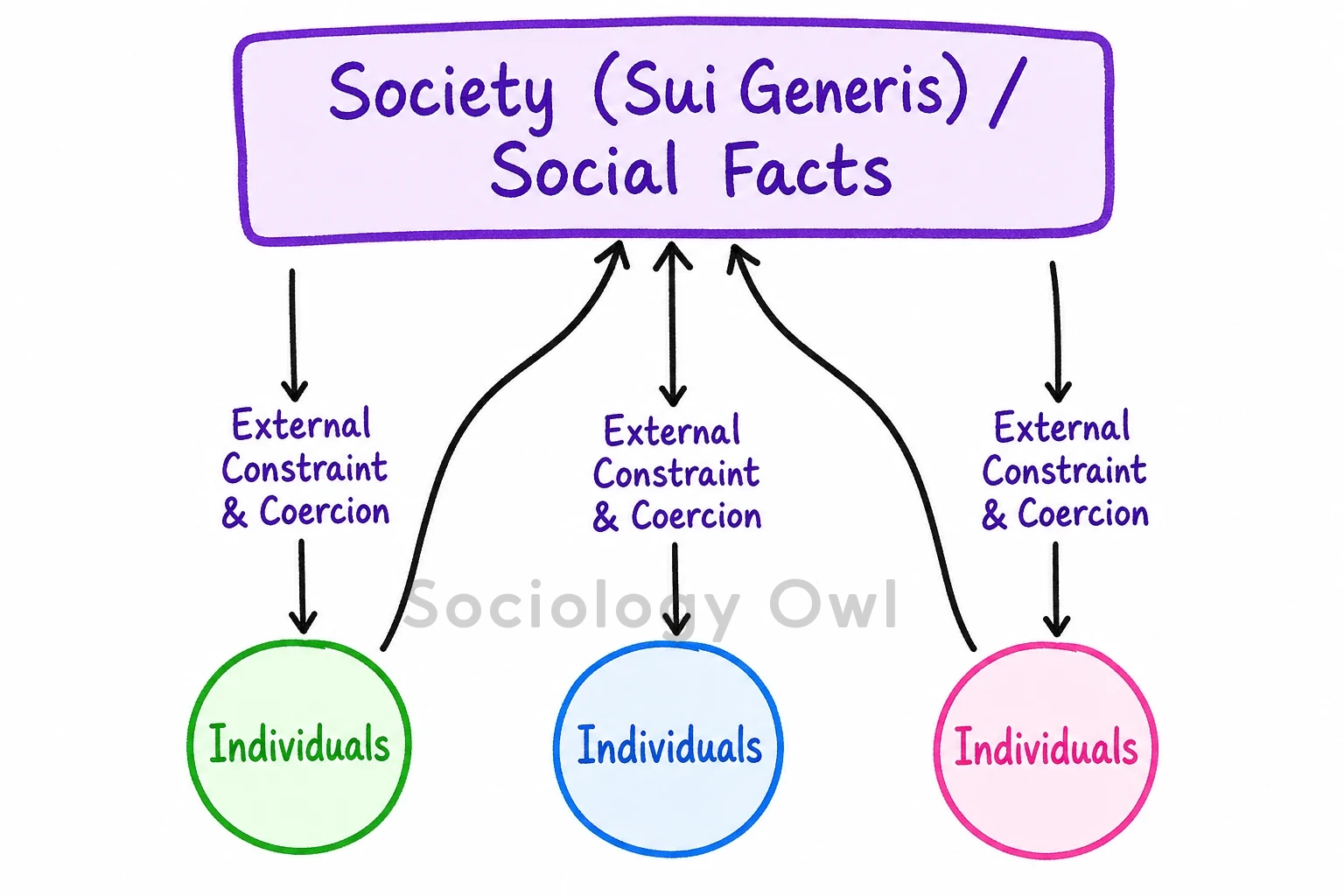
Social facts, a concept introduced by Emile Durkheim, are fundamental to sociological understanding. These are collective ways of acting, thinking, and feeling that exist outside individual consciousness and exert a coercive force on individuals.

Key characteristics of social facts include:

1. Externality: They exist independently of individual actions or thoughts.
2. Constraint: They exert pressure on individuals to conform.
3. Generality: They are widespread within a society or social group.
4. Objectivity: They can be studied empirically, like natural phenomena.

Durkheim used the rate of suicide as an exemplar of a social fact. He argued that suicide, seemingly a personal act, is influenced by social forces:

• Suicide rates remain relatively stable within societies over time.
• Different societies have consistently different suicide rates.
• Rates vary with social conditions (e.g., economic crises, wars).

Durkheim considered suicide rates a social fact because:

1. They are collective, existing beyond individual cases.
2. They exert an external force on individuals through social conditions.
3. They are measurable and show consistent patterns across groups.
4. They respond to social changes, demonstrating their connection to broader societal forces.

Conclusion:
By analyzing suicide as a social fact, Durkheim illustrated how personal actions are shaped by collective forces, establishing a foundation for sociological inquiry.

Q. Describe various characteristics of a ‘social fact’. How is rate of suicide a social fact according to Durkheim? Read More »

Q. Critically explain the salient features of ‘alienation’ as propounded by Karl Marx.

Q. Critically explain the salient features of ‘alienation’ as propounded by Karl Marx.

UPSC Sociology 2024 Paper 1

Model Answer:

Karl Marx’s concept of alienation is a fundamental aspect of his critique of capitalism and industrial society. This theory explores how workers become estranged from various aspects of their human nature and productive activity under capitalist conditions.

Key features of Marx’s concept of alienation include:

1. Alienation from the product of labor:
• Workers do not own or control the goods they produce
• The products of their labor become alien objects, owned by capitalists
• This leads to a sense of powerlessness and disconnection from one’s creations

2. Alienation from the act of production:
• Work becomes an external, coerced activity rather than a fulfilling expression of human creativity
• Workers have little control over the production process or working conditions
• Labor is reduced to a means of survival rather than a source of self-realization

3. Alienation from human nature (species-being):
• Capitalist labor inhibits the expression of essential human characteristics like creativity and social cooperation
• Workers are unable to fully develop their potential as human beings
• Marx argued that work should be a way to express our humanity, not suppress it

4. Alienation from other humans:
• Competitive capitalist relations replace cooperative social bonds
• Workers are alienated from capitalists who exploit their labor
• Even relationships among workers become instrumentalized and commodified

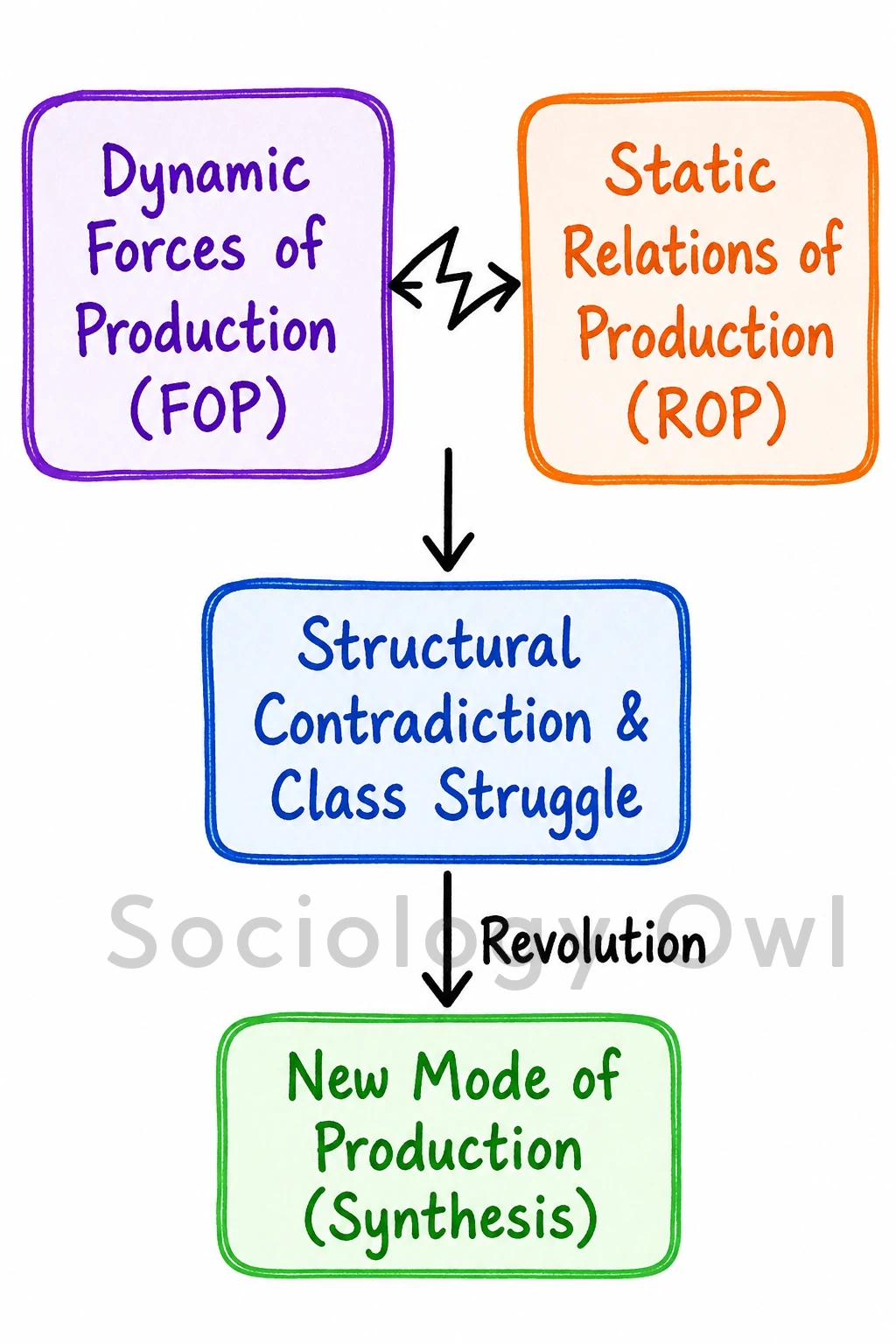
Marx viewed alienation as a structural feature of capitalism, not merely a psychological state. He argued that overcoming alienation would require fundamental changes to the economic system and social relations of production.

Critics have questioned whether Marx’s concept of human nature is too essentialist or whether alienation is as pervasive as he claimed. Nonetheless, his analysis remains influential in understanding the human costs of modern industrial and post-industrial labor.

Conclusion: Marx’s theory of alienation provides a powerful critique of how capitalism can dehumanize workers, offering insights that remain relevant to contemporary labor issues and social inequality.

Q. Critically explain the salient features of ‘alienation’ as propounded by Karl Marx. Read More »

Write short note on the sacred and the profane.

Model Answers

Q: Write short note on the sacred and the profane.

Question asked in UPSC Sociology 2002 Paper 1. Download our app for last 20 year question with model answers.

Model Answer:

Sacred and Profane

The sacred refers to things set apart and forbidden, imbued with spiritual significance and reverence. In contrast, the profane encompasses the ordinary, everyday aspects of life. This dichotomy forms a crucial framework for analyzing religious beliefs, rituals, and social structures.

• Durkheim’s Theory:

– Émile Durkheim, in his work “The Elementary Forms of Religious Life” (1912), argued that the sacred-profane distinction is the defining characteristic of religion.
– He believed this division reflects the separation between the social and the individual, with the sacred representing collective ideals.

• Characteristics of the Sacred:

– Set apart from everyday life
– Subject to prohibitions and taboos
– Inspires awe, respect, and sometimes fear
– Often associated with rituals and ceremonies
– Examples: religious symbols, holy texts, consecrated spaces

• Nature of the Profane:

– Mundane, ordinary aspects of daily existence
– Not subject to special restrictions or reverence
– Constitutes the majority of human experience
– Examples: work, leisure activities, routine tasks

• Social Function:

– The sacred-profane dichotomy helps maintain social cohesion
– Sacred elements often reinforce collective values and identity
– Rituals transitioning between sacred and profane (e.g., rites of passage) mark important life stages

• Cultural Variations:

– What is considered sacred or profane varies across cultures and time
– Some societies have more fluid boundaries between the two realms

• Modern Applications:

– Sociologists like Jeffrey Alexander have applied these concepts to understand “civil religion” and the sacralization of secular ideals in modern societies
– The sacred-profane framework can be used to analyze phenomena beyond traditional religion, such as nationalism or celebrity culture

In conclusion, the concepts of the sacred and the profane provide a powerful analytical tool for understanding how societies categorize and attach meaning to different aspects of life. This distinction continues to be relevant in studying both traditional religious practices and contemporary social phenomena.

Write short note on the sacred and the profane. Read More »

Short note on Interpretative Sociology

Model Answers

Q: Write Short note on Interpretative Sociology

Question asked in UPSC Sociology 2013 Paper 1. Download our app for last 20 year question with model answers.

Model Answer:

Interpretative Sociology

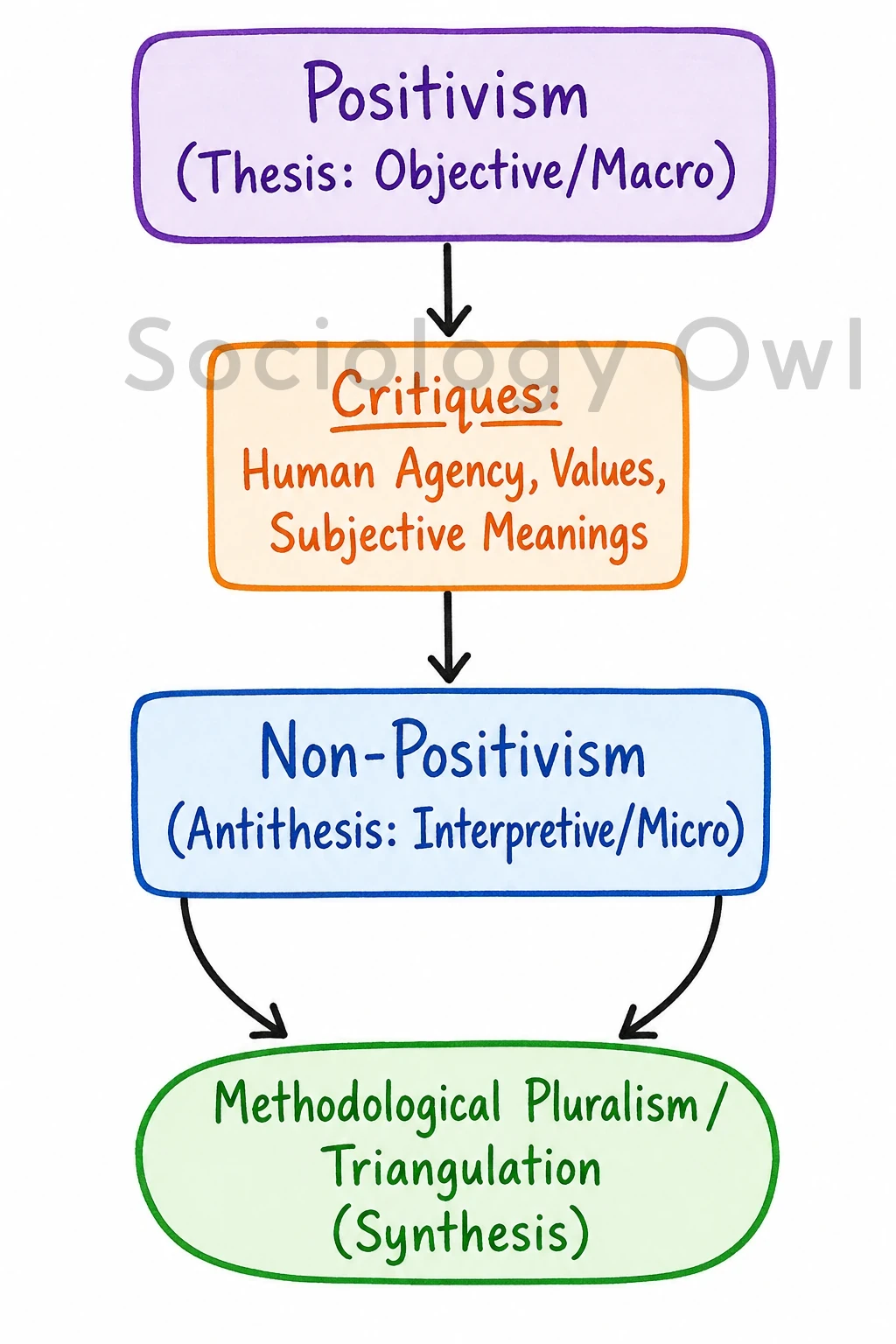
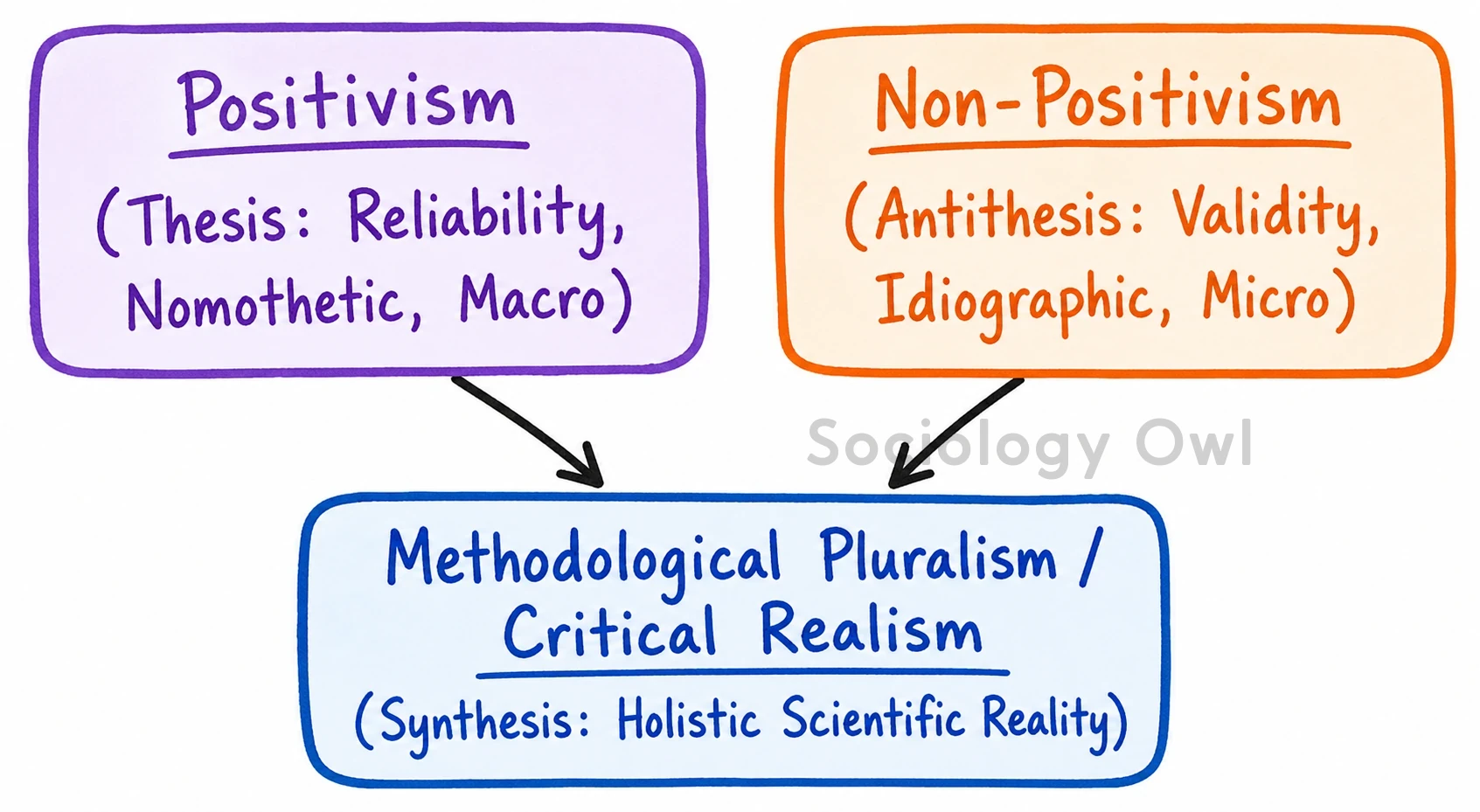
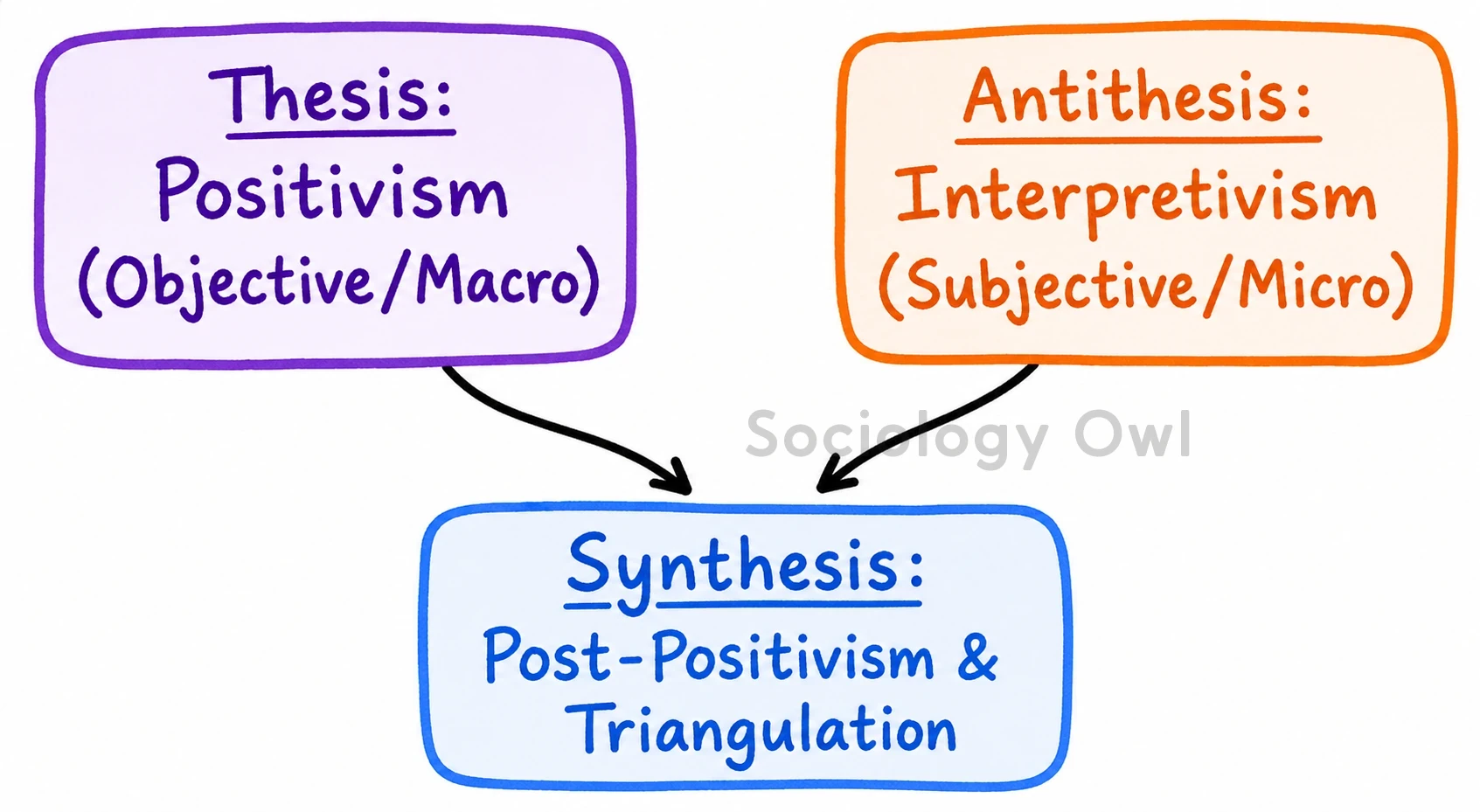
Interpretative Sociology is a key approach within sociological theory that focuses on understanding social actions through the meanings individuals attach to their behaviors and interactions. This perspective emerged as a counterpoint to positivist approaches in sociology.

Key aspects of Interpretative Sociology include:

• Emphasis on subjective meanings: Interpretative sociologists argue that to understand social phenomena, we must examine how individuals interpret and make sense of their social world.

• Focus on micro-level interactions: This approach prioritizes studying face-to-face interactions and everyday experiences rather than large-scale social structures.

• Use of qualitative methods: Researchers often employ techniques like participant observation, in-depth interviews, and ethnography to gain insight into participants’ perspectives.

• Rejection of purely objective social facts: Interpretative sociologists contend that social reality is constructed through human interpretation and interaction, rather than existing as an external, objective reality.

Key theorists and concepts associated with Interpretative Sociology include:

• Max Weber: Introduced the concept of “Verstehen” (understanding), emphasizing the importance of grasping the subjective meanings behind social actions.

• Herbert Blumer: Developed Symbolic Interactionism, which examines how people create shared meanings through social interaction and interpret symbols in their environment.

• Erving Goffman: Proposed Dramaturgical Analysis, viewing social interactions as performances with individuals managing impressions and playing roles.

• Alfred Schutz: Contributed to phenomenological sociology, exploring how individuals construct and maintain their “lifeworlds” through everyday experiences.

Examples of Interpretative Sociology in practice include:

1. A study examining how medical students develop their professional identities through interactions with peers, patients, and mentors.

2. Research investigating how individuals in online communities create and negotiate shared meanings and norms.

3. An ethnographic study of a workplace, exploring how employees interpret and respond to organizational culture and policies.

Interpretative Sociology has significantly influenced contemporary sociological thought, contributing to the development of various micro-sociological approaches. However, critics argue that it may overlook broader structural factors and power dynamics in society. Despite these critiques, Interpretative Sociology remains a valuable perspective for understanding the nuanced ways individuals construct and navigate their social realities.

Short note on Interpretative Sociology Read More »