Model Answer

Critically examine the dialectics involved in each mode of production as propounded by Karl Marx.

Model Answers

Q: Critically examine the dialectics involved in each mode of production as propounded by Karl Marx.

Question asked in UPSC Sociology 2021 Paper 1. Download our app for last 20 year question with model answers.

Model Answer:

Dialectics of Historical Materialism in Mode of Production

Karl Marx inverted G.W.F. Hegel’s idealism to formulate Dialectical Materialism. In his theory of Historical Materialism, Marx posited that history progresses through structural contradictions (dialectics) between dynamic Forces of Production (FoP) (technology, labor) and stagnant Relations of Production (RoP) (ownership, class dynamics), ultimately manifesting as class struggle.

Stages of Modes of Production

Marx identified successive stages of history, each driven by internal contradictions, except the final stage:

Primitive Communism: The discovery of agriculture (new FoP) generated a material surplus, which contradicted communal ownership (RoP), leading to the emergence of private property.

Ancient Mode: The dialectical conflict between Patricians (owners) and Plebeians/Slaves over the inherent limits of slave labor synthesized into a new agrarian system.

Feudalism: Land-based RoP between Lords and Serfs clashed with the emergence of mercantilism and the Industrial Revolution (new FoP), overthrowing feudalism and empowering the Bourgeoisie.

Capitalism: The core dialectic lies between the socialized nature of production and the private appropriation of profit by the Bourgeoisie, which brutally exploits the Proletariat. This breeds Alienation and Pauperization, inevitably triggering a socialist revolution.

Communism: Unlike prior stages, communism marks the “end of history.” It is a stateless, classless society where FoP and RoP are in perfect harmony; hence, dialectics permanently cease.

Critical Examination of Marx’s Model

Sociological Critiques

fop rop

Marx’s dialectical model faces significant sociological critique:

Max Weber: Criticized Marx’s economic reductionism, asserting that stratification is multidimensional across Class, Status, and Party.

Ralf Dahrendorf: Argued that modern structural conflict stems from the unequal distribution of Authority within Imperatively Coordinated Associations, not merely property ownership.

Jurgen Habermas: Noted that advanced capitalism suppresses dialectics through mass media, consumerism, and the welfare state, preventing the proletariat from realizing their exploitation.

Structural Marxism (Louis Althusser): Argued that superstructures (state, ideology) possess “relative autonomy” and are not simple economic puppets. Furthermore, Marx’s predicted polarization failed due to the rise of a vast, pacifying middle class.

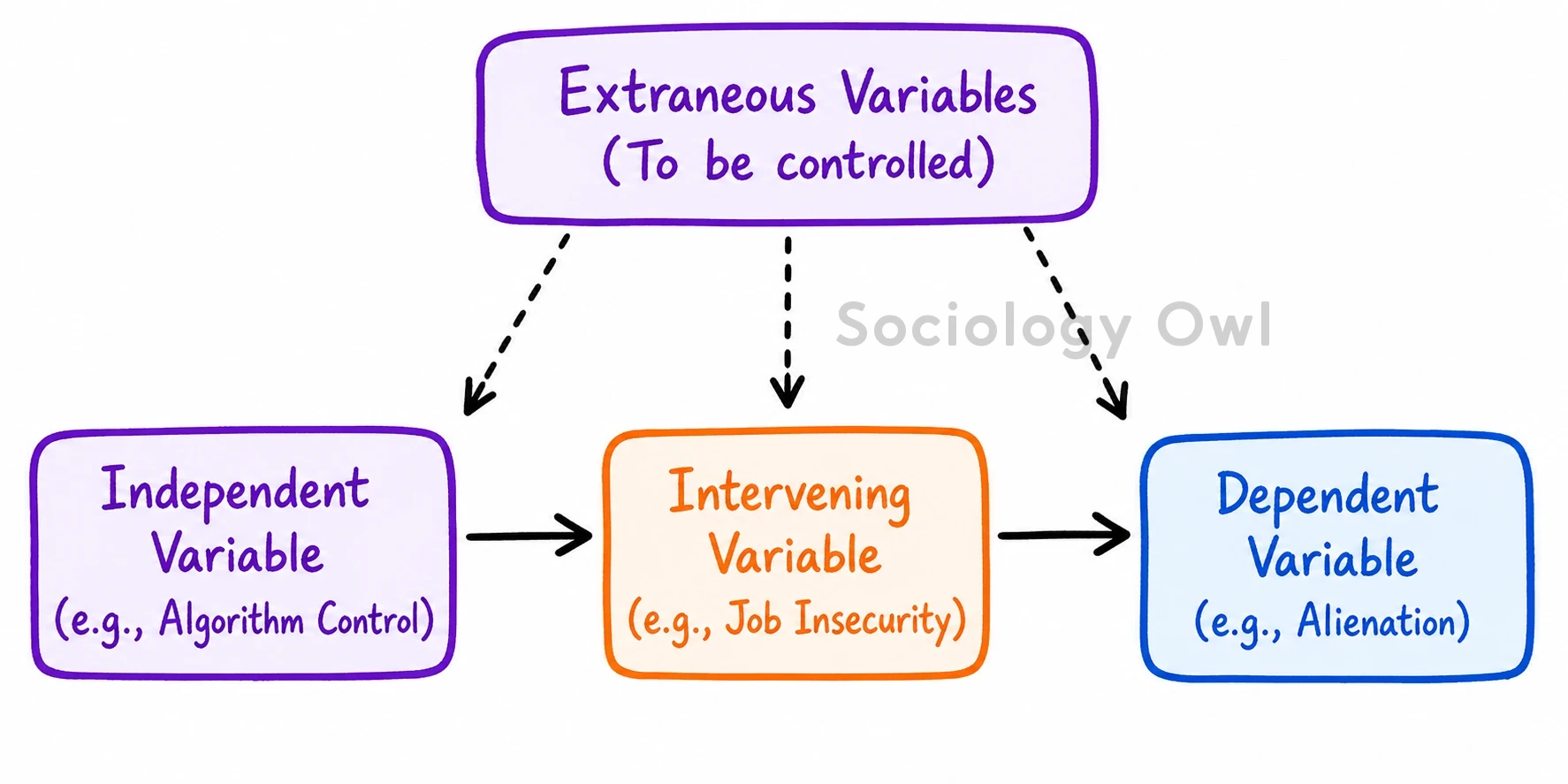
Marx’s capitalist dialectic is highly visible in today’s “Gig Economy” (e.g., Uber, Swiggy). Algorithmic platforms (advanced FoP) enforce highly exploitative, decentralized RoP, generating a new, vulnerable Precariat class lacking structural protections.

Conclusion

While criticized for economic determinism and failing to predict revolutions in agrarian societies (like Russia or China), Marx’s dialectical method remains a paramount tool in Macro-sociology. It established the foundation of Conflict Theory and continuously inspires paradigms like Feminist and Subaltern studies to deconstruct systemic inequalities.

Critically examine the dialectics involved in each mode of production as propounded by Karl Marx. Read More »

Is sociology a value-free science ? Discuss

Model Answers

Q: Is sociology a value-free science ? Discuss

Question asked in UPSC Sociology 2020 Paper 1. Download our app for last 20 year question with model answers.

Model Answer:

Is Sociology a Value Free Science ?

A value-free sociology implies an epistemological separation of empirical facts from researchers’ personal beliefs. The debate centers on whether sociology can emulate natural science’s objectivity (Positivism) or if human subjectivity renders this impossible.

Positivist and Interpretive Stances

Positivism: Auguste Comte and Emile Durkheim championed absolute value-neutrality, treating “social facts as things” to ensure pure objectivity.

Interpretivism: Max Weber advocated for Wertfreiheit (value-neutrality) in methodology, but acknowledged values guide topic selection. He utilized Verstehen to understand subjective meanings.

Critiques of Value-Free Sociology

Major Theoretical Critiques

Alvin Gouldner: In Anti-Minotaur: The Myth of a Value-Free Sociology, he argued neutrality is an illusion that excuses moral indifference.

Gunnar Myrdal: Noting that values are omnipresent, he advocated for “value-explicit” research.

Feminist Critique: Dorothy Smith’s Standpoint Theory highlights that supposedly “objective” sociology historically masks male-centric biases.

sociology value free

Modern research on Climate Justice or Gender Inequality inherently begins with a value judgment (that inequality is unjust) but requires strictly objective data-collection methods.

Conclusion

While absolute value-neutrality is impossible, sociology strives for methodological objectivity. By practicing Reflexivity (Pierre Bourdieu), sociologists explicitly acknowledge their social location, transforming sociology into a rigorously value-explicit and morally responsible science.

Is sociology a value-free science ? Discuss Read More »

Durkhiem argued that society is more than the sum of individual acts. Discuss.

Model Answers

Q: Durkhiem argued that society is more than the sum of individual acts. Discuss.

Question asked in UPSC Sociology 2022 Paper 1. Download our app for last 20 year question with model answers.

Model Answer:

Durkheim : Society as More Than the Sum of Individual Acts

Emile Durkheim conceptualized society as an objective reality sui generis to establish sociology as a positivist science. Using a chemical analogy, he argued that just as hydrogen and oxygen combine to form water, individual acts fuse to create a distinct macroscopic reality that transcends psychological reductionism.

Mechanisms of Societal Superiority

Social Facts: External, constraining forces (such as laws and norms) that possess independent causal power over individuals.

Empirical Proof: In his study Suicide, Durkheim statistically proved that highly personal acts are dictated by macroscopic societal currents of integration and regulation.

Collective Conscience: Shared beliefs and moral attitudes bind society together, overshadowing individual desires.
social facts

Critique of Structural Determinism

Max Weber’s perspective of Methodological Individualism counters Durkheim, arguing that society is simply the aggregated result of meaningful individual Social Action.

Symbolic Interactionists like G.H. Mead argue society is continuously negotiated through daily micro-interactions, not enforced by external coercion.

Modern phenomena like internet virality or stadium euphoria represent Collective Effervescence, where group energy undeniably overtakes individual rationality, proving society’s independent power.

Conclusion

Despite criticisms of reifying society and ignoring individual agency, Durkheim’s anti-reductionist perspective successfully established sociology’s independent domain, laying the theoretical bedrock for Structural-Functionalism.

Durkhiem argued that society is more than the sum of individual acts. Discuss. Read More »

What are the shortfalls of positivist philosophy that gave rise to the non-positivist methods of studying social reality ?

Model Answers

Q: What are the shortfalls of positivist philosophy that gave rise to the non-positivist methods of studying social reality ?

Question asked in UPSC Sociology 2022 Paper 1. Download our app for last 20 year question with model answers.

Model Answer:

Positivism, championed by Auguste Comte and Emile Durkheim in The Rules of Sociological Method, advocated studying “social facts as things” using objective, natural science methods. However, the late 19th-century Methodenstreit debate exposed fundamental flaws in applying natural science principles to conscious human behavior, paving the way for non-positivist methodologies.

Critiques of Positivism

Ontological and Epistemological Shortfalls: Positivism treats society as a deterministic, physical object. Peter Berger and Thomas Luckmann in The Social Construction of Reality counter this, arguing society is an ongoing human production. Symbolic interactionists argue individuals actively interpret reality rather than passively reacting to macro-laws.

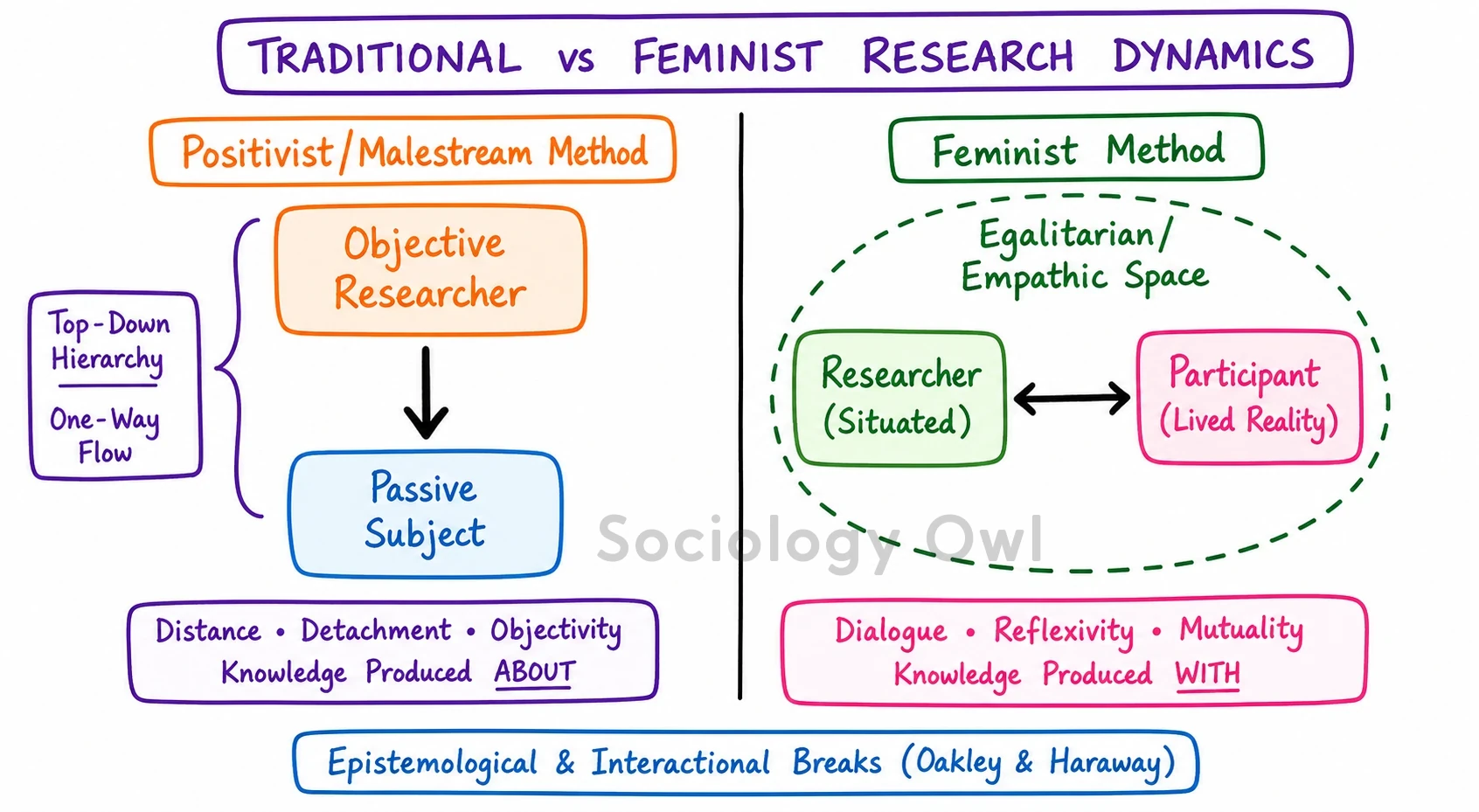
The myth of value-neutrality: Frankfurt School critical theorists argued that objective neutrality is impossible; all research is value-laden. Additionally, the Feminist critique by Ann Oakley highlighted that positivism is inherently hierarchical and patriarchal, reducing human subjects to passive data-mining objects rather than equal participants.

Methodological Shortfalls: Inability to study subjective meaning: Neo-Kantian thinkers like Wilhelm Dilthey argued human consciousness demands interpretive understanding, not just observation. This birthed Max Weber’s concept of Verstehen (empathetic understanding) and Alfred Schutz’s phenomenological approach to capture intricate lived experiences that statistics ignore.

Rejection of universal laws: Positivism’s search for static, universal generalizations was dismantled by the Post-Modernist critique. Michel Foucault argued against absolute “meta-narratives,” emphasizing instead how historical contexts, discourse, and power dynamics constantly shift social realities.

During the COVID-19 pandemic, positivist statistical surveys successfully captured how many people refused vaccines. However, non-positivist interpretivist methods, like in-depth interviews, were critical to understanding the subjective meaning behind vaccine hesitancy, such as political identity and historical distrust of medical institutions.

Conclusion

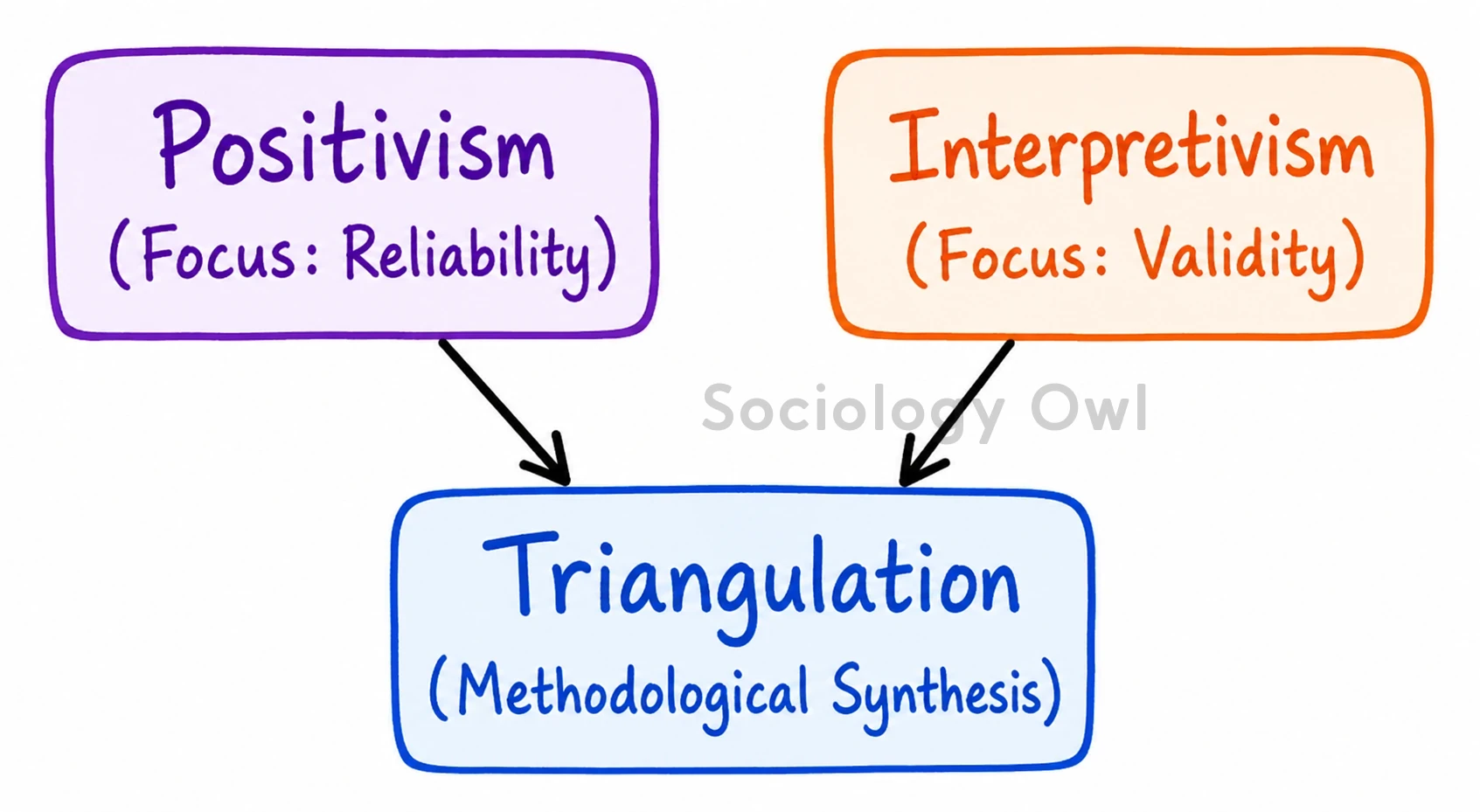
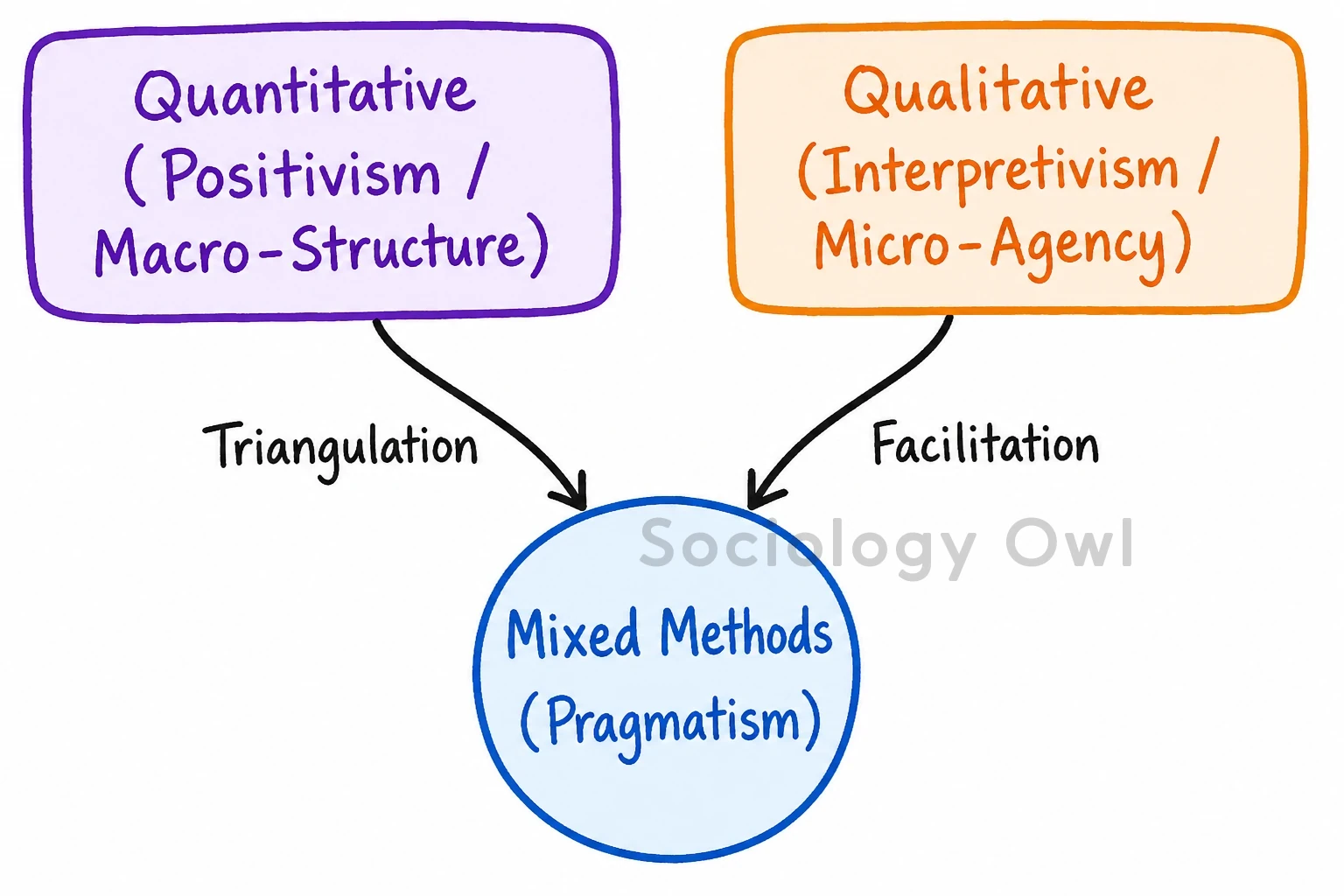
While non-positivist methods effectively capture micro-level meanings, they often face criticisms of extreme subjectivity. Contemporary sociology has largely moved past this binary debate toward Methodological Pluralism or Triangulation, a concept advanced by Norman Denzin. By combining positivist macro-structures with non-positivist lived experiences, sociologists achieve a holistic understanding of dynamic social realities.

What are the shortfalls of positivist philosophy that gave rise to the non-positivist methods of studying social reality ? Read More »

Is non-positivistic methodology scientific? Illustrate.

Model Answers

Q: Is non-positivistic methodology scientific? Illustrate.

Question asked in UPSC Sociology 2018 Paper 1. Download our app for last 20 year question with model answers.

Model Answer:

Non-positivistic Methodology

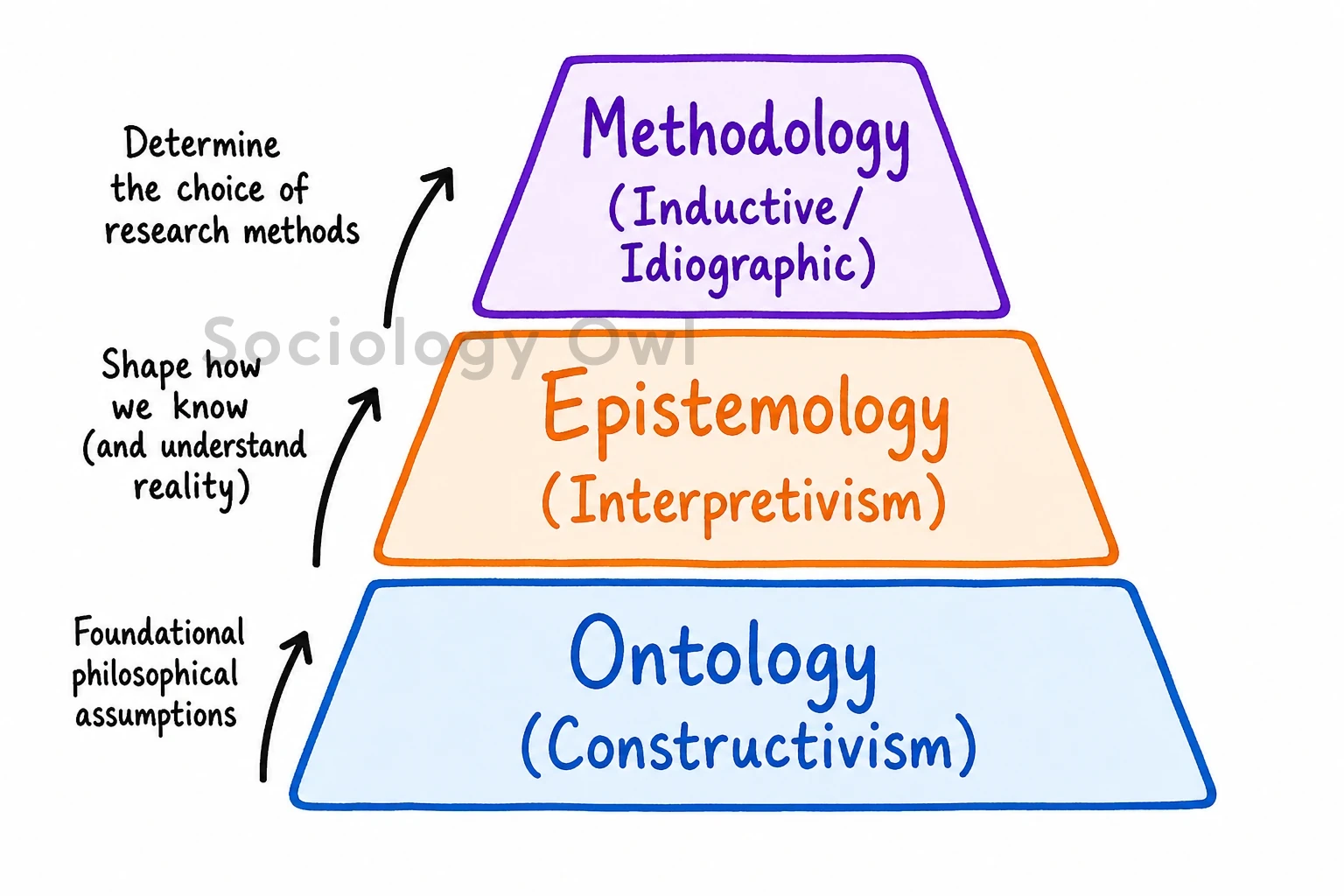
The debate on whether non-positivistic methodology is ‘scientific’ hinges on the definition of science itself. While positivists equate science with the nomothetic (natural science) model, non-positivists argue that studying conscious human beings requires an idiographic, interpretive epistemology focused on subjective reality.

Scientific Merit of Non-Positivism

  • Rigorous Conceptual Tools: Max Weber introduced Ideal Types alongside Verstehen as objective heuristic tools to systematically study subjective social action, drawing causal explanations in his seminal work, The Protestant Ethic and the Spirit of Capitalism.
  • Prioritizing Validity: Non-positivism pursues deep validity over mere reliability (replicability). William Foote Whyte’s participant observation in Street Corner Society uncovered facts about gang structures that standardized positivist surveys would inherently miss.
  • Systematic Experimentation: Harold Garfinkel’s ethnomethodology utilized “breaching experiments” to systematically uncover hidden, everyday social rules.
  • Objectivity through Reflexivity: Alvin Gouldner’s “Reflexive Sociology” mandates researchers to acknowledge their positionality, ensuring scientific transparency and addressing subjectivity biases.

Epistemological Critiques

  • Falsifiability: Karl Popper argues that non-positivist interpretations often evade strict Falsification, making them unscientific by strict positivist standards.
  • Paradigm Plurality: Countering this, Thomas Kuhn asserts that sociology is a multi-paradigmatic science where interpretivism functions as a distinct, valid scientific Paradigm.

Modern qualitative research proves non-positivism’s ongoing scientific utility. In Evicted, Matthew Desmond employs rigorous ethnography to map the hidden dimensions of urban poverty. Similarly, non-positivist studies of gig-economy workers capture “algorithmic alienation,” revealing subjective precarities entirely invisible to purely quantitative income surveys.

Conclusion

Ultimately, non-positivism expands the boundaries of science beyond mere quantification. Contemporary sociology resolves this debate through Methodological Pluralism (Alan Bryman) and Critical Realism (Roy Bhaskar), effectively synthesizing objective structural data with subjective meanings to capture a holistic and scientifically rigorous social reality.

Is non-positivistic methodology scientific? Illustrate. Read More »

“The sociological imagination enables us to grasp history and biography and the relationship between the two in a society.” – C.W.Mills. Explain.

Model Answers

Q: "The sociological imagination enables us to grasp history and biography and the relationship between the two in a society.” - C.W.Mills. Explain.

Question asked in UPSC Sociology 2018 Paper 1. Download our app for last 20 year question with model answers.

Model Answer:

The Sociological Imagination

In The Sociological Imagination (1959), C.W. Mills offers a framework to bridge the micro-macro divide and the agency-structure debate. Rejecting both Talcott Parsons’ overly abstract “Grand Theory” and Paul Lazarsfeld’s micro-focused “Abstract Empiricism”, Mills envisioned a politically engaged sociology that connects individual experiences (biography) with broader structural forces (history).

Biography, History, and the Micro-Macro Link

  • Biography: Represents the micro-level, encompassing an individual’s personal experiences, character, and immediate milieu.
  • History: Represents the macro-level, including broad economic, political, and cultural transformations shaping society over time.
  • The Nexus: Mills argued that human lives are intricately woven into historical epochs. Individual choices (agency) are fundamentally constrained or facilitated by historical context (structure).

Personal Troubles vs. Public Issues

The core mechanism of sociological imagination is distinguishing:

  • Personal Troubles of Milieu: Occur within the individual’s immediate, private life.
  • Public Issues of Social Structure: Transcend local environments, rooted in institutional crises.
  • Mills’ Examples: If one person in a city is unemployed, it is a personal trouble. If 15 million are unemployed nationwide, it is a structural public issue. Similarly, mass divorce rates indicate macro-institutional shifts, not merely micro-level marital failure
  • Sociological Imagination

Theoretical Linkages and Critiques

  • Emile Durkheim demonstrated this imagination in Suicide, linking an intensely personal act (biography) to macro-social currents of regulation (history).
  • Anthony Giddens’ Structuration Theory echoes Mills by analyzing how human agency and structures mutually reproduce.
  • Critique: Postmodernists like Jean-François Lyotard reject grand historical narratives, asserting that contemporary society lacks a singular “History” connecting to fluid biographies. Furthermore, critics warn that emphasizing historical structure risks structural determinism, underplaying human free will.

Contemporary Relevance
In the era of AI automation, a freelance coder losing their job might perceive it as personal inadequacy (biography). However, the sociological imagination reframes this as a consequence of globalized platform capitalism and technological displacement (history).

Conclusion

Ultimately, Mills provided more than an analytical tool; he offered a democratic, emancipatory vision. By developing a sociological imagination, individuals transcend being passive victims of historical currents, becoming active, self-aware citizens capable of driving structural social change.

“The sociological imagination enables us to grasp history and biography and the relationship between the two in a society.” – C.W.Mills. Explain. Read More »

Q. What is positivism? Critically analyze the major arguments against it.

Q. What is positivism? Critically analyze the major arguments against it.

UPSC Sociology 2025 Paper 1

Model Answer:

Positivism, rooted in Enlightenment rationality and pioneered by Auguste Comte, asserts that sociology must adopt natural science methods to discover universal laws of human behavior. Emile Durkheim operationalized this by advocating treating “social facts as things” in The Rules of Sociological Method, establishing an objective, empirical basis for sociology.

Critiques of Positivism

Ontological and Epistemological Critiques:

  • Neglect of Subjective Meaning: Max Weber argued humans possess consciousness and agency. His interpretivist approach emphasizes Verstehen (empathetic understanding) to grasp internal motivations, contrasting with natural matter that merely reacts.
  • Reflexivity: Anthony Giddens formulated the Double Hermeneutic. Unlike natural objects, humans interpret sociological theories and alter their behavior accordingly, rendering law-like prediction impossible.
  • Scientific Fallibility: Karl Popper rejected positivist verification in favor of Falsification. Furthermore, Thomas Kuhn demonstrated through Paradigm Shifts that science itself is a socially constructed, subjective enterprise rather than purely objective.

Axiological and Structural Critiques:

  • Myth of Value-Neutrality: Alvin Gouldner argued complete objectivity is impossible. During the Positivist Dispute, the Frankfurt School (Jurgen Habermas) argued that positivism legitimizes the oppressive status quo by masking structural inequalities as “value-neutral” facts.
  • Reductionism: Phenomenologists like Alfred Schutz argue positivism reduces inter-subjective social realities into mechanical variables. Interpretivists argue this necessitates Clifford Geertz’s “Thick Description” to capture cultural depth.

Postivism
Critical Evaluation of the Anti-Positivist Critiques: Extreme anti-positivism or postmodernism risks radical relativism—if no objective truth exists, sociological policy-making becomes impossible. Consequently, sociology has shifted toward Post-Positivism (e.g., Roy Bhaskar’s Critical Realism), which accepts that while absolute objectivity is unattainable, rigorous empirical observation remains vital when conducted with reflexivity.

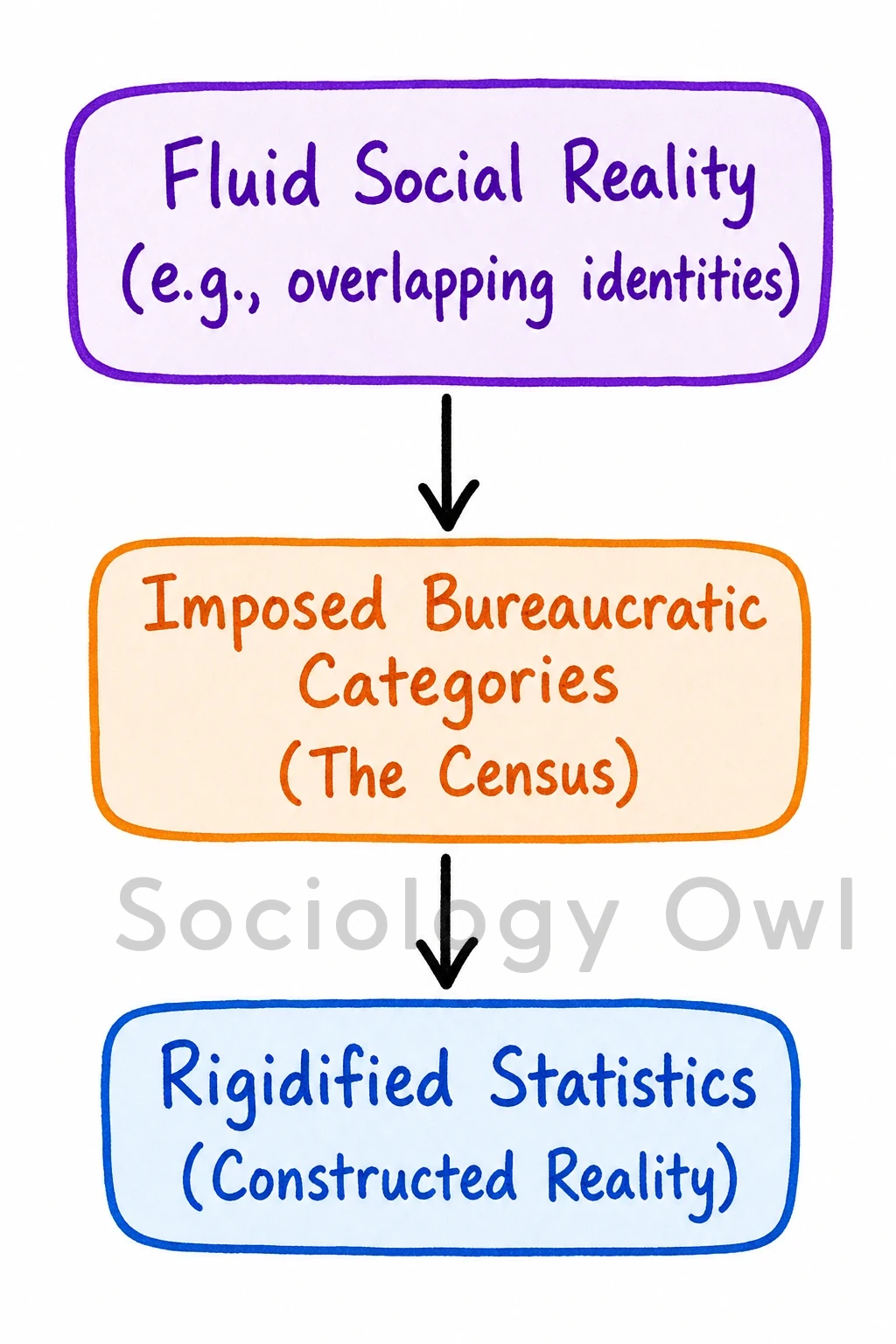
Contemporary Relevance: Today’s reliance on Big Data and algorithmic governance represents modern hyper-positivism. However, predictive AI in criminal justice often reproduces structural biases (racism, classism). This proves that quantitative data lacking contextual Verstehen fails to capture complex human realities.

Conclusion

The historical hostility between positivism and its critics has matured into methodological pluralism. Modern sociologists embrace Alan Bryman’s concept of Triangulation, synergizing quantitative and qualitative methods to comprehensively capture both macro-structural patterns and micro-level human experiences.

Q. What is positivism? Critically analyze the major arguments against it. Read More »

Critically examine the relevance of Durkheim’s views on religion in contemporary society.

Model Answers

Q: Critically examine the relevance of Durkheim’s views on religion in contemporary society.

Question asked in UPSC Sociology 2022 Paper 1. Download our app for last 20 year question with model answers.

Model Answer:

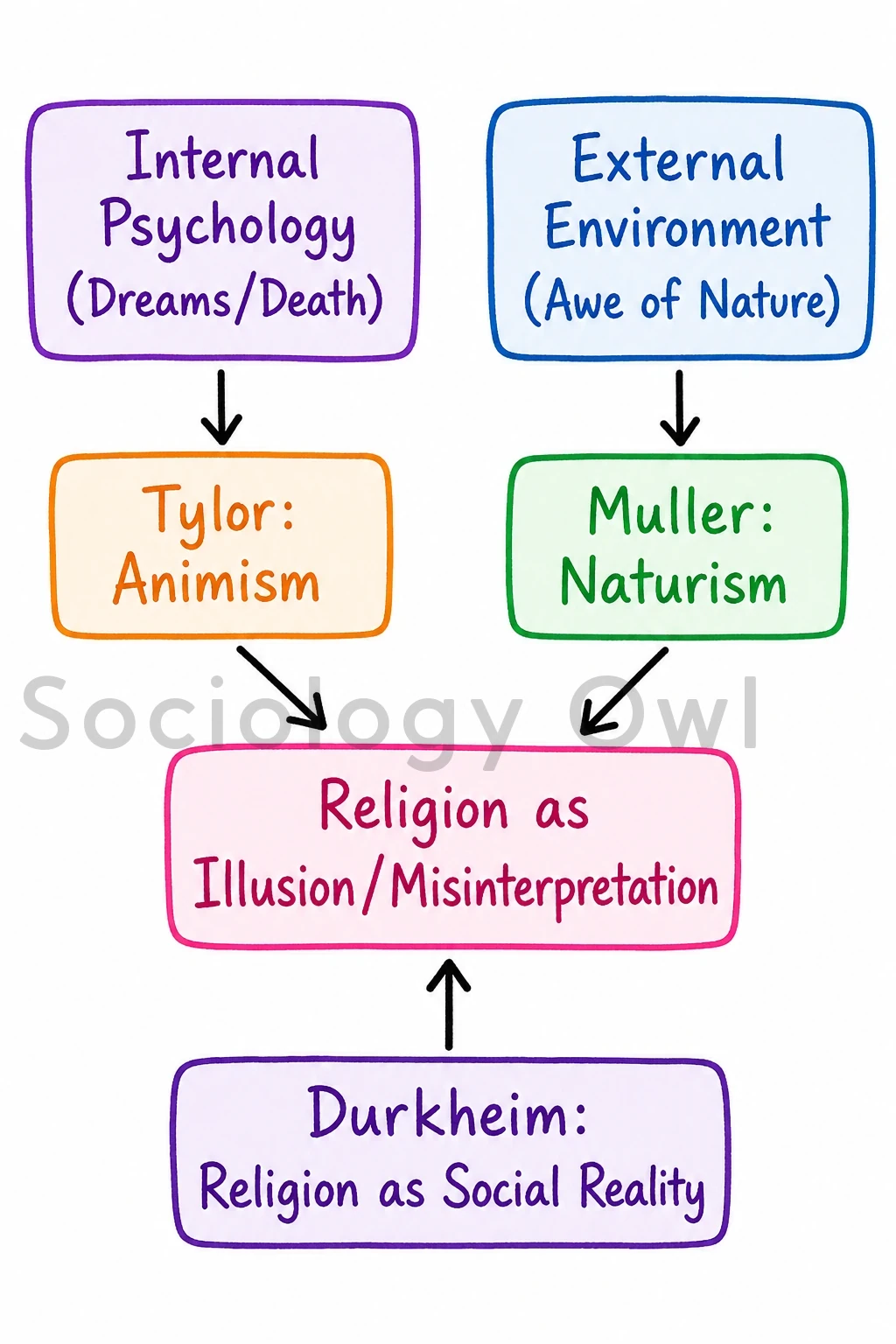
In The Elementary Forms of Religious Life, Emile Durkheim defines religion as a unified system of beliefs and practices relative to Sacred things, uniting adherents into a single moral community.

Relevance of Durkheim’s Views

  • Civil Religion: Robert Bellah shows how secular nationalism (e.g., constitutional reverence, Independence Day) fosters cohesion identically to traditional religion.
  • Neo-Totemism: National flags and corporate logos function as modern totems, projecting collective identity.
  • Collective Effervescence: Mega-events like the FIFA World Cup or Kumbh Mela generate unifying social energy, mimicking religious fervor.

Religion

Limitations in Contemporary Society

  • Privatization: Grace Davie identifies “believing without belonging”, emphasizing individualized spirituality over collective ritual.
  • Dysfunction: Religion frequently triggers sectarian violence globally, contradicting Durkheim’s integration thesis and supporting Karl Marx’s conflict perspective.

Regarding contemporary relevance, the global emergence of environmentalism as a moral duty proves Durkheim’s concept of the Sacred continuously adapts to secular, modern contexts. Conversely, the rise of religious “Nones” challenges the universality of a singular moral community.

Conclusion

Despite secularization weakening orthodox faith, Durkheim’s functional premise survives. Modern societies continuously reinvent Sacred symbols and rituals to maintain the collective solidarity essential for social integration.

Critically examine the relevance of Durkheim’s views on religion in contemporary society. Read More »

Q. Highlight the main features of historical materialism as propounded by Marx. How far is this theory relevant in understanding contemporary societies? Explain.

Q. Highlight the main features of historical materialism as propounded by Marx. How far is this theory relevant in understanding contemporary societies? Explain.

UPSC Sociology 2025 Paper 1

Model Answer:

Historical Materialism, the cornerstone of Karl Marx’s sociological thought, posits that material and economic conditions are the primary drivers of societal evolution. Marx constructed this methodology by inverting Georg Hegel’s dialectics (replacing idealism with materialism) and integrating Ludwig Feuerbach’s materialism.

Main Features of Historical Materialism

  • Base-Superstructure Model: The economic base, comprising the Forces of Production (FOP) and Relations of Production (ROP), determines the ideological superstructure (politics, law, religion). As Marx wrote in A Contribution to the Critique of Political Economy, “social existence determines consciousness.”
  • Dialectical Contradiction: Historical change occurs when dynamic FOP (technology, labor methods) outgrow static ROP (property and class laws). This structural contradiction generates class struggle, culminating in revolutionary transformation.
    Karl Marx
  • Evolutionary Stages: History progresses through distinct modes of production driven by class antagonism: Primitive Communism → Ancient Mode (Slavery) → Feudalism → Capitalism → Socialism/Communism.

Contemporary Relevance

  • Global Capitalism: Immanuel Wallerstein’s World Systems Theory validates Marx globally, explaining neocolonial exploitation where Core nations extract surplus from the Periphery. Contemporary Oxfam reports on wealth concentration echo Marx’s capital accumulation thesis.
  • Ideological Control: Antonio Gramsci’s Cultural Hegemony and Louis Althusser’s Ideological State Apparatus explain how modern capitalism survives not just by economic force, but by manufacturing consent through media and algorithms.
  • Worker Alienation: Gig economy precarity highlights ongoing worker commodification and Alienation.
  • Limitations and Critiques: Herbert Marcuse (Frankfurt School) noted that capitalism pacified the working class by creating “false needs” through consumerism. Ralf Dahrendorf criticized Marx for missing the “decomposition of capital”—the rise of a salaried middle class and institutionalized union conflict. Furthermore, feminists like Heidi Hartmann argue the theory is “sex-blind,” ignoring patriarchy’s independent structural force.

Conclusion

While strict Economic Determinism is challenged today, Historical Materialism remains an indispensable analytical tool. Adapted by Neo-Marxists, it continues to anchor critical sociology and environmental sociology, notably utilizing concepts like the “Metabolic Rift” to critique capitalist-driven ecological crises.

Q. Highlight the main features of historical materialism as propounded by Marx. How far is this theory relevant in understanding contemporary societies? Explain. Read More »

How can Parsons’ AGIL framework be used to analyse key problems is a society? Discuss.

Model Answers

Q: How can Parsons' AGIL framework be used to analyse key problems is a society? Discuss.

Question asked in UPSC Sociology 2013 Paper 1. Download our app for last 20 year question with model answers.

Model Answer:

AGIL Model of Talcott Parsons

In The Social System, Talcott Parsons designed the AGIL framework to explain how societies maintain a “Moving Equilibrium”. To analyze key societal problems, this lens must shift to diagnose systemic strains, institutional maladjustments, and failures in Social Control Mechanisms.

Diagnosing Societal Crises via AGIL Deficits

Parsons argued that problems emerge when interdependent subsystems fail their functional prerequisites:

  • Adaptation (A – Economy): Deficits in resource mobilization cause unemployment and inflation. Robert Merton applied his concept of Dysfunctions here, showing how economic growth latently produces extreme inequality.
  • Goal Attainment (G – Polity): Governance deficits, corruption, and policy paralysis reflect a systemic inability to prioritize and execute collective goals.
  • Integration (I – Law/Community): The breakdown of Value Consensus breeds polarization and violence. This directly mirrors Emile Durkheim’s concept of Anomie, where rapid change dissolves normative regulation.
  • Latency (L – Family/Education): Failures in Socialization erode civic values. Jørgen Habermas’s “Legitimation Crisis” and Louis Althusser’s Ideological State Apparatus illustrate how institutional commodification destroys normative commitments.

AGIL Model
Furthermore, Parsons’ Cybernetic Hierarchy of Control explains that crises occur when high-energy subsystems (Adaptation/Economy) overwhelm high-information subsystems (Latency/Culture), leading to issues like hyper-consumerism overriding ethical values.

Critique of the Parsonian Approach

  • C. Wright Mills criticized AGIL as overly abstract “Grand Theory”, unable to capture visceral realities like poverty.
  • Ralf Dahrendorf argued its consensus-bias blinds it to how problems often stem from the coercive power of the state over the masses.

The COVID-19 pandemic highlights AGIL’s systemic interdependence. An Adaptive (A) shock (economic collapse) forced strict Goal Attainment (G) responses (state lockdowns), which triggered Integrative (I) crises (migrant distress and social isolation) and ultimately strained Latency (L) (mental health and education disruptions).

Conclusion

While conflict theorists expose its blind spots regarding power and coercion, Neo-Functionalists like Jeffrey Alexander have revived AGIL. It remains a highly sophisticated diagnostic grid, proving that mapping structural interdependencies is crucial for policymakers tackling multidimensional global crises.

How can Parsons’ AGIL framework be used to analyse key problems is a society? Discuss. Read More »